Venue type sets a Napa Valley wedding budget more than any decor choice: estate winery site fees run $25,000–$60,000 plus food-and-beverage minimums, while a restaurant buyout for under 60 guests carries minimums of $15,000–$35,000.
The ideas below run from a Forest Lawn Ceremony Aisle to a French Chateau Style Estate, and my rule for choosing between them is simple: match your guest count to what the venue fee actually covers.
1. Vineyard Ceremony
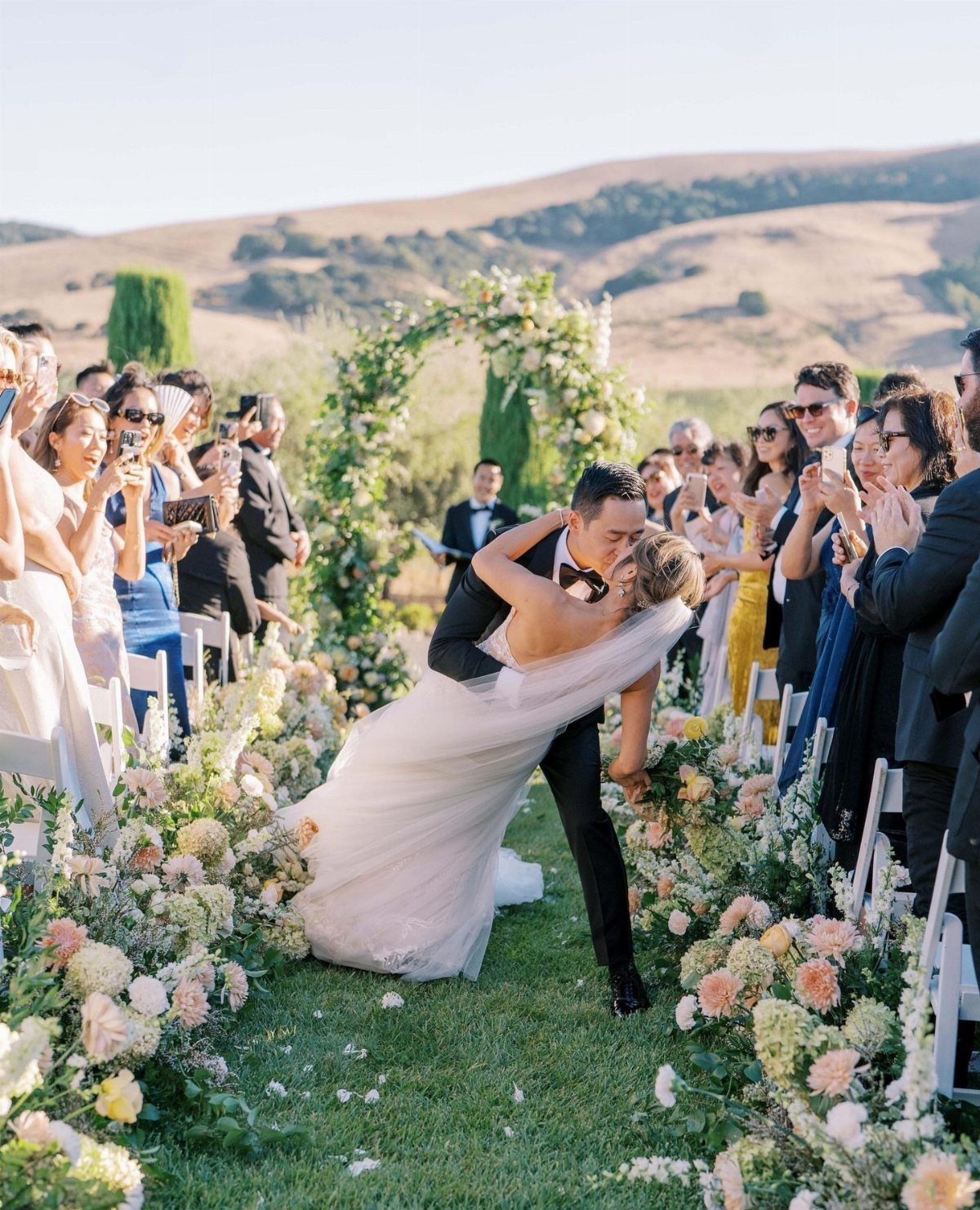
Napa proper has few true winery weddings, so a vineyard ceremony usually means a grandfathered winery or a nearby Sonoma property. Ask early which one you are actually booking.
Skip heavy backdrops, since the hills already give guests a view worth looking at.
I would take a Sonoma property with real vines over a Napa venue that only looks the part.
Founded in 1861, Charles Krug is Napa Valley’s oldest winery and a premier location for grand celebrations. Couples can exchange vows on The Great Lawn, shaded by majestic heritage oaks, and host receptions for up to 1,200 guests.
2. Beaulieu Garden
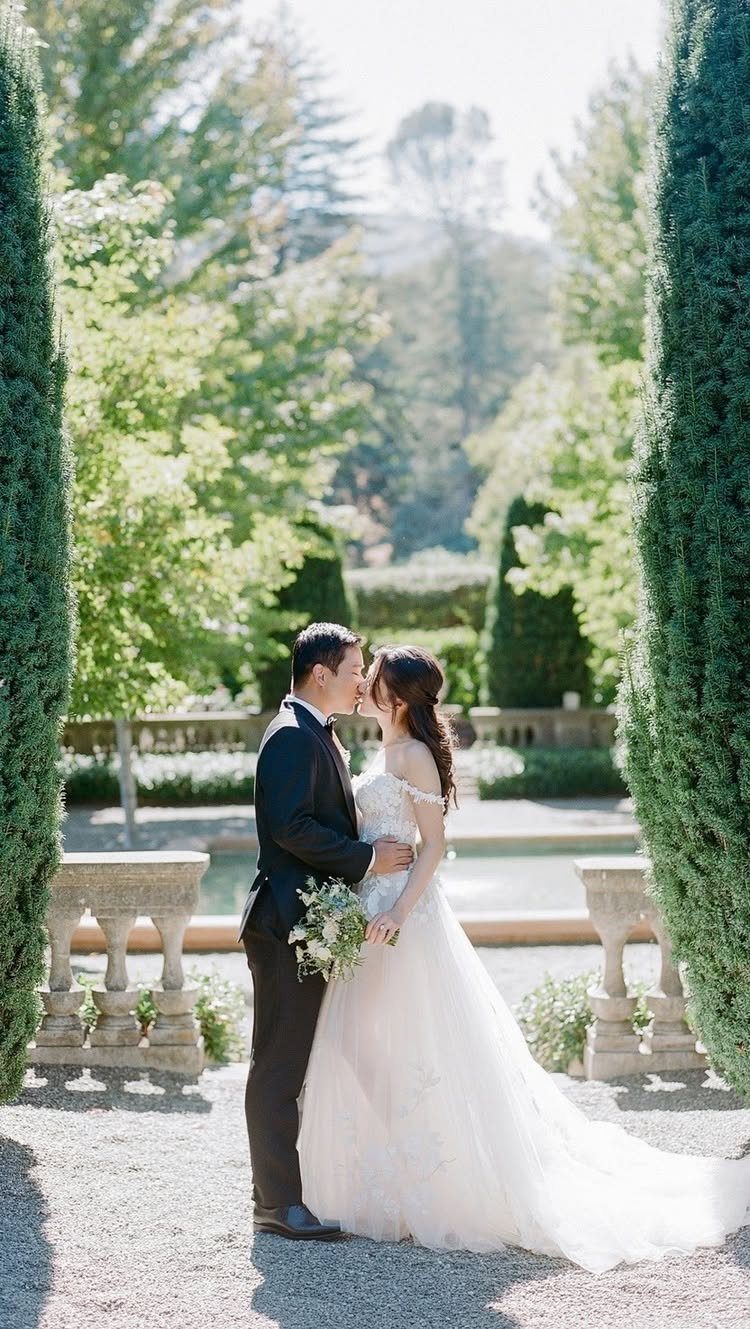
A garden with sycamore-lined allées, trimmed hedges and gravel paths reads as a French country estate, and that look comes from the layout more than from any décor you add.
The structure does the styling, so you can keep decor light.
Plan your ceremony or portraits along the gravel paths, where the hedges and stone pedestals frame a couple without props. Heels sink in gravel, so I would warn bridesmaids to pick block heels.
3. Lawn Reception with Pond View
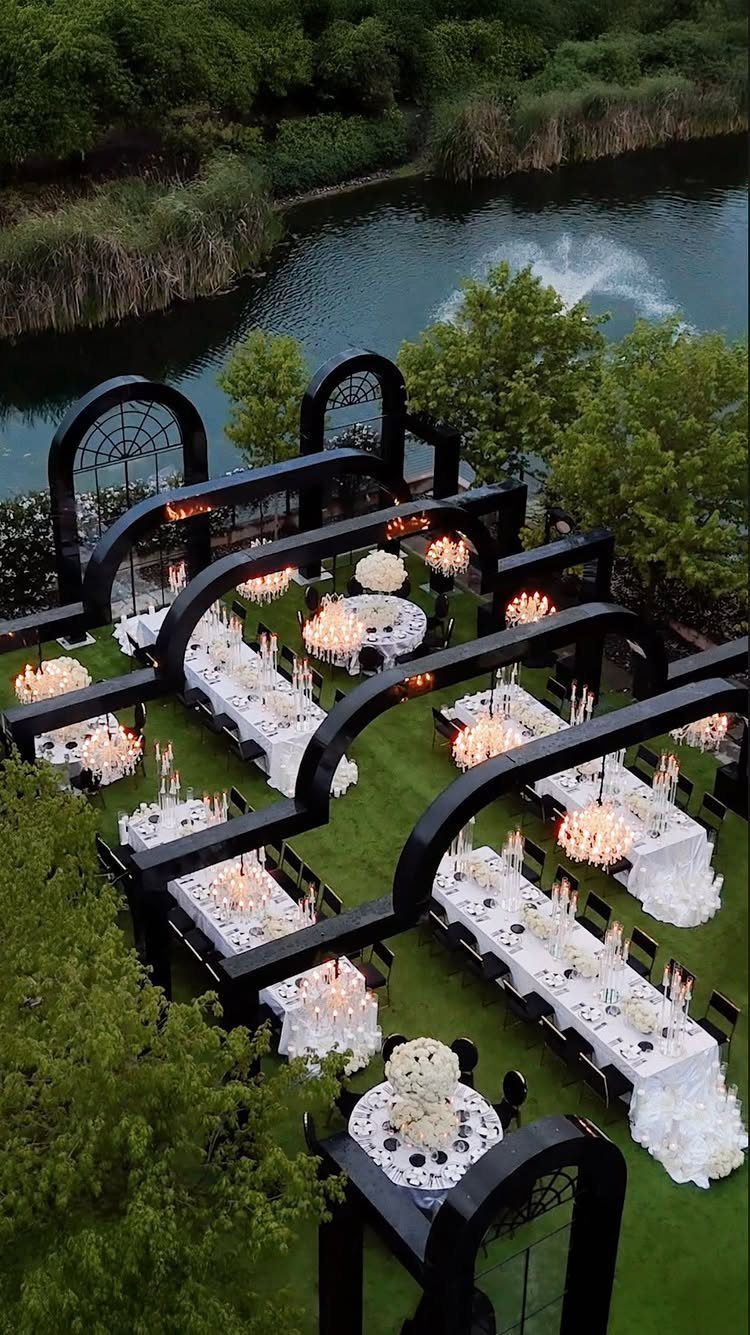
Black architectural arches and chandeliers over long white tables turn an open lawn into a dining room, and a pond with a fountain gives it a quiet backdrop. Black against white reads as formal without extra flowers.
I like this setup for couples who want drama without a building. Set the tables where guests can look out at the water, then hang chandeliers to light the space once the sun goes down.
4. Candlelit Evening Dinner Setup
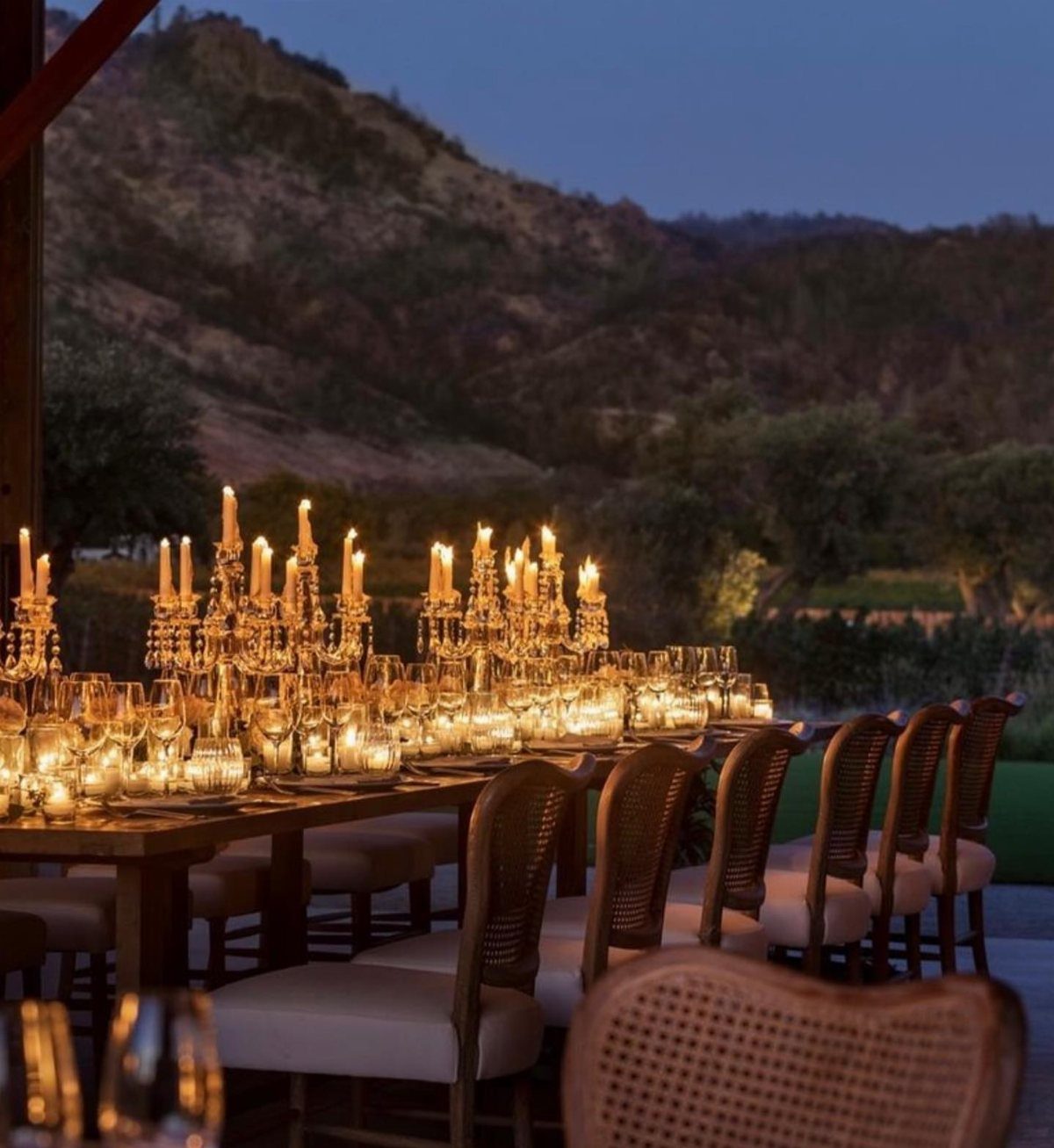
Dusk is the moment for a long wooden table crowded with candelabras and pillar candles, with the hills fading behind it. Mixing heights is what makes the glow look layered instead of lined up.
Cane chairs suit the wood tables and give the setup a relaxed feel. Candles are cheap decor, so I would spend the savings on the table itself, since it is the one thing every guest touches.
5. Curtained Pergola Reception
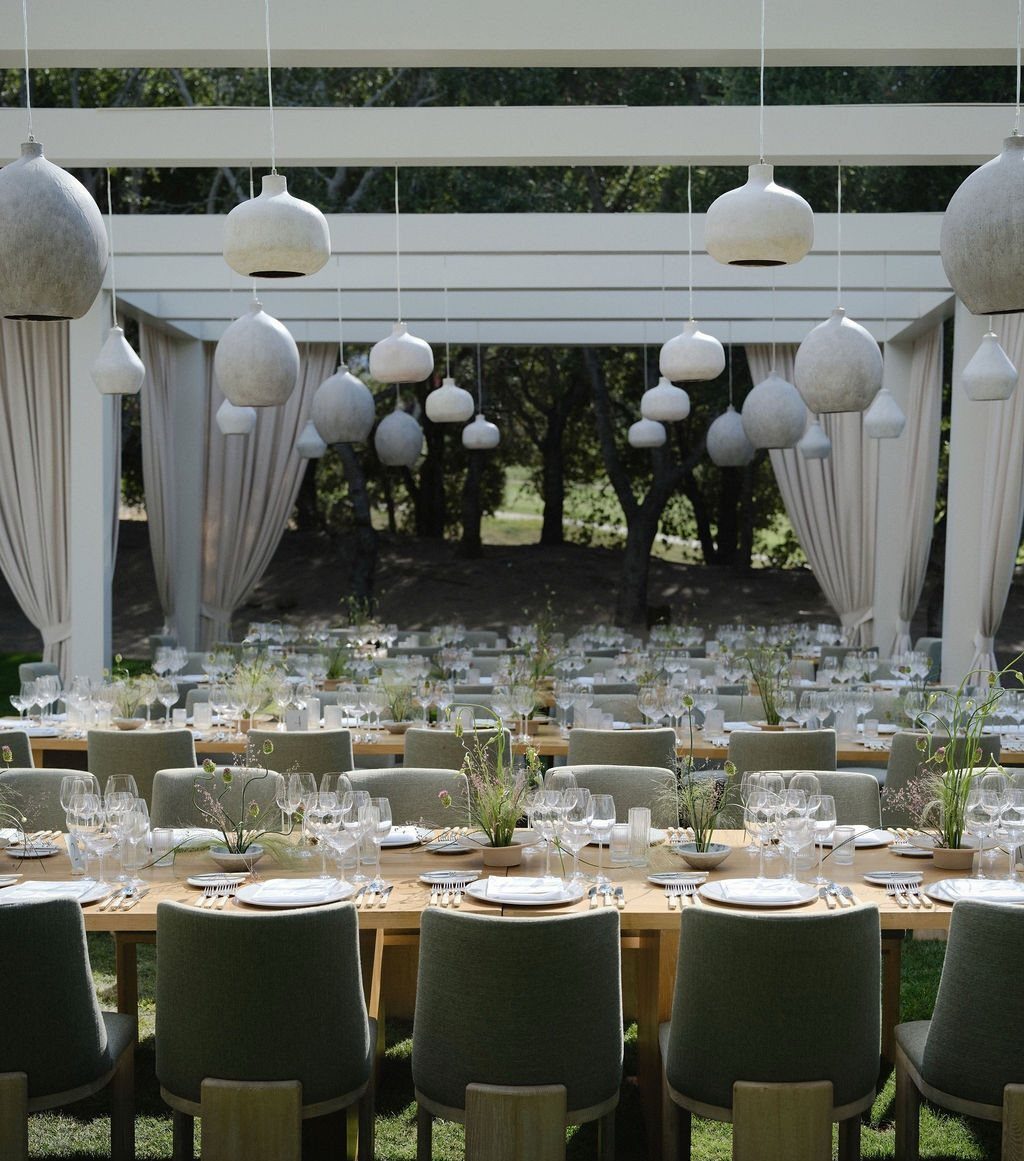
White fabric overhead softens a long table and lets globe lights hang at a flattering height. The pergola works as a ceiling, so you get the feel of a room under open sky and trees.
Green chairs against wood tables and white plates keep the palette simple. Choose one chair color and commit; with this much fabric and light already in play, extra accents just compete.
6. Clear-Top Tent Dining
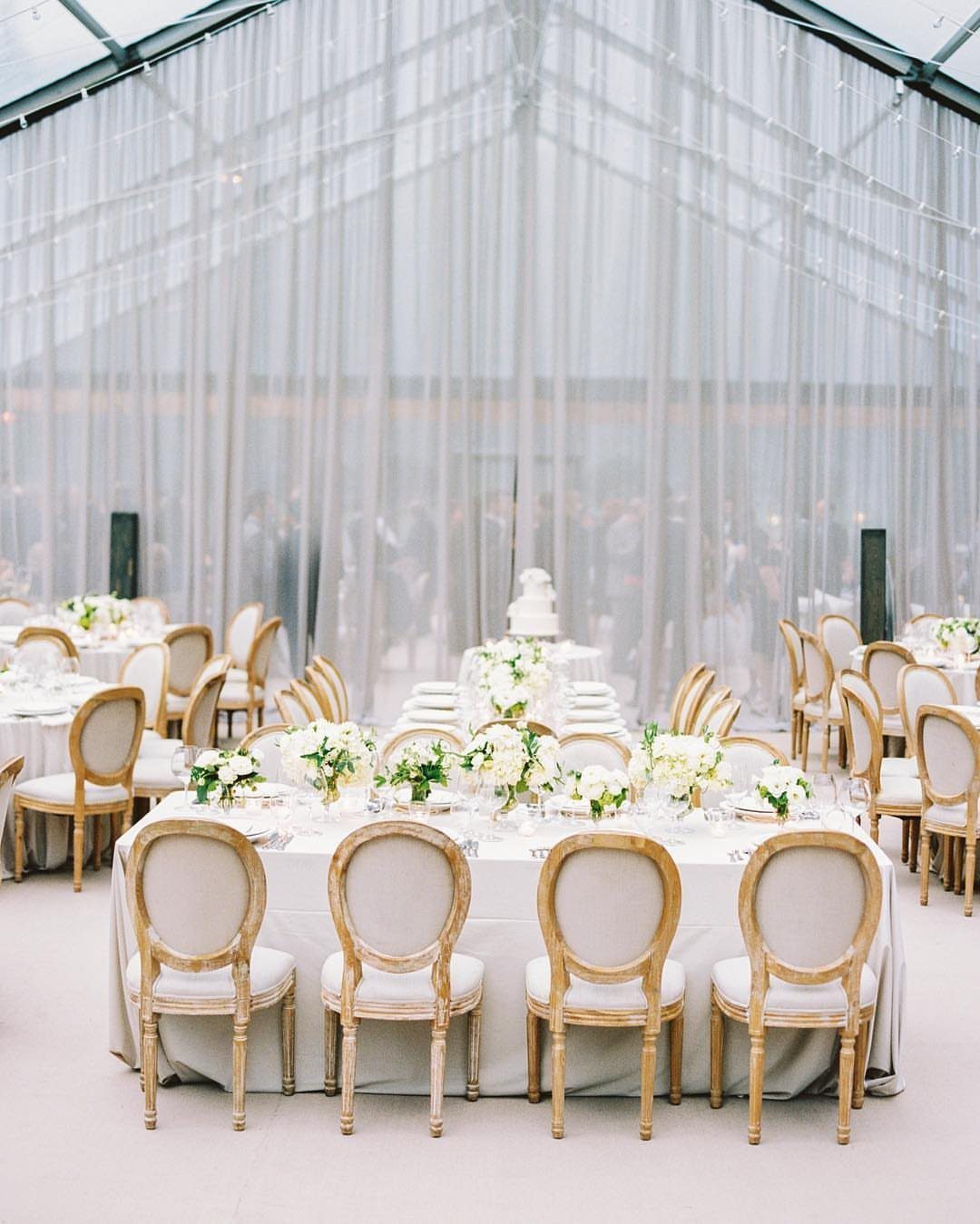
A clear-top tent lets guests see the sky while the sheer curtains soften the sides. Dinner here feels sheltered without feeling closed in.
White floral centerpieces on round tables suit that airiness, and cream chairs keep the whole room pale.
I would pick this over a solid tent for any evening meal, since you still get the view. Budget extra for the lighting, because a clear roof goes dark quickly after sunset.
7. Forest Lawn Ceremony Aisle
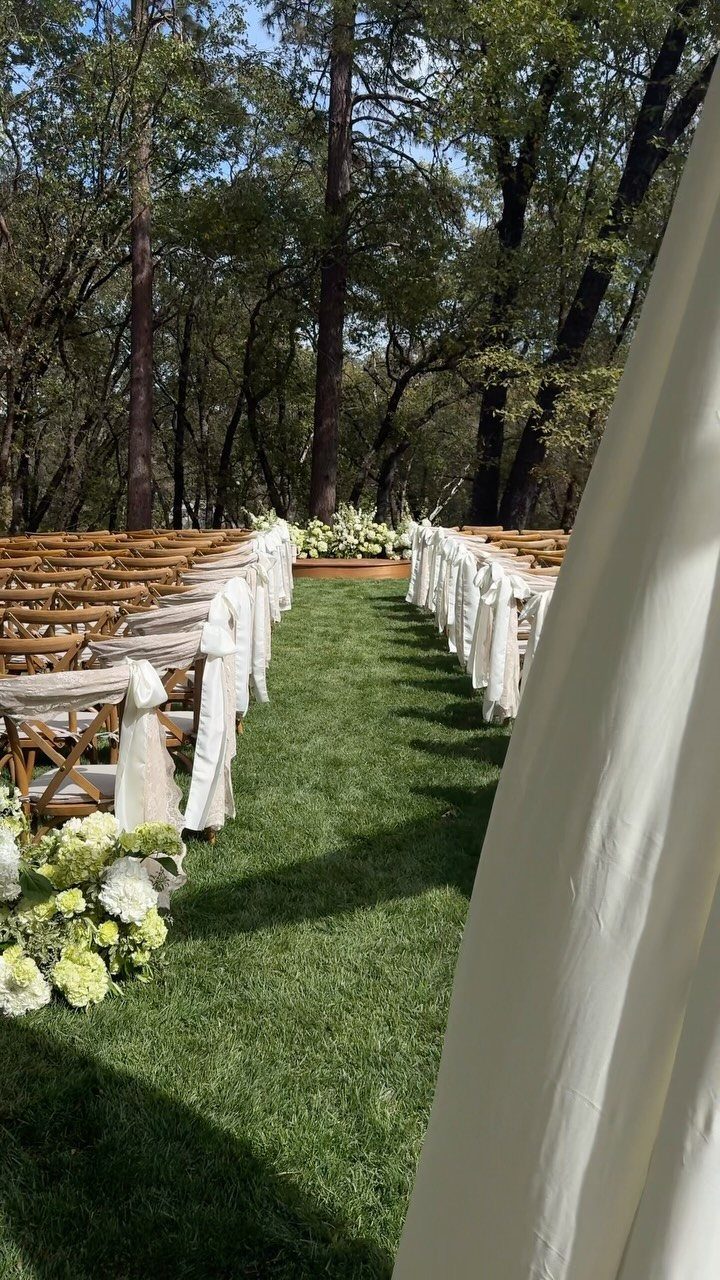
A wall of tall trees behind the last row does the work an arch would do elsewhere, so the aisle can stay plain grass. Wooden folding chairs with white sashes keep the whole scene in 2 quiet tones.
White flowers at the front and sides read well against dark trunks. Few arrangements will do here, since the trees are already the main event.
Tie the sashes the same way on every chair, since a crooked bow shows down a long row.
8. Ivy-Covered Stone Winery Courtyard
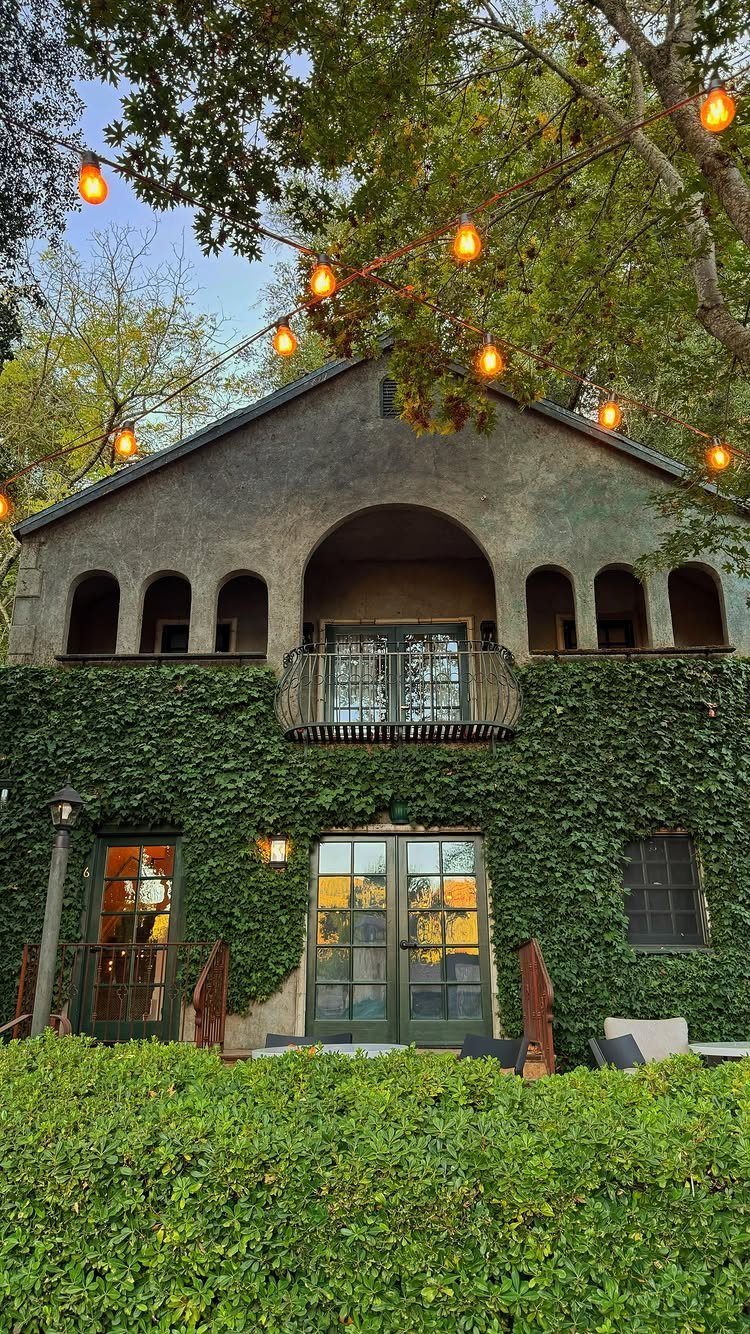
Ivy on stone gives a courtyard its age without any decor, and string lights overhead turn it into a room once twilight arrives. Schedule the ceremony or dinner so guests are seated as the lights come on.
Keep tables and florals simple, because the building already supplies the pattern and texture. Warm bulbs suit the green and stone better than cool white ones.
If the courtyard has a balcony, I would use it for a toast or a grand exit.
9. French Chateau Style Estate
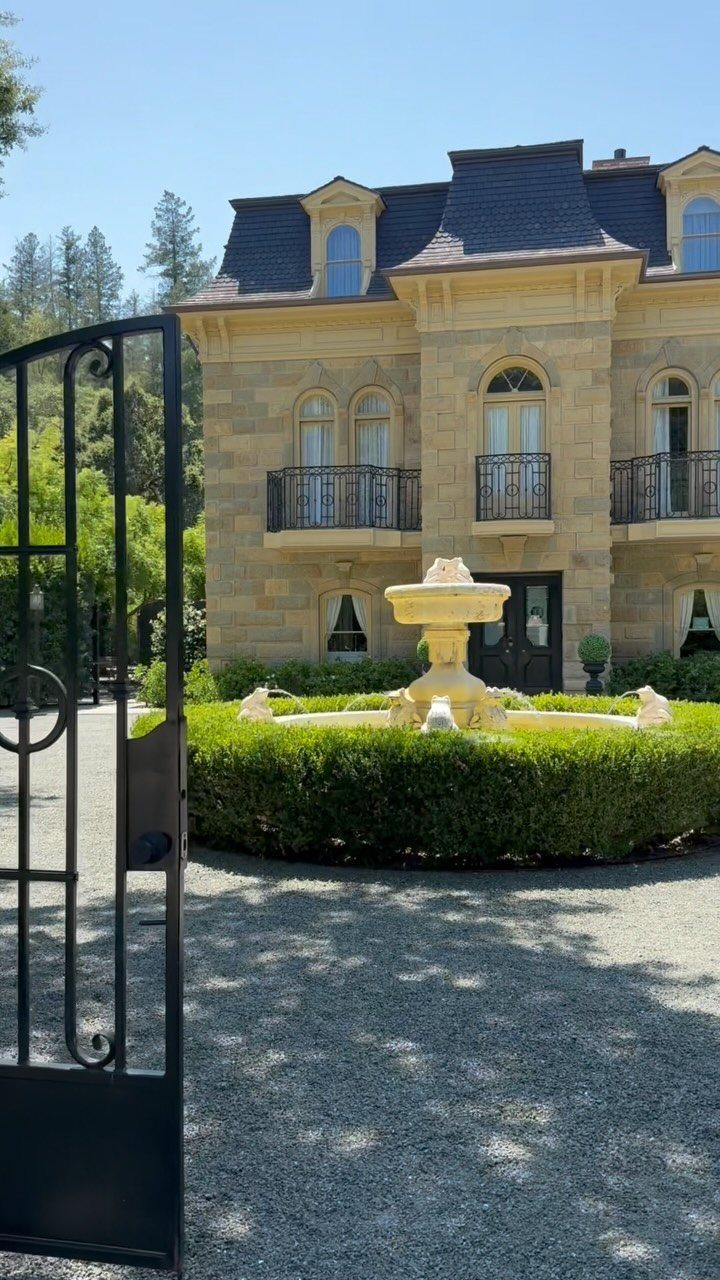
Iron gates, clipped hedges and a tiered fountain tell guests they have arrived somewhere formal before they reach the door. That arrival is worth designing around.
Use the open gates as the entrance to the ceremony, and photograph the couple by the fountain. I would skip heavy arches and keep flowers low and white, since the stone and hedges already carry the structure.
An estate like this usually costs more than a plain lawn, so ask what the rental includes before you fall for it.
10. Lawn Reception with Mountain Backdrop
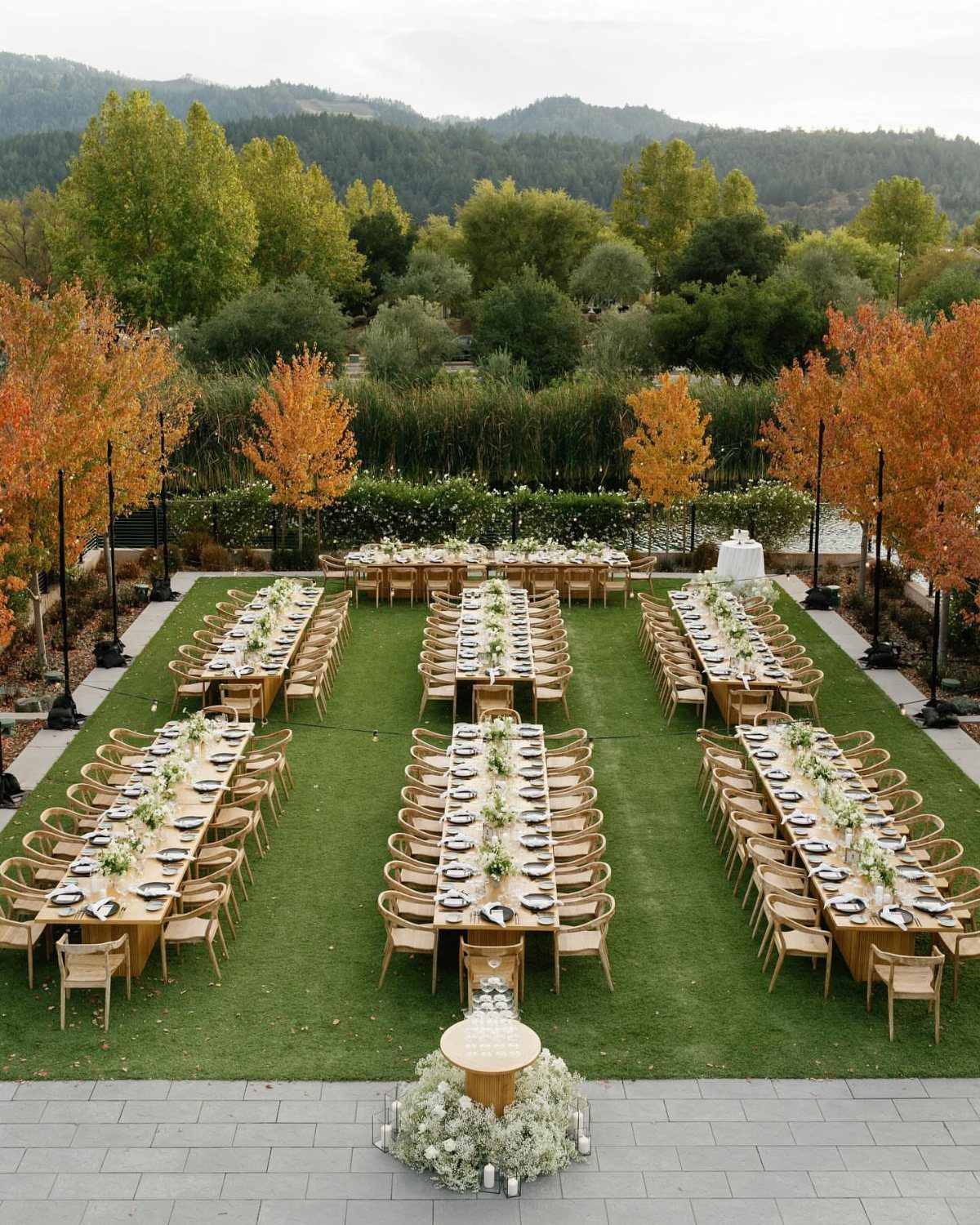
Long wooden tables on open grass, with autumn trees and mountains beyond, need very little added to them. The view works best as the centerpiece, so I would set the tables low enough to see over.
Run the tables in one long line or a few parallel rows so every seat faces the scenery. Warm fall colors in the trees mean neutral linens and simple greenery are plenty.
Pick wood over white-clothed tables here; it matches the landscape.
Wedding Planning Tips
Prime dates at estate wineries book 12–18 months out, so a Saturday between May and October needs a decision early.
If your calendar is flexible, late April through early June has the best weather, and September through early October brings harvest color.
Lodging is the part couples forget.
Napa’s valley floor is about 30 miles long, so guests scatter fast. I would reserve a hotel room block as soon as the date is set, and send the details with the save-the-date.
Transportation matters just as much when guests are tasting wine all weekend. Arrange shuttles between the hotel and venue so nobody drives after the reception.
Budget Considerations
Venue type sets the budget more than anything else.
Estate winery site fees run $25,000–$60,000 plus food-and-beverage minimums, while a restaurant buyout for under 60 guests carries minimums of $15,000–$35,000. Resorts keep catering at $250–$400+ per guest.
Read the pricing sheet for add-ons.
One wine-country property lists $500–750 per person, then adds a service fee of about 23% and 7.75% tax. With a guest list that size, those extras can push the real total far past what the venue fee suggested.
A private estate has the lowest venue fee, but you rent everything from generators to bathrooms. I would only take that route with an experienced planner, and I would price the full rental list before comparing it to a resort.
Photography Opportunities
Plan the portrait window around golden hour, when vineyard lawns glow gold. Build the timeline backward from sunset, and give the couple’s portraits a generous block so nobody is rushing the best light.
Season changes the backdrop.
Bud break arrives in late April, veraison runs July–August, and harvest brings deeper vineyard color. Spring hills are bright green, and summer grasses turn gold.
Indoor options photograph well too, including barrel rooms and candlelit wine caves.
Ask your photographer to scout them, since low light needs a plan. I would also book one outdoor spot and one indoor spot, so weather or a late schedule never leaves you without a backdrop.
Frequently Asked Questions
What are the best wedding venues in Napa Valley?
Merryvale Vineyards, Charles Krug Winery, and The Meritage Resort come up most often.
Napa County allows true winery weddings at only a small number of grandfathered properties, so many couples end up at resorts, private estates, or a nearby Sonoma property with real vines.
When is the best time to get married in Napa Valley?
Late April through early June and mid-September through October are the strongest windows.
Spring has the best weather, while fall brings harvest color in the vineyards. Fall is also the most competitive time to book, so decide early if you want a Saturday.
How far in advance should I book a Napa Valley wedding venue?
For a prime Saturday at an estate winery, I’d lock the date 12–18 months out.
Dates between May and October go first. If your calendar is flexible, off-peak days are easier to land.
Is $10,000 a reasonable wedding budget?
Not for a Napa Valley wedding.
Estate winery site fees alone start at $25,000, and even a restaurant buyout for under 60 guests carries minimums of $15,000–$35,000. A $10,000 budget points toward a different region or a much smaller, simpler celebration.