Second weddings here run from a cave reception to a backyard ceremony, and from a short dress to a bridal jumpsuit.
Who stands beside you shapes the pick: if children are part of the day, build the ceremony around them, and if it is just the two of you, spend on one strong setting like a destination or a cave reception and keep the rest quiet.
Since the traditional version is already behind you, every piece of it is optional, and you can keep what you loved and drop the rest.
1. Destination Wedding
Pick the place that already means something to the two of you, whether that’s the town where you met or a coastline you keep returning to.
A second wedding rarely needs a venue chosen for show; it needs one with a story you both recognize.
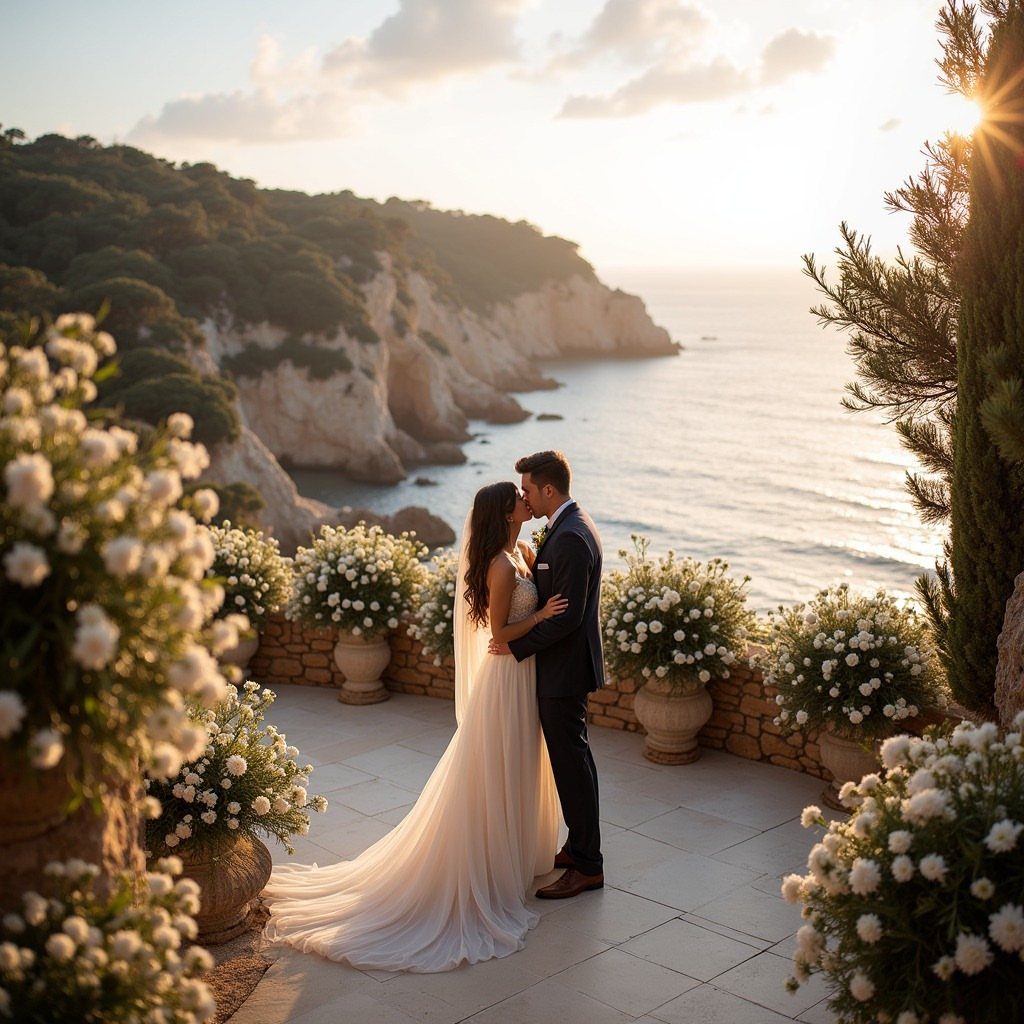
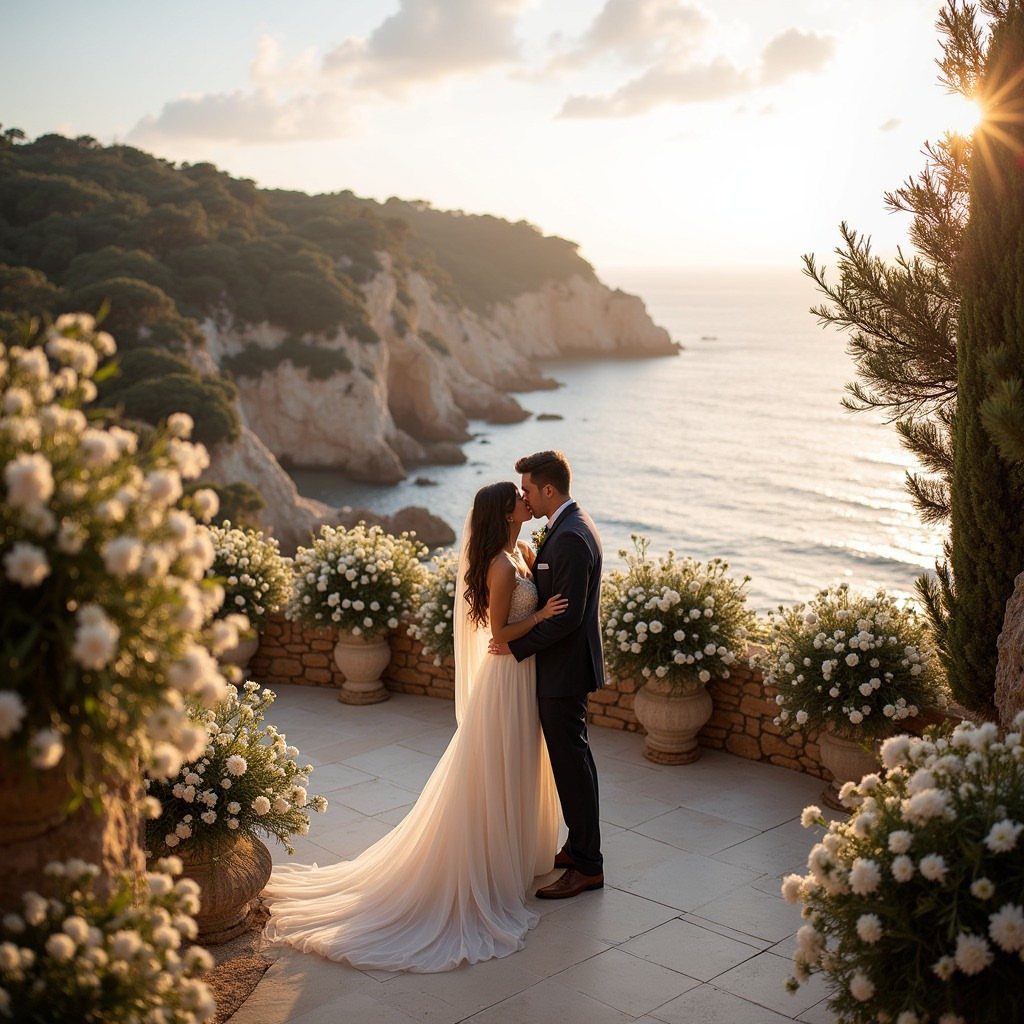
For a destination wedding, pick a terrace at sunset with white flowers: one strong view, and little else to buy. The view does the decorating, so more of the budget can go to getting your closest people there.
2. Backyard Wedding
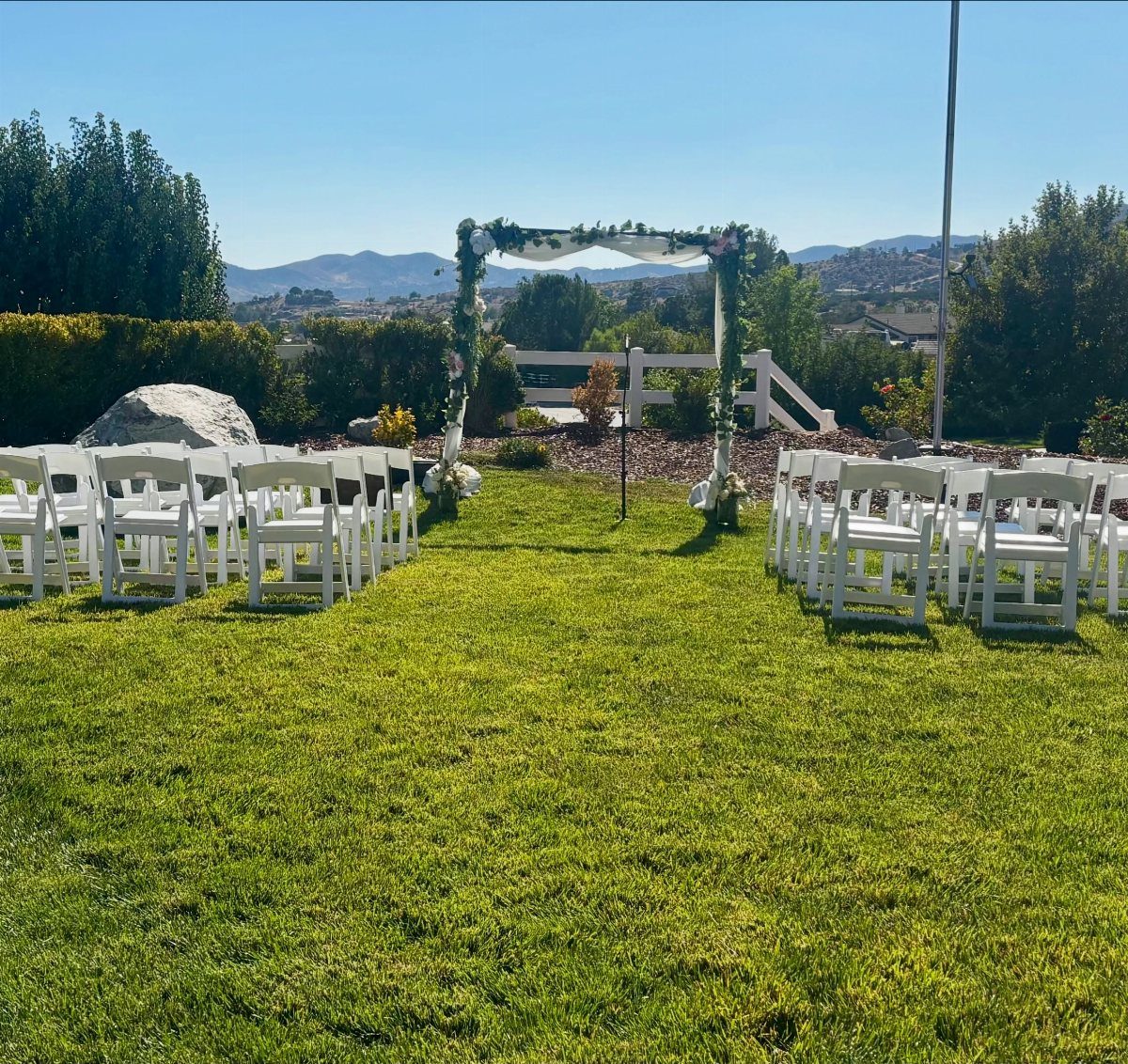
Put the money into the arch, since it frames every photo, and spend as little as you can on plain chairs. A view like the mountains here costs nothing, so face the seats toward it.
3. Hot Air Balloon Wedding
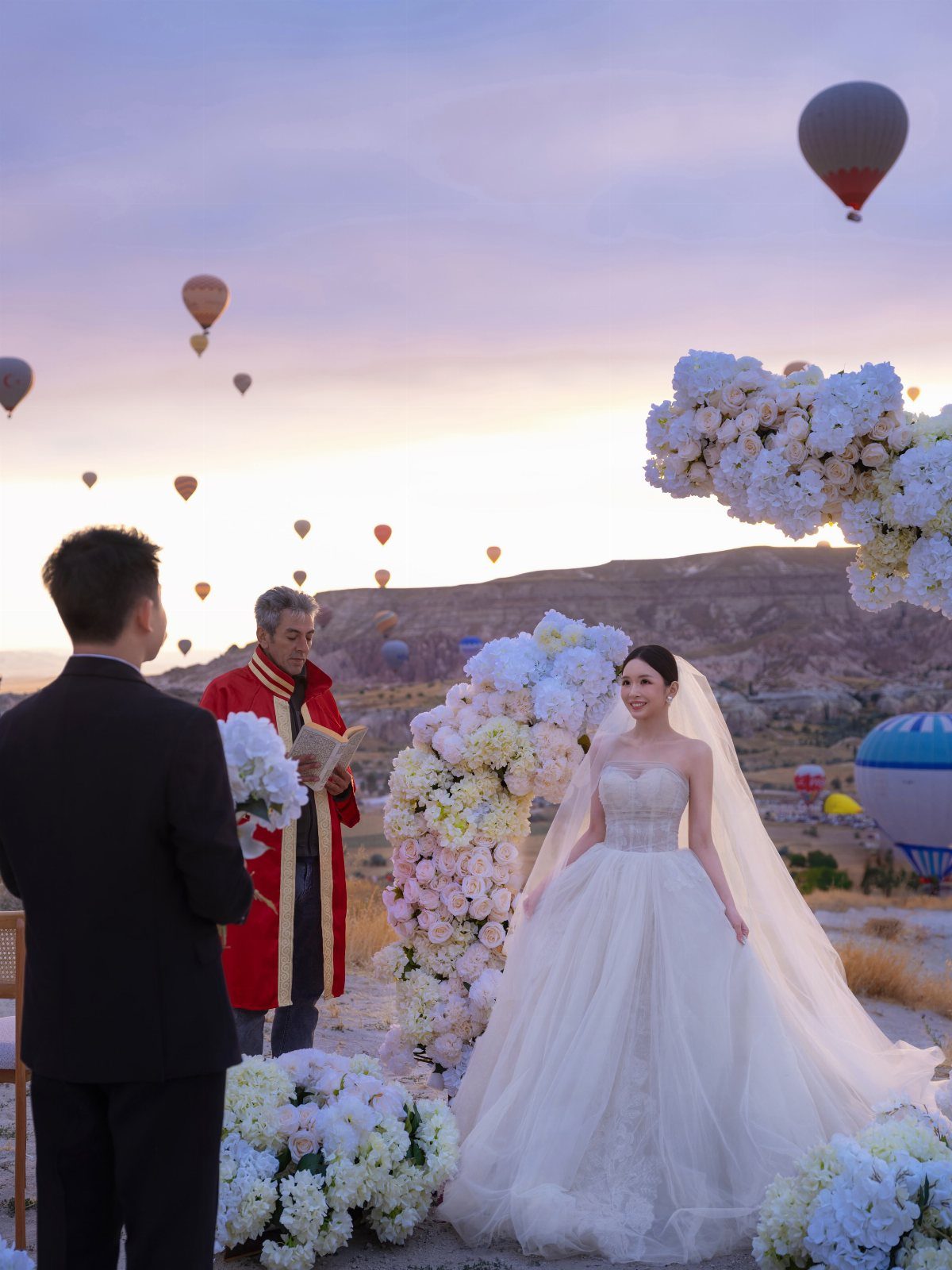
Hot air balloons turn the sky into the decor.
Book the ceremony where balloons already launch, and the backdrop is mostly handled before you spend on anything else; a few stems or a simple arch is all the florals need to do.
I would not compete with the sky by adding more.
Check early how a launch schedule fits your guest list, since this works best as an intimate day.
4. Meaningful Splurge Flowers
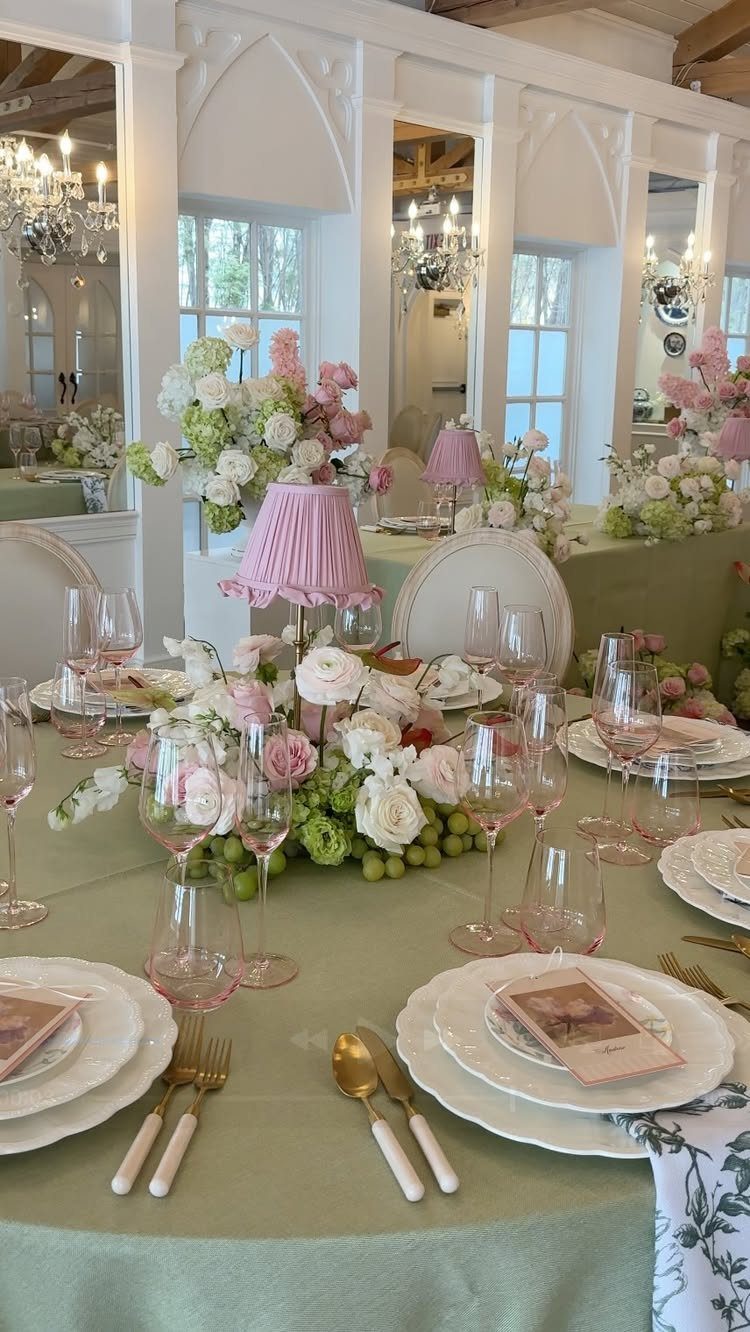
Choose one thing to splurge on, and make it the flowers.
Spend there and save elsewhere.
If a bloom has meaning for you, a flower from a first date or a family garden, put it in the centerpieces and let it be the reason for the spending.
5. Short Wedding Dress
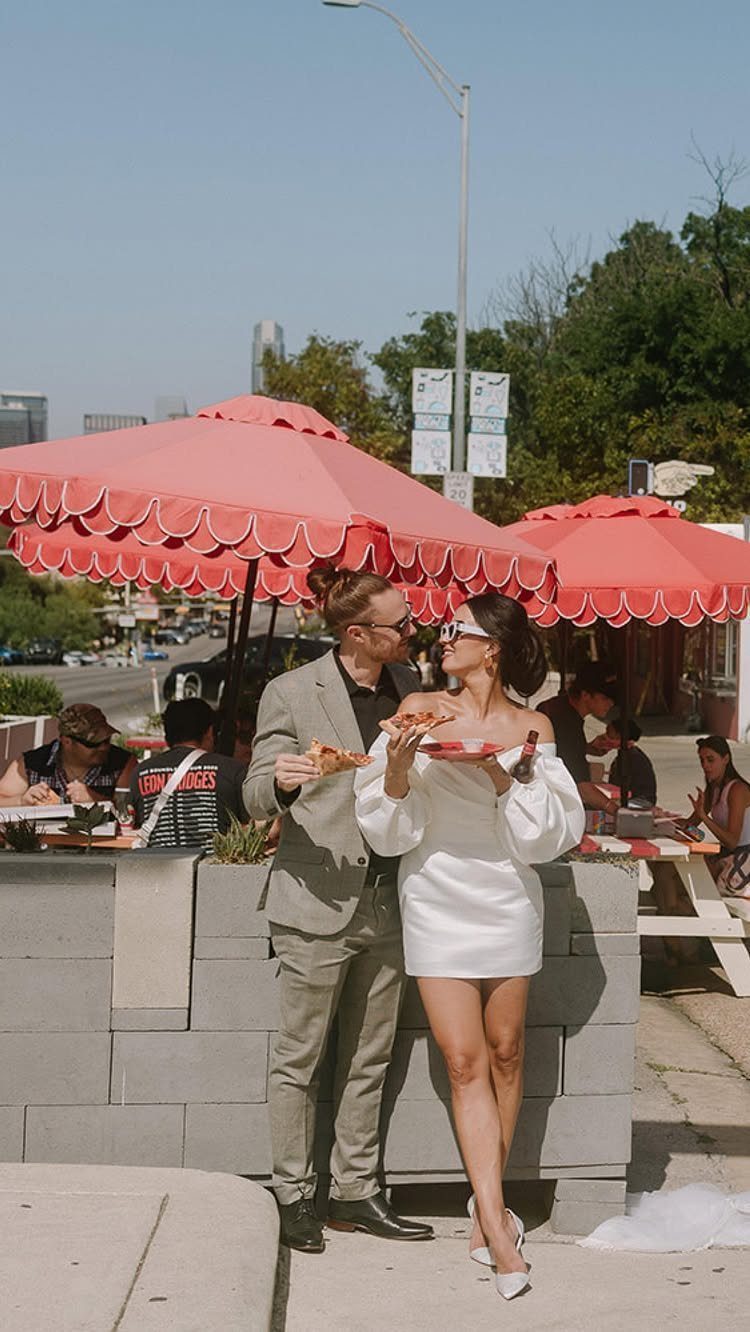
A short white dress suits a second wedding, and I like it best with something relaxed to eat. A casual reception and a short hem go together well, and a pizza-and-umbrellas kind of party is the proof.
You can move, sit at a picnic table and dance without managing a train. Pair it with a groom in a plain grey suit, and the outfits match the mood.
Shorter fabric usually means a smaller bill, which helps a modest budget.
6. Bridal Jumpsuit
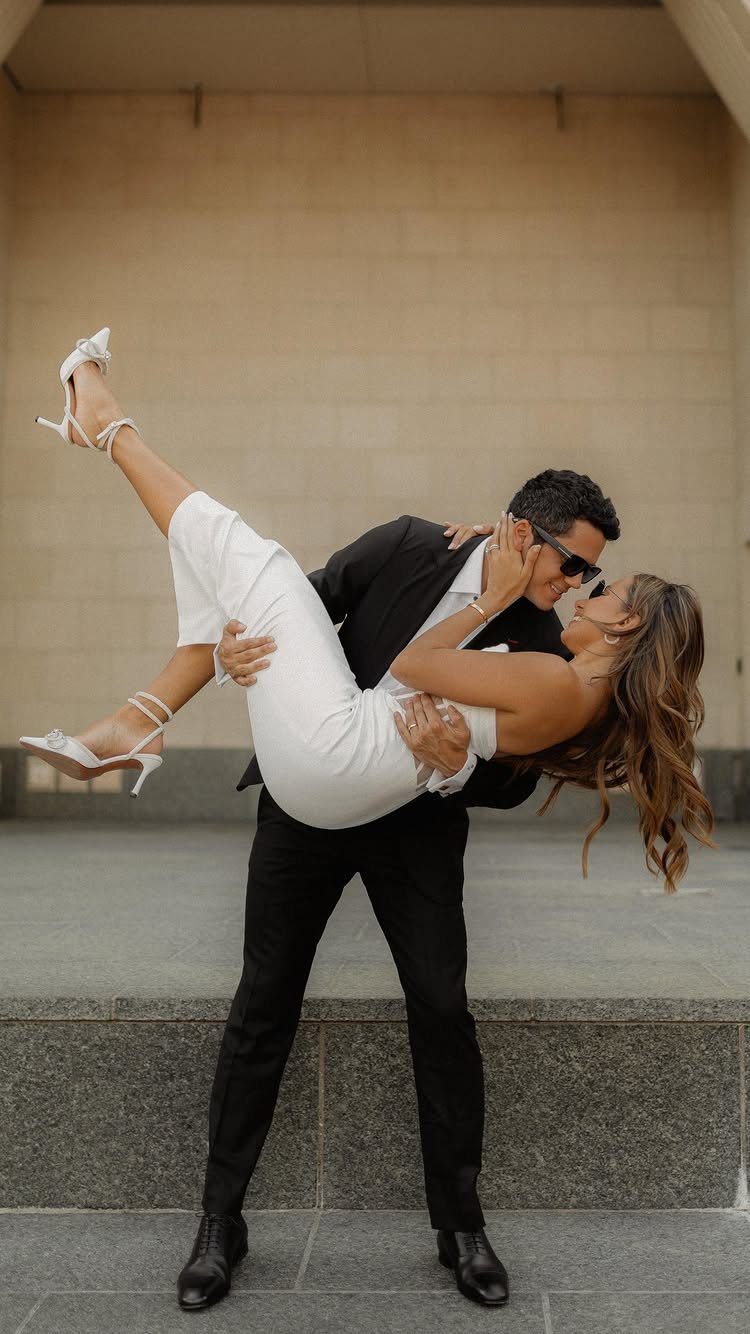
A white jumpsuit gives you a bridal look with no skirt to manage. It makes the dip, the walk down the aisle and the dance floor easy.
Sunglasses are a fun finishing touch, and I would keep them for the portraits. Choose a clean, tailored cut, then keep the jewelry and shoes simple so the outfit reads as deliberate.
Have it fitted before the wedding; a jumpsuit lives or dies on the length through the torso.
7. Floral Print Wedding Dress
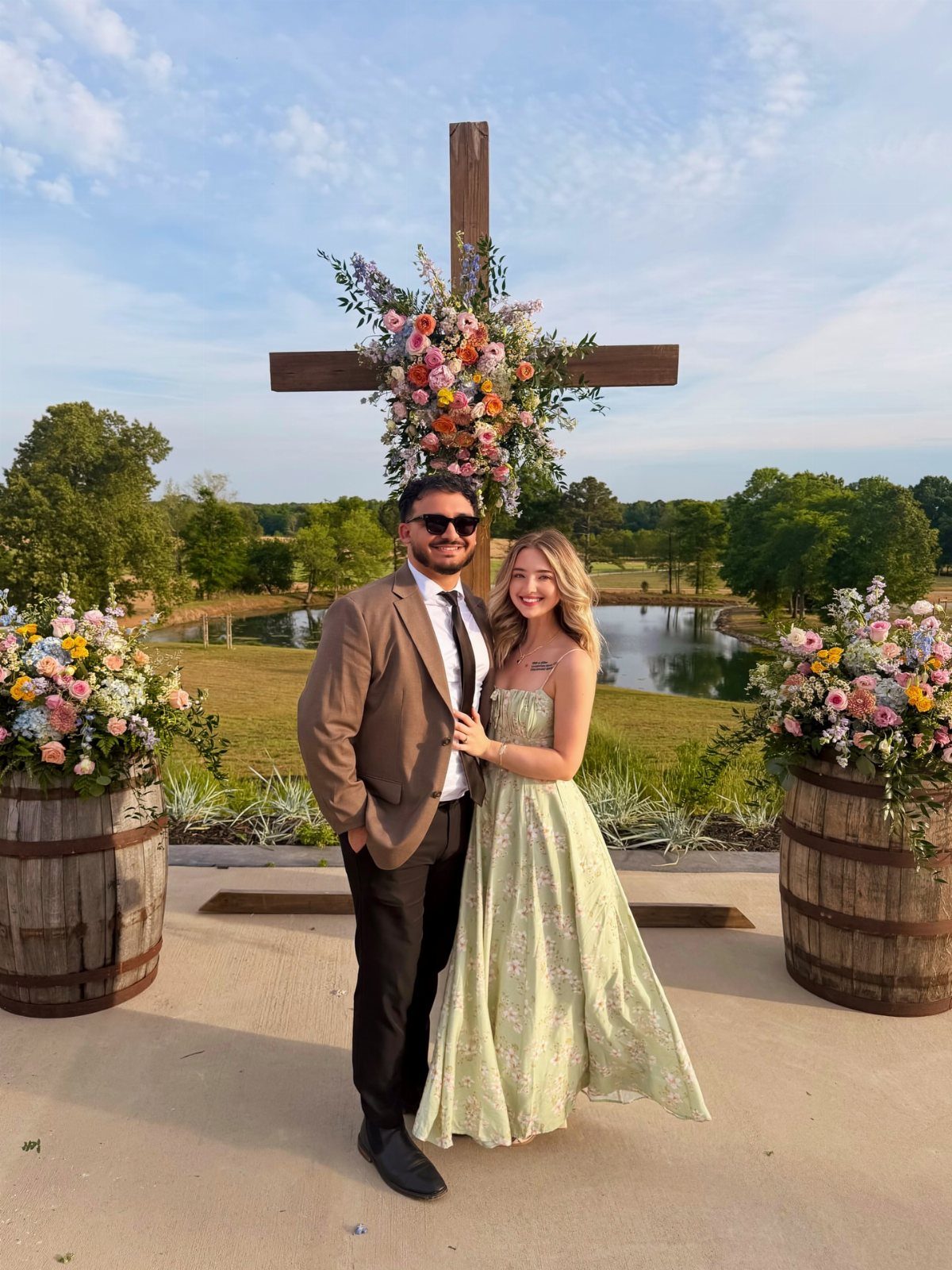
A light green gown with a delicate floral print lets the dress carry the flowers, so the bouquet and the ceremony decor can stay small. For a second wedding on a modest budget, that is a fair trade.
Strapless keeps the neckline clean, which leaves the print to do the talking. I would keep jewelry minimal and choose a groom’s suit in a quiet solid, like the brown here, so the pattern is the one bold choice.
8. Including Children in the Celebration
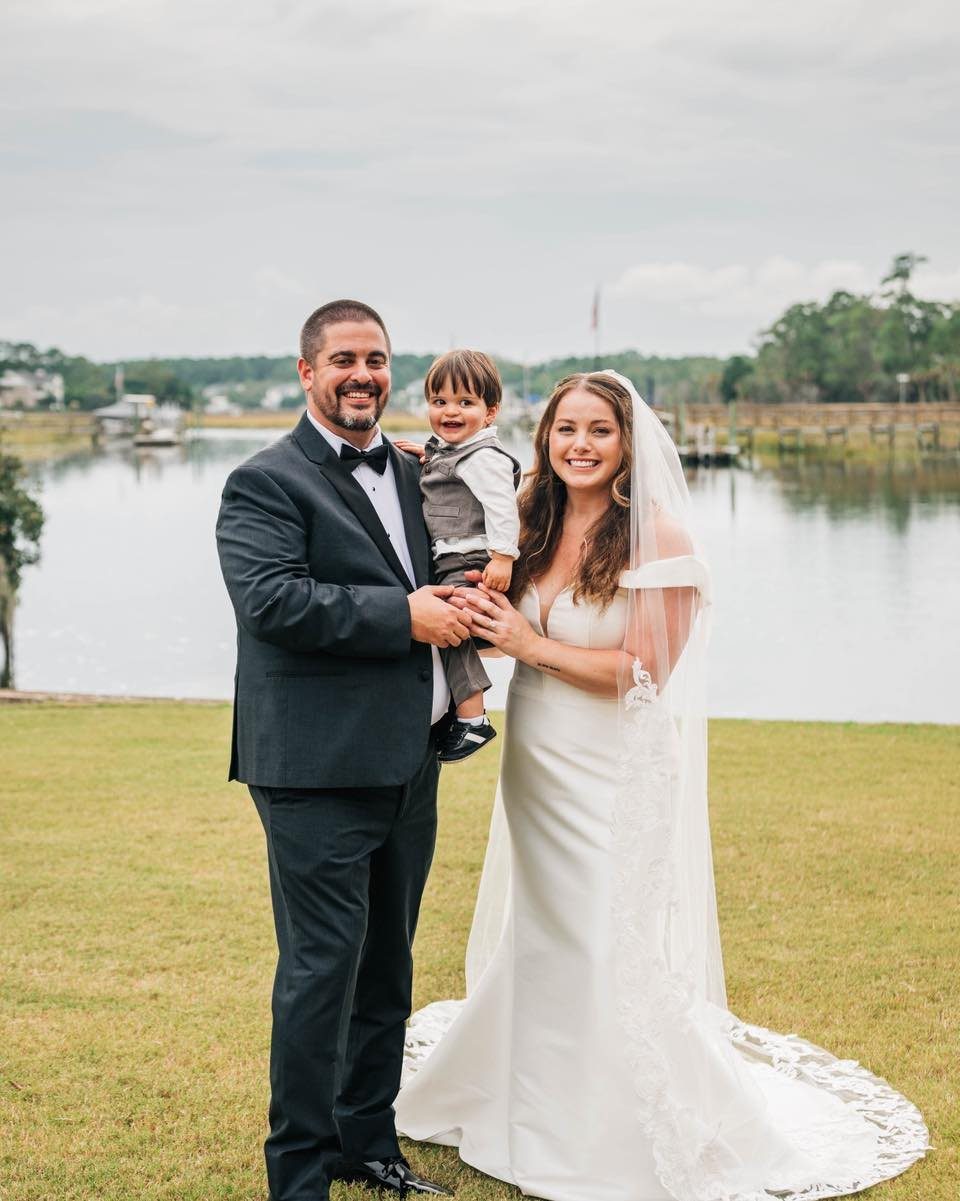
A child belongs in the ceremony itself, not just the photos. Give your son or daughter a real role and an outfit that matches the groom’s, like the little vest here.
Keep the job short and easy, such as standing beside you for the vows or walking in with you. Photograph the three of you together early, before anyone gets tired.
I would plan a quiet spot nearby for breaks, since a long day is a lot for a small kid.
9. Cave Reception Venue
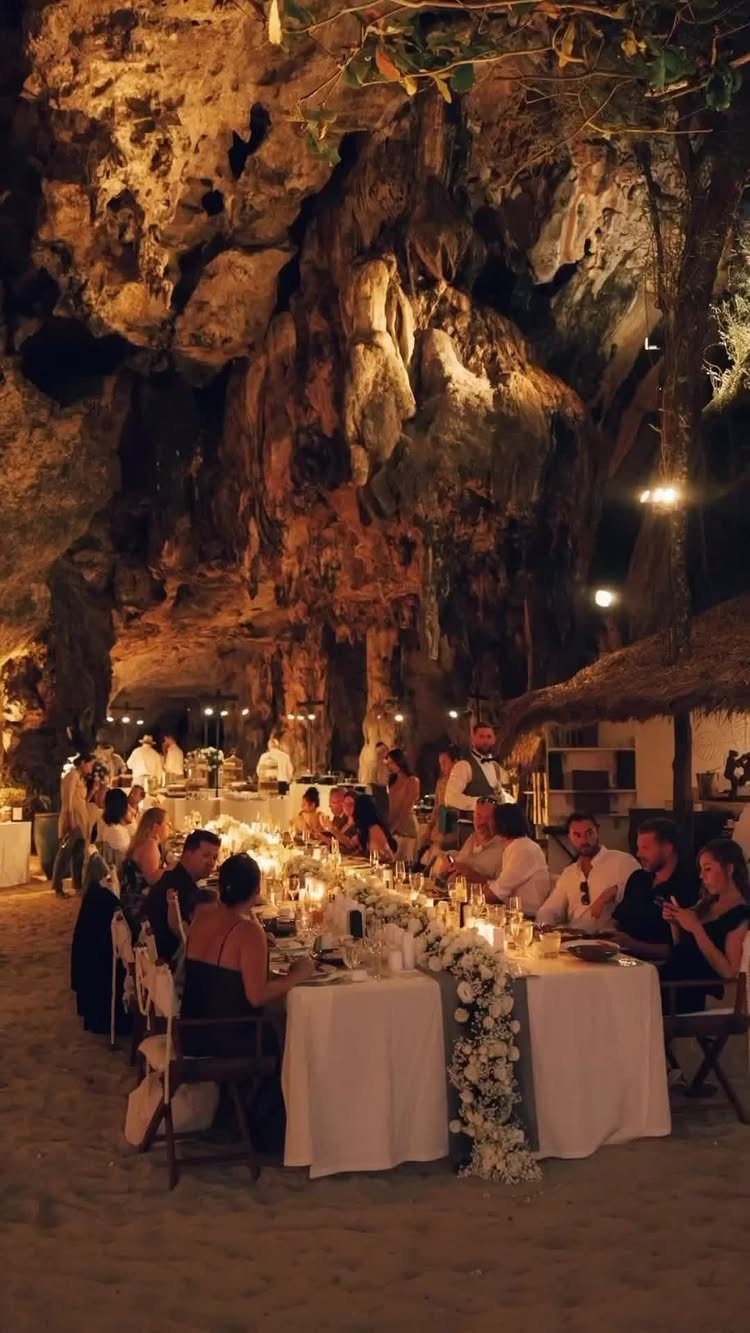
A cave makes the ceiling for you. Rock walls and warm lighting create an atmosphere most venues can’t, so the table needs only white linens and a low floral runner.
Keep the flowers white and the candles or lights warm, and skip anything tall that hides faces across the table. A single long table suits a small guest list, and it keeps conversation going the whole meal.
Ask the venue early about lighting, since you may need to bring your own.
10. Dried Flower Favor Vials
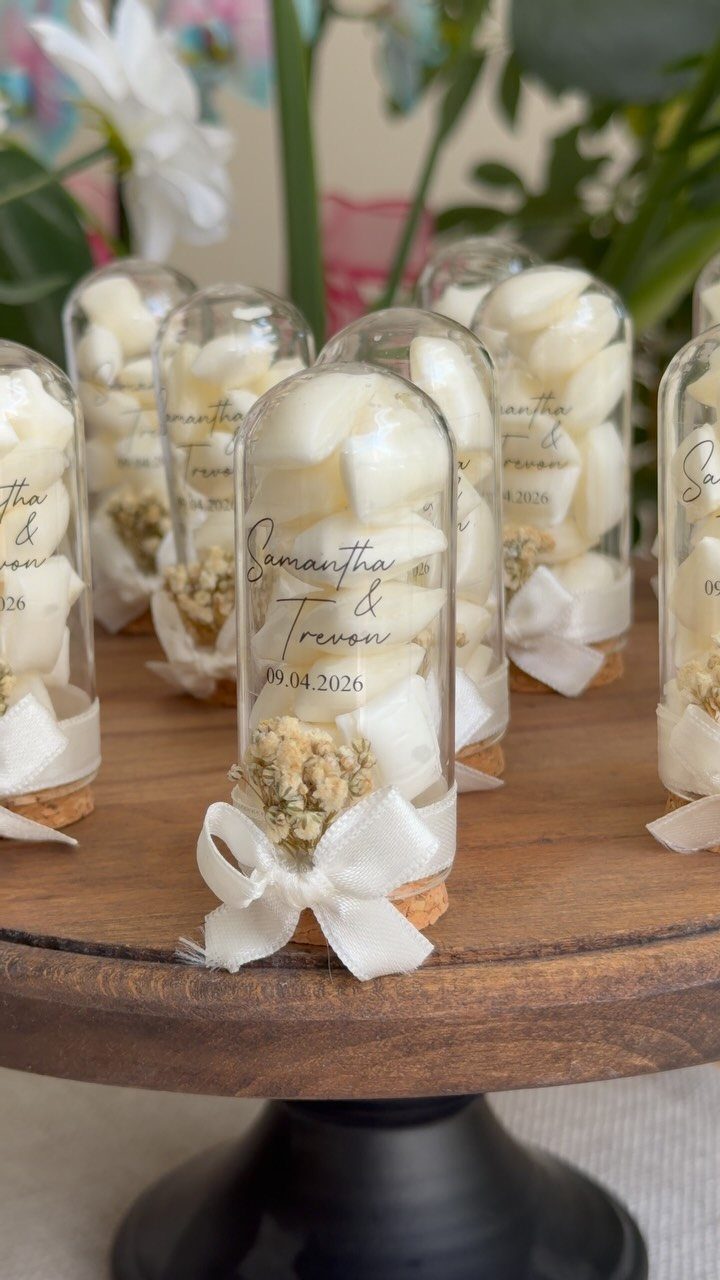
Small corked glass vials filled with white petals and dried flowers make a favor guests can keep on a shelf. Label each vial with your names and the wedding date so guests can keep it as a small memento.
Order the vials and corks in bulk, and dry the flowers well ahead so nothing molds inside the glass. A ribbon around the neck finishes it.
Set them on a wooden stand at the entrance, and the favor doubles as decor for almost no money.
Emotional Preparation
Second weddings tend to stir up more than the first one did, and it helps to expect that before the planning starts.
Old family opinions, an ex’s name coming up in conversation, and a parent who has strong views about a "do-over" can all land in the same week.
Decide ahead of time which conversations you will have and which you will close politely. If a planning meeting turns tense, pause it and pick it up the next day.
Support is part of the plan, not a sign of weakness. A close friend who listens, a sibling who will run interference, or a counselor can all take pressure off you and your partner.
Breaking from Tradition
You have already done the traditional version, so this time you get to choose what stays. Keep the parts that mean something to you, skip the rest, and invent new ones where nothing fits.
A daytime ceremony, a food truck reception or a big entertainment booking can all set this day apart from the last one. Going traditional is just as valid if that feels right.
Write down every custom you are tempted to include, then ask of each one whether you would miss it. If the answer is no, cut it.
Involving Family
Your wedding can welcome both families at once. Kids from earlier marriages can stand up with you as attendants, read a passage during the ceremony, or take your arm for the walk down the aisle.
Vows that name the kids, or a symbolic unity ritual that includes every child, tell them they are part of the new household and not just guests.
A family first look before the ceremony is a gentle way to bring them into the excitement.
Letting children suggest ideas or take on a small task in the planning can make them feel invested.
Still, the decision is yours: if a quiet day for just the two of you suits you better, that is a perfectly good choice.
Frequently Asked Questions
What do people do for second weddings?
Most keep it small and personal. Popular choices include a destination spot with one strong view, a backyard ceremony, a short white dress or jumpsuit, and a casual reception.
Children from earlier marriages often get a real role, such as standing beside you for the vows or reading a passage.
Since the formal, traditional wedding is already behind you, keep only the customs you would actually miss and let the rest go.
How can I include my kids in a second wedding?
Give them a real job in the ceremony, not just a spot in the photos. Kids can be attendants, do a reading, walk down the aisle beside you, or simply hold your arm on the way in.
A vow that names the children, or a ritual that brings each of them in, shows them they belong to the new household.
Give a child one short job and set aside a quiet corner for breaks, because a full wedding day wears out small kids fast.
What should I wear to a second wedding?
A short white dress or a white jumpsuit both work well.
With either one you can walk, sit and dance freely with no train to manage, and a shorter hem usually costs less too. Have a jumpsuit fitted before the wedding, because the torso length makes or breaks it.
How can I make a second wedding special on a modest budget?
Choose one thing to splurge on, and make it the flowers, ideally a bloom that means something to you.
Then let the setting do the decorating: a terrace with a view, a backyard facing mountains, or a cave with rock walls and warm lighting.
Small touches such as dried flower favor vials on a wooden stand add decor for almost no money.