Water itself is rarely the line item; the cost shows up in what it makes you add, which the budgeting and planning sections below break down: weather backups, venue choices and the permits and logistics that come with a waterfront site.
The list runs from a beach ceremony with chair legs pressed into the sand to a chartered yacht where the vessel sets your guest cap, and the right pick depends on your headcount and whether your budget covers one waterside booking or two.
If your budget covers only one, I’d spend it on a reception by the water and keep the ceremony simple, with the 9 p.m. music cutoff checked before you sign.
1. Beach Weddings
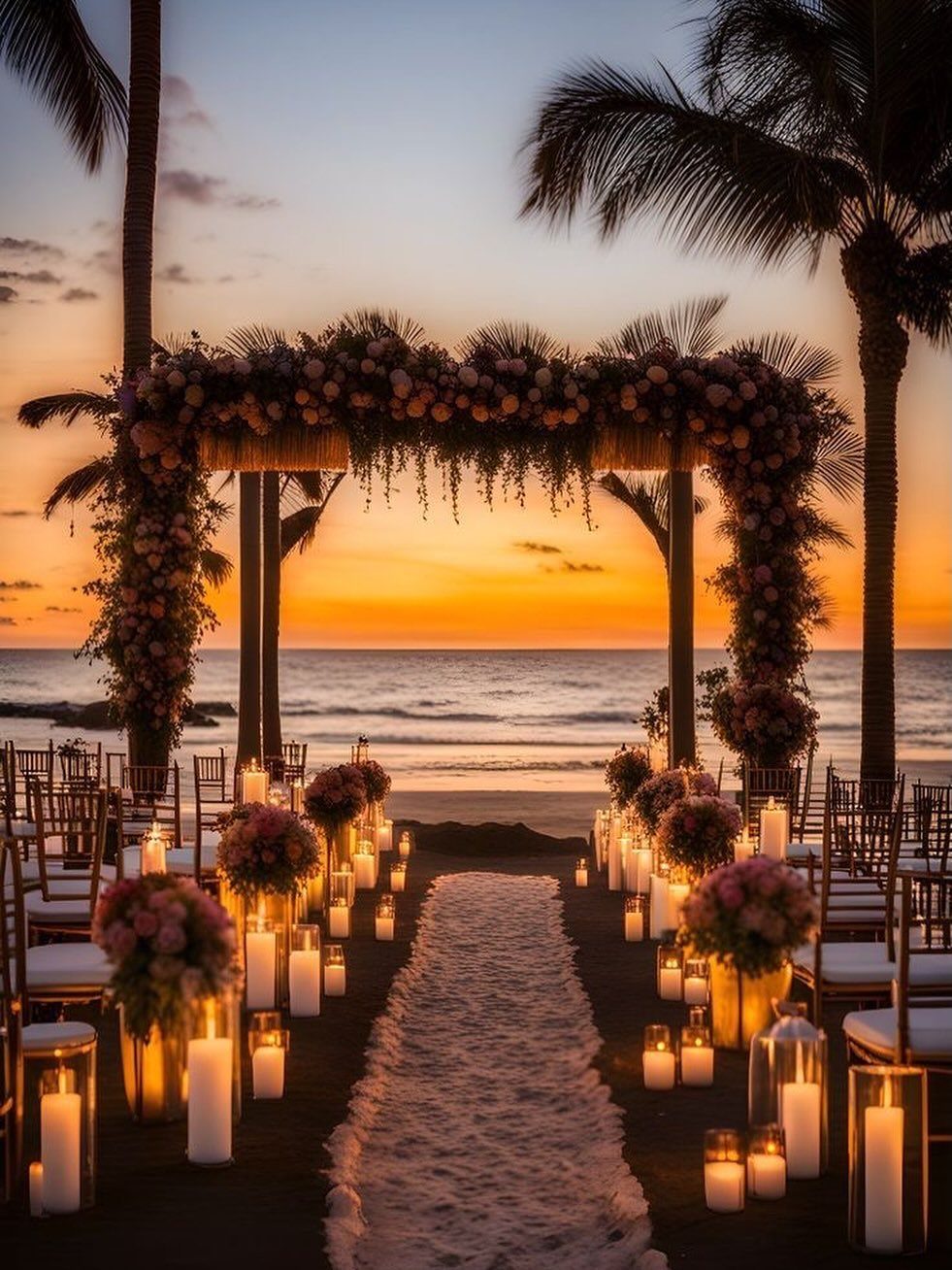
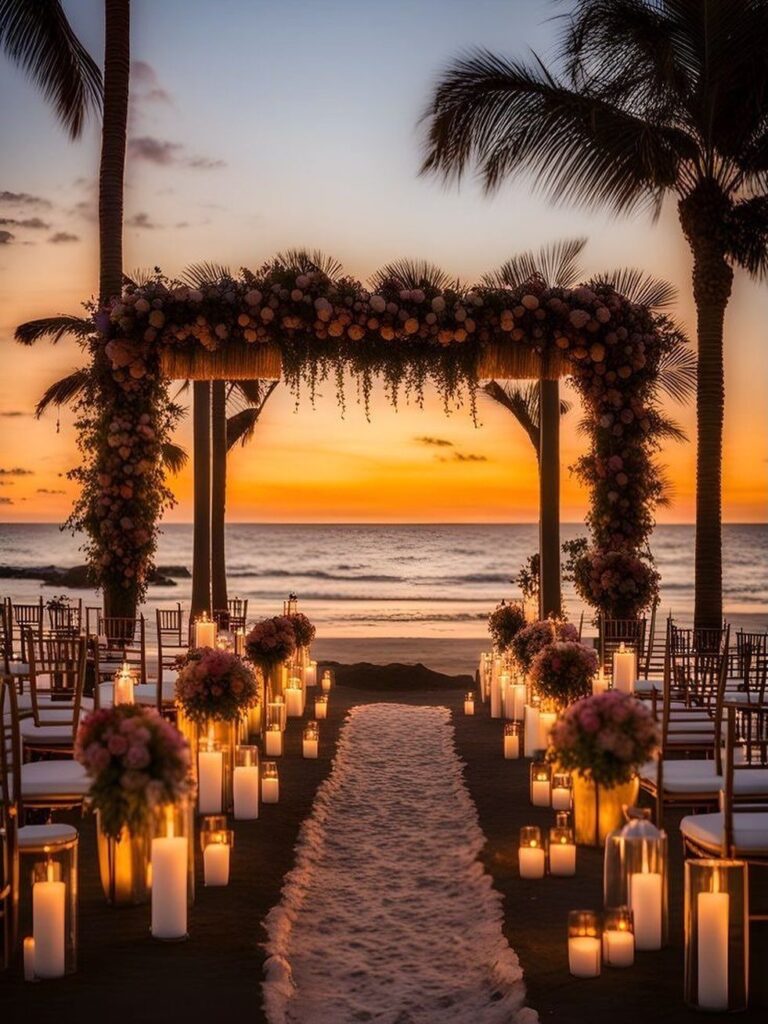
Sand swallows chair legs, so the gold chairs under that floral arch only stay level if the rows are pressed in firmly or set on boards. A white aisle runner helps guests walk and keeps the path clear.
Candles make sense on a beach at sunset, but wind decides everything. I would choose hurricane glass over open flame, and pick the ceremony time so the sun sits low behind the arch.
Tell guests to wear shoes they can slip off.
2. Yacht Weddings
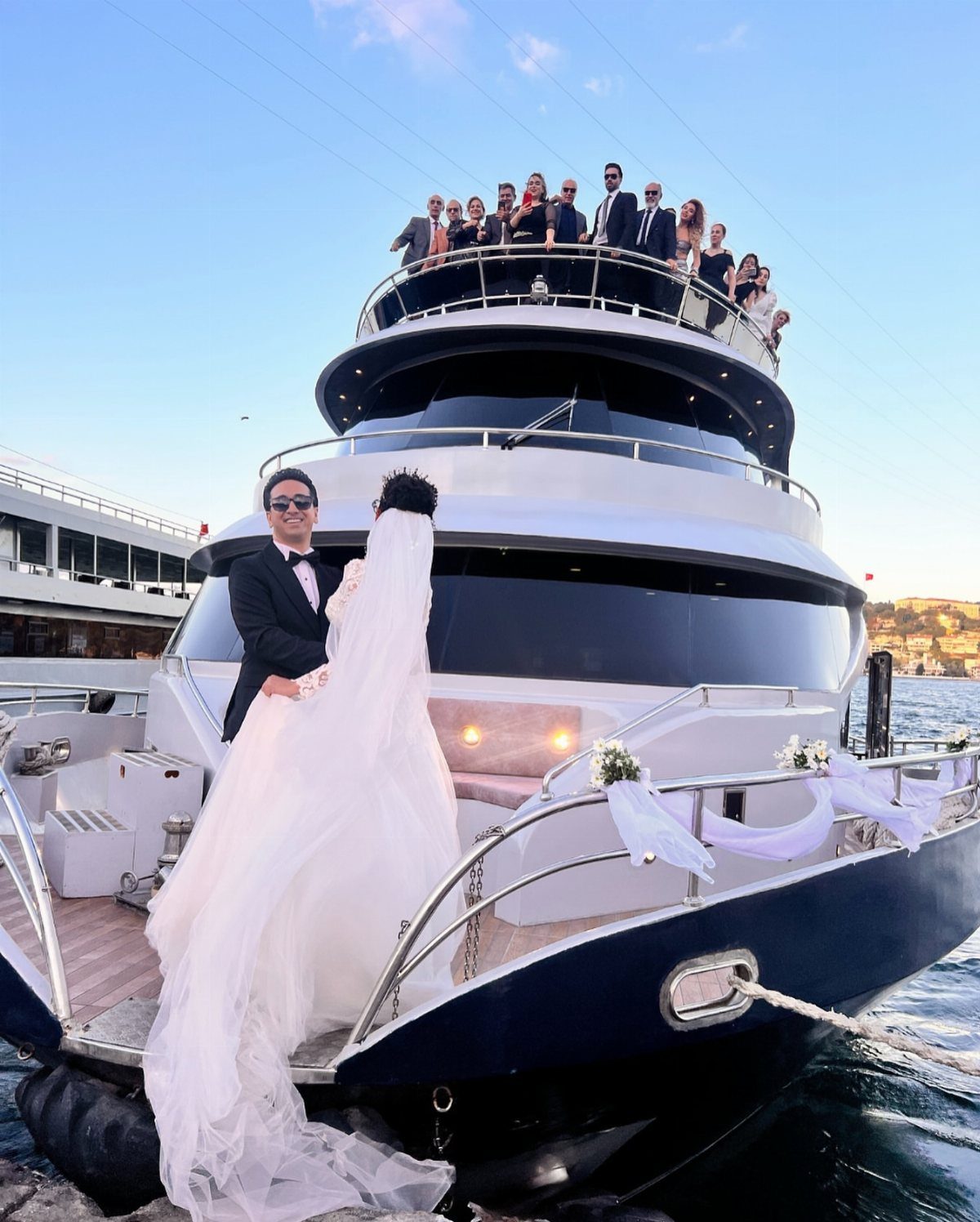
Guest count is the first number to settle on a yacht, because the vessel sets the cap, and a chartered boat can hold far fewer people than a hall. Ask for the maximum capacity in writing before anything else.
On a yacht with 2 decks, I’d put guests on the upper deck for the vows and keep the couple on the main deck below, so everyone gets a clear view without crowding the aisle.
I like that layout. Everyone sees the kiss, and nobody crowds the aisle.
A small, close guest list suits this idea best.
3. Reception by the Water
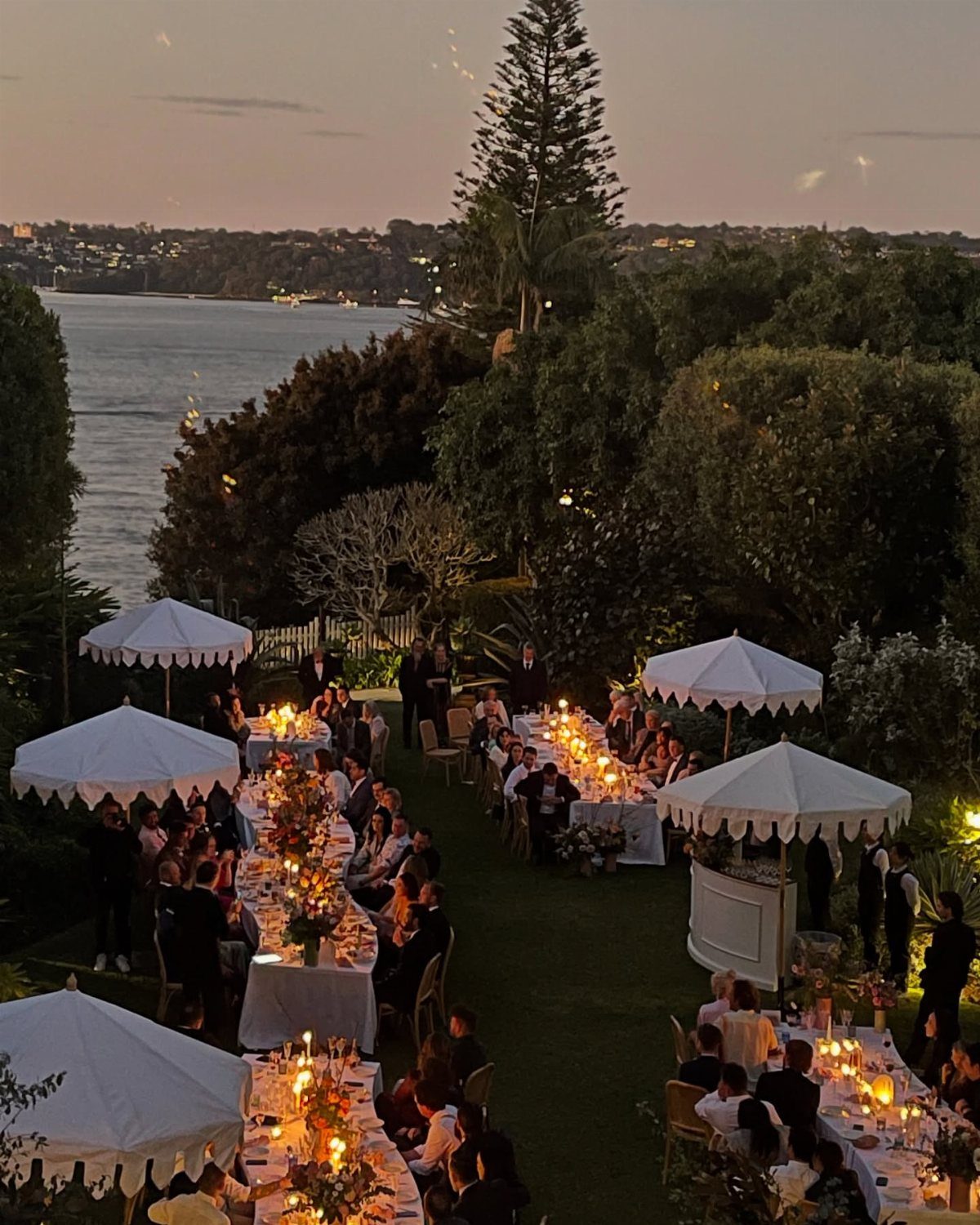
Long tables on a lawn work well for a water view, since every seat can face the bay and nobody gets stuck behind a centerpiece. Run them parallel to the shoreline.
White umbrellas earn their place twice: shade at dusk setup, cover if clouds roll in. Candles bring the evening glow, but add low lighting along the paths so older guests can find their way back to the tables.
I would book a venue by the water for the reception, not the ceremony, if the budget only stretches to one.
4. Locally Sourced Seafood
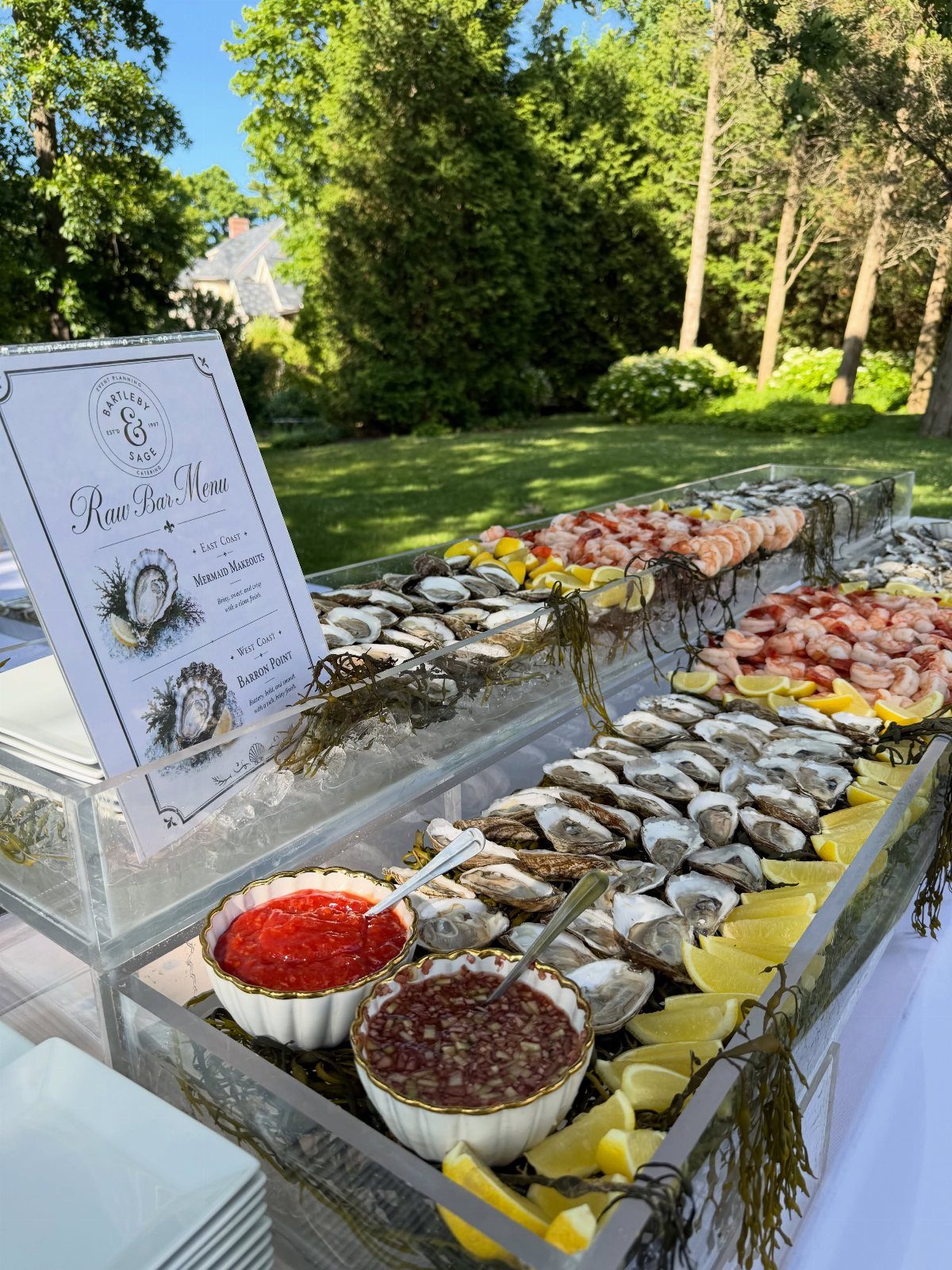
A raw bar is the most direct way to put a local catch on the menu. Listing oysters by origin, as an "East Coast" and "West Coast" split does, gives guests something to compare and talk about.
Clear acrylic tiers are what I’d choose for a raw bar display, since they stay out of the way and let the shellfish supply all the color.
Set out sauces within reach, and have a shucker on hand if you serve oysters on the half shell.
Seafood costs more than most proteins, so price it per guest early.
5. Weather Considerations

A sign telling them to shade themselves so they don’t miss a moment sets the tone.
Order the same count of parasols as you have guests, since they double as rain cover. I would also line up a tent or indoor backup before booking anything outdoors.
Decide on the rain plan by the time you sign the contract, not the week before.
6. Waterfront Weddings
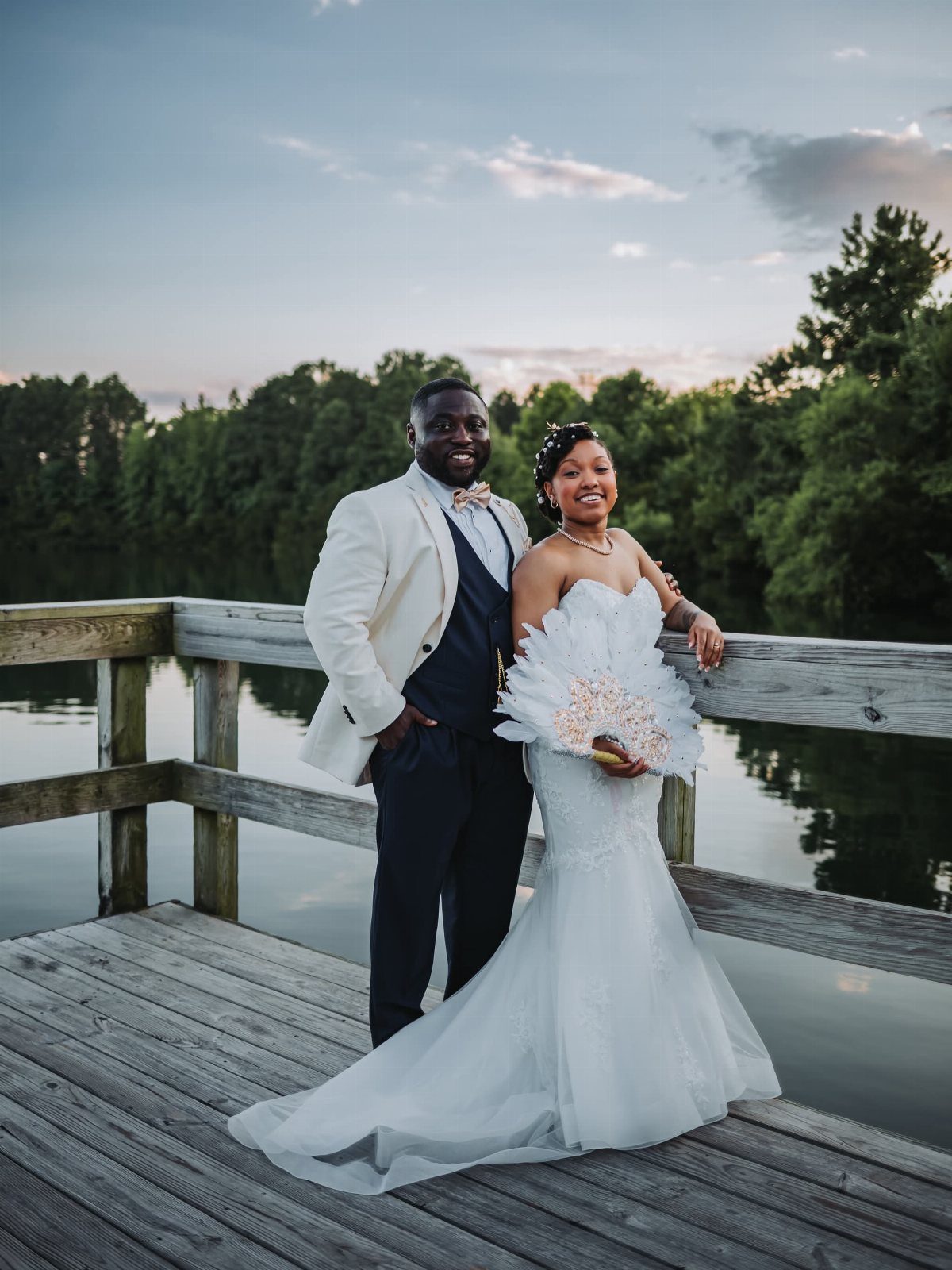
Virginia gives couples two very different waterfronts: the historic Potomac River and the quiet shores of the Chesapeake Bay. Pick based on mood, since one leans formal and the other relaxed.
A wooden dock like this one makes a natural photo spot, and it costs nothing extra. Ask the venue how many people the pier can hold at once, and keep portraits to the couple and a few family members.
Visit at the hour you plan to marry, so you see where the light falls.
7. Wedding Spot
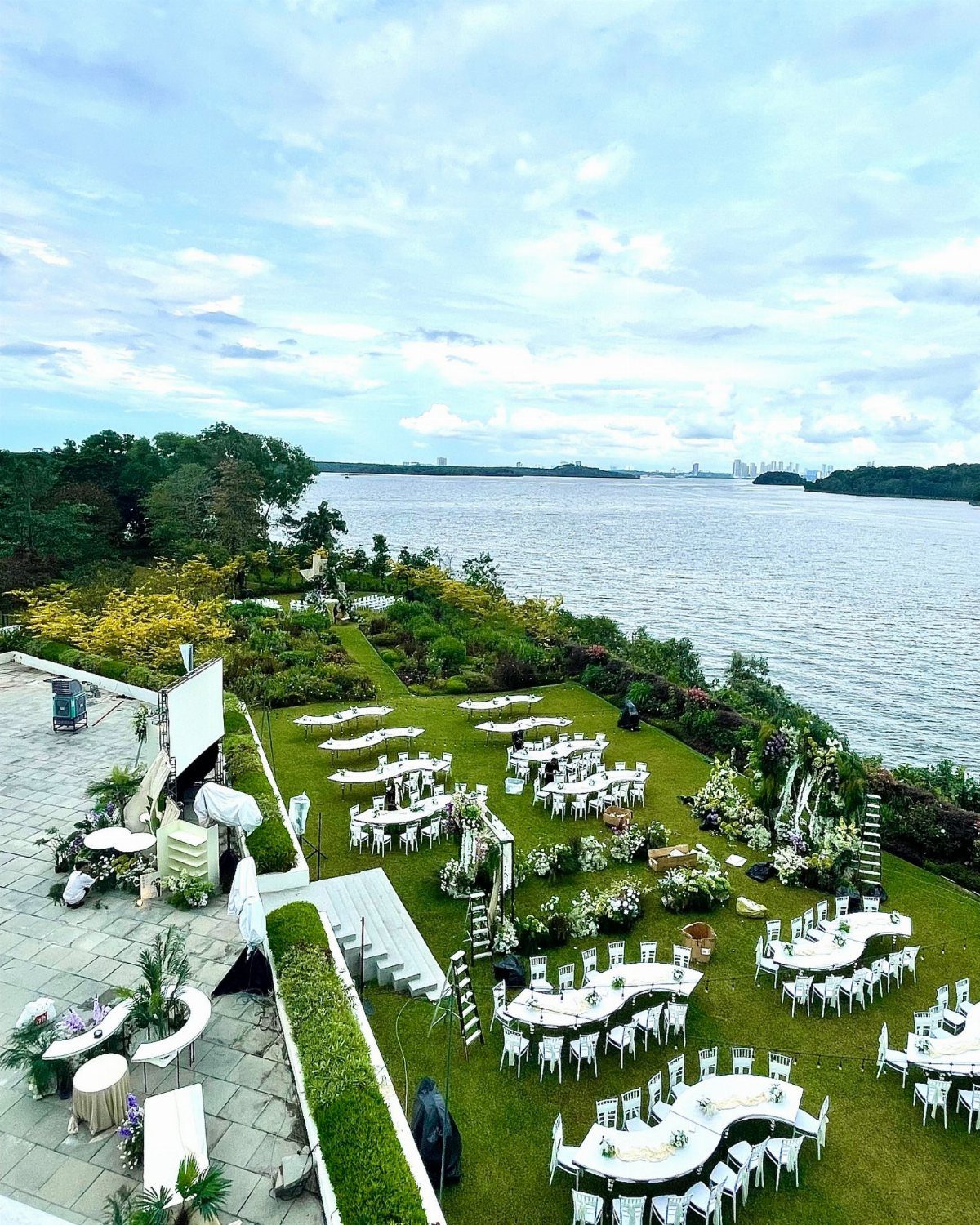
A riverside lawn gives you the view for free, so the real decisions are about the ground and the sky.
Walk the lawn before you sign and look for soft or sloping spots, since chair legs and table legs need level footing.
Before you book any waterside spot, ask what the backup is if the sky turns: a tent on site, an indoor room, or a firm rain date, plus who makes the call and by what hour.
Pick this if the water is the main decoration and you’d rather spend on food than on styling.
8. Garden Ceremonies
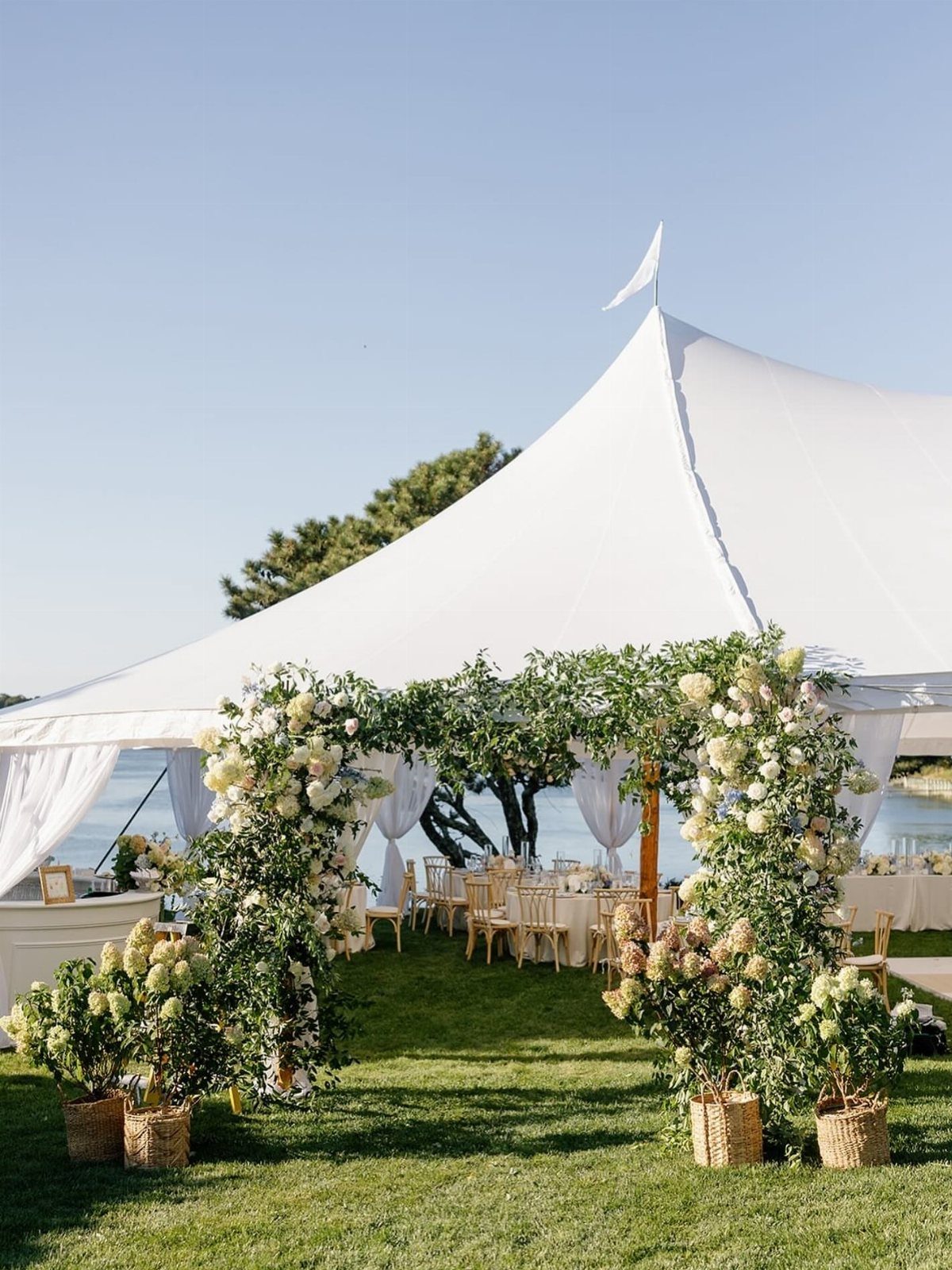
Garden ceremonies by the water work best when the flowers do the framing: a floral archway at the tent entrance tells guests where to go and gives you a photo spot before anyone sits down.
A tent on a lawn also solves the shade and rain question, though I’d still confirm how it’s anchored and who sets it up.
Price the tent rental early, since it can take a real bite out of a modest budget.
Face the opening toward the water so guests see it the moment they step through.
Planning Tips for Waterfront Weddings
Visit the venue at the hour of your ceremony, then walk both the ceremony and reception spaces. Watch how sunlight hits the altar, since water bounces glare in ways a midday tour won’t show.
Some venues ban amplified sound entirely, and others stop at 9 p.m. Ceremony mics need foam windscreens, and I’d hire a sound tech who can ride the levels as the breeze picks up and drops.
Get the package contents in writing, down to whether florals, chairs and day-of coordination are in or out.
Ask whether the shoreline beside the building is public, because booking a building doesn’t always reserve the beach or lawn next to it.
Ask about lighting after dark, and keep the ceremony short so golden hour is left for photos. Talk timing with your photographer.
Venue Selection Considerations
Start with the rain question: does the venue have an indoor room or a tent option?
Think about how guests arrive. If many are traveling in from out of town, check how easy the place is to find and reach, and whether older relatives can get from parking to the water.
Match capacity to your real guest list, with room for dining and dancing, not just seats.
Ask about vendors early. Many venues keep a preferred list, so if you want your own caterer, confirm that outside catering is allowed before you sign.
Finally, ask what time the music must stop. A venue with a 9 p.m. cutoff and one that runs later are very different parties.
Budgeting for Waterfront Weddings
Set the budget before you tour, then split it across venue rental, catering, decor, and entertainment. Doing it early keeps a gorgeous view from eating the whole number.
Add the costs that only water venues bring: permits and transportation. Ask each venue about both in writing, because they rarely appear in the headline rental price.
Decide where the money goes. When the water is already the scenery, a plain arch or altar with flowers on the chair ends frees up money for the meal and the band.
If the meal matters most to you, put the money there and keep the ceremony simple.
I’d keep it on a modest budget, because a single waterfront booking gives you the view without paying for a second venue.