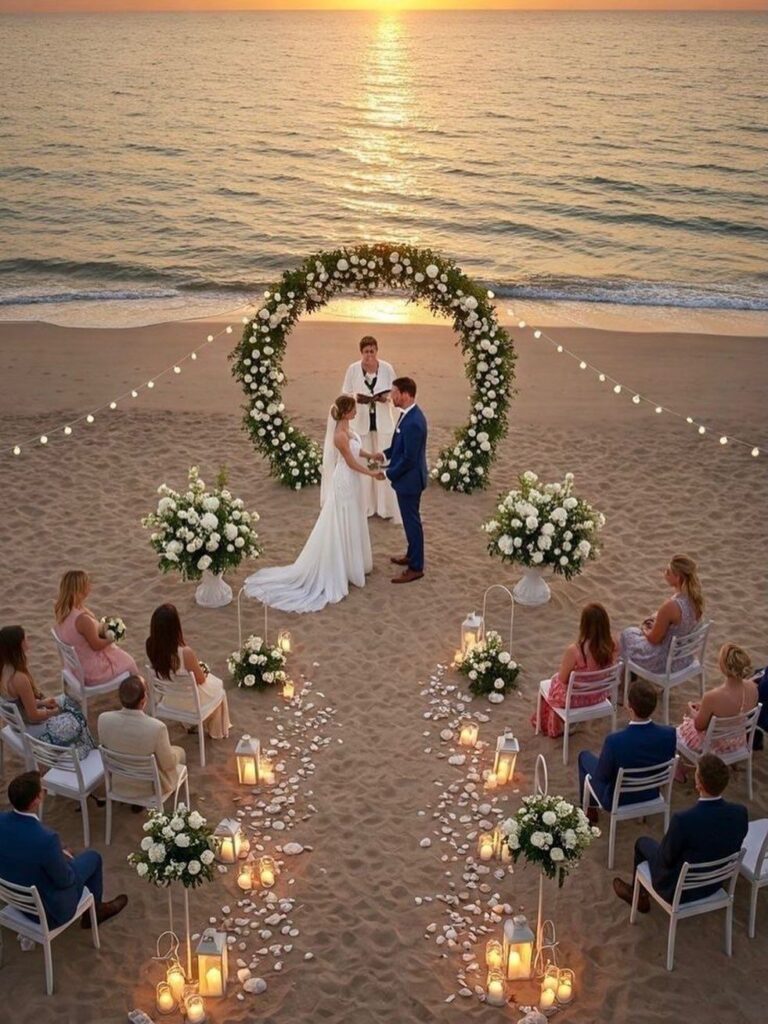
The ideas span a handful of shell place cards at one end and a canopied beach dining table or an ocean front gazebo at the other, and what sorts them is how much of your budget you want sitting in one spot.
Cheap pieces like string lights and shell and floating candle centerpieces spread the seaside feel across the whole day, while a gazebo, a canopied dining table or a seafood station on ice concentrates the money in one scene, so pick the single moment you want guests to remember, then keep the rest plain.
1. Sunset Wedding Ceremony
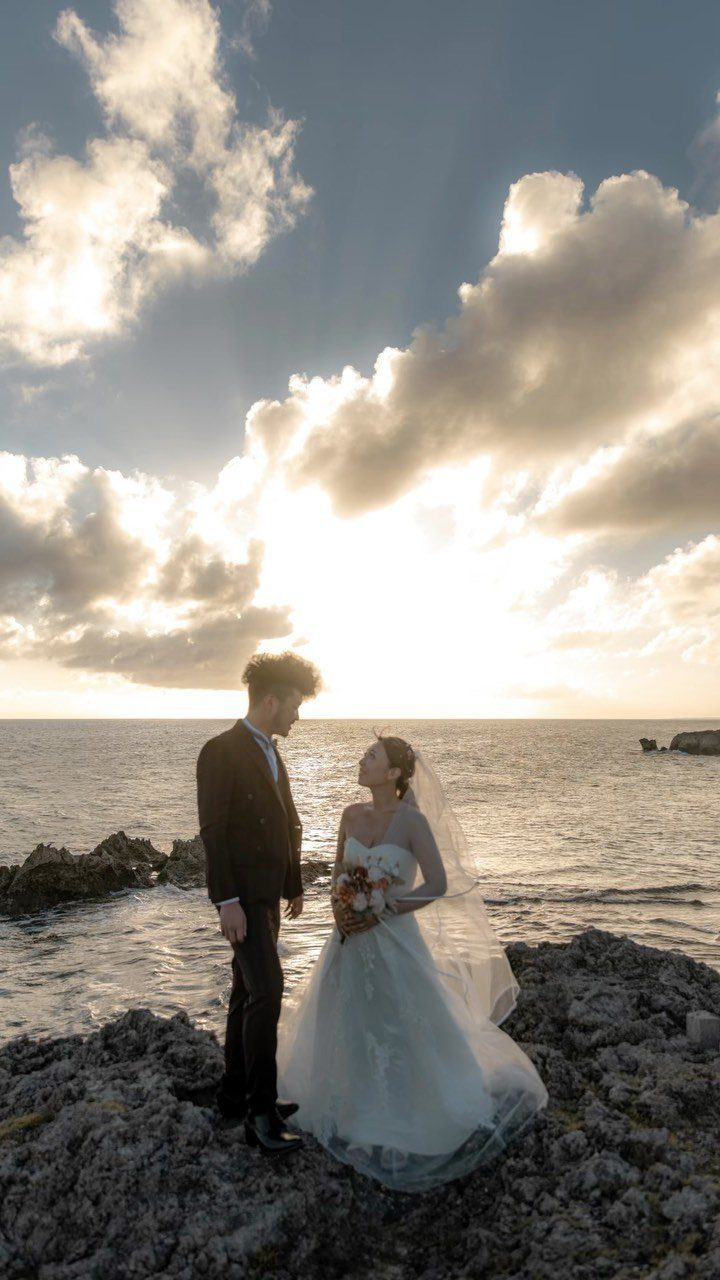
Rocky shoreline at sunset gives you a ceiling of color and a backdrop of dark stone, and I would build the whole ceremony around that light.
Check the sunset time for your date and start the vows early enough that they land in the glow instead of after it. Tell guests the start time plainly, because latecomers will walk in front of your photographer.
Rock footing is uneven, so flat shoes are the smart call for the couple’s walk to the water.
2. Chilled Refreshment Station
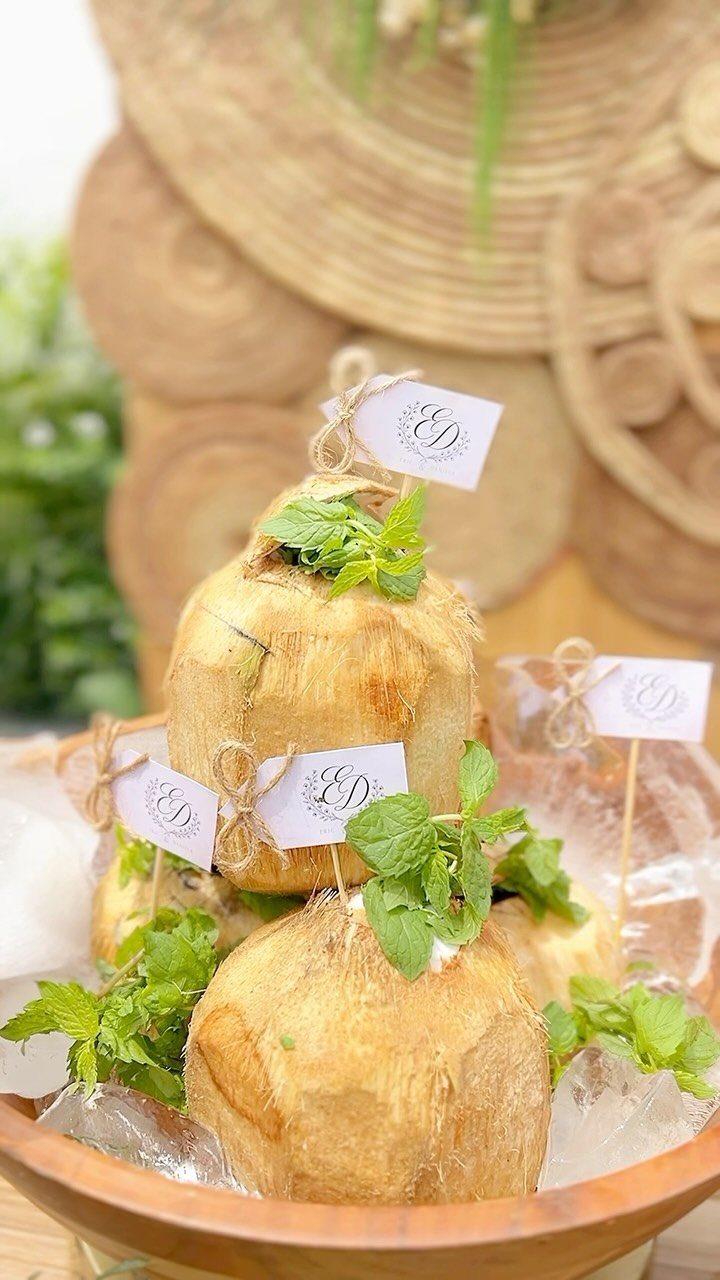
Young coconuts sunk in a wooden bowl of ice are the simplest way I know to keep guests cool and give them something to hold.
Tuck a sprig of mint into each one and tie on a monogrammed tag, so guests find their own and you skip a drink menu entirely.
Keep the ice topped up through the afternoon, since melt arrives fast in the sun.
Put the bowl near the ceremony seating, where people wait longest.
3. Beach Lounge Area
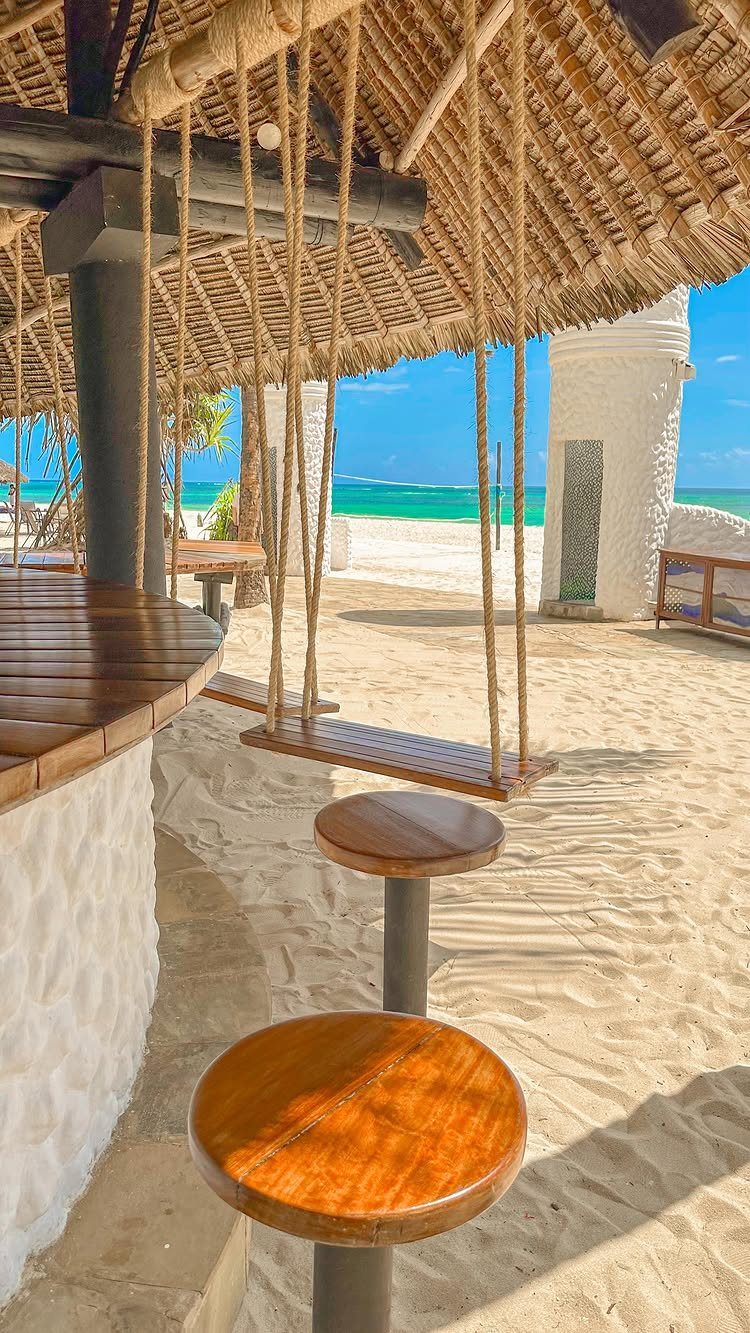
I like it best as a second gathering place away from the dance floor, somewhere to sit between ceremony and dinner. The rope swing doubles as a photo prop, so you need no extra decor.
Expect to rent or build the structure, which costs more than loose furniture, so a modest budget might keep just the bar and stools.
4. Seashell Place Cards
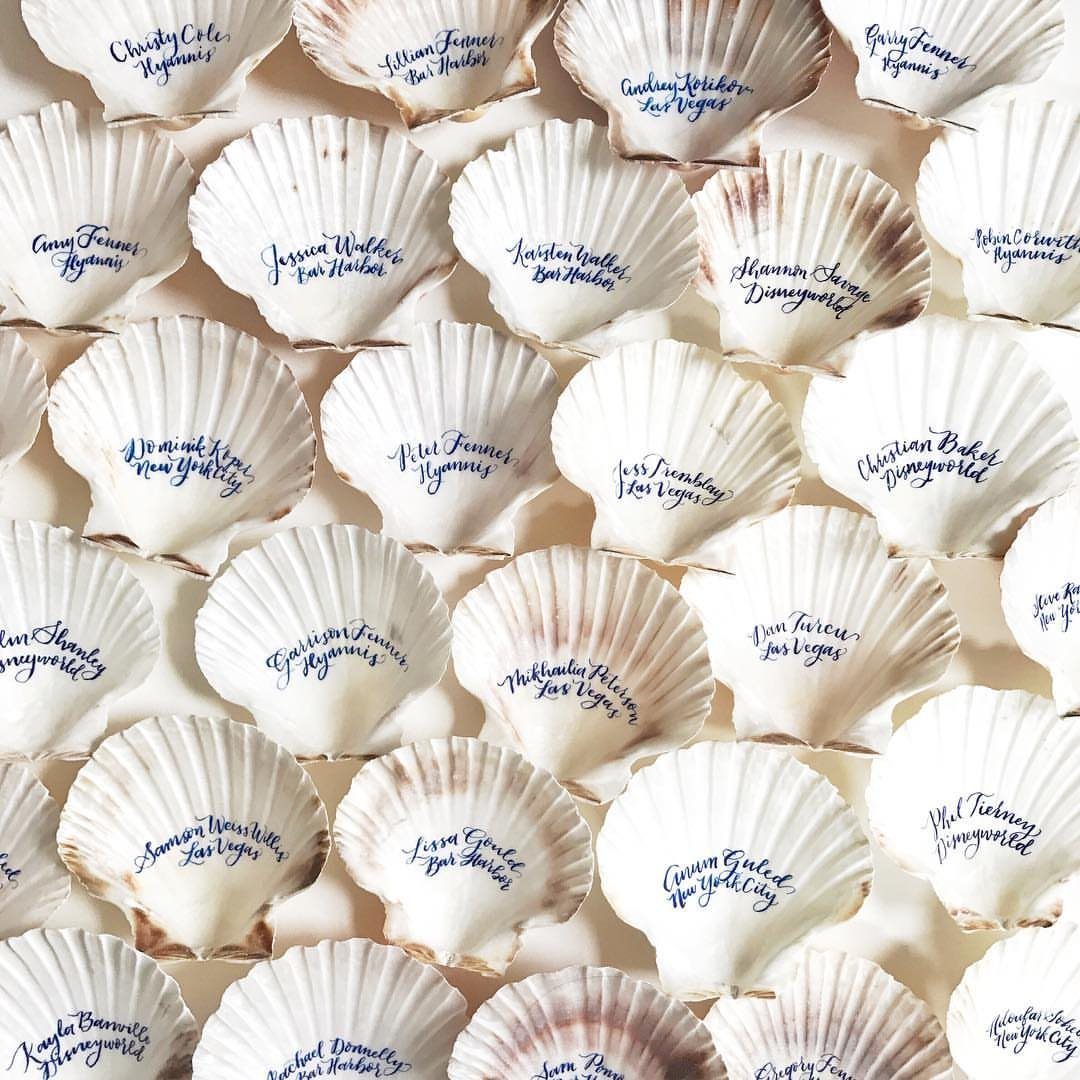
Writing each guest’s name and hometown on a white scallop shell in blue ink makes a place card that doubles as a keepsake.
Use a fine permanent marker or paint pen, and test it on one shell first, because glossy surfaces smear. Add the location line; it gets strangers talking at the table.
Write them all in one sitting so the handwriting stays consistent, and buy a few spares for typos.
5. Fresh Seafood Station on Ice
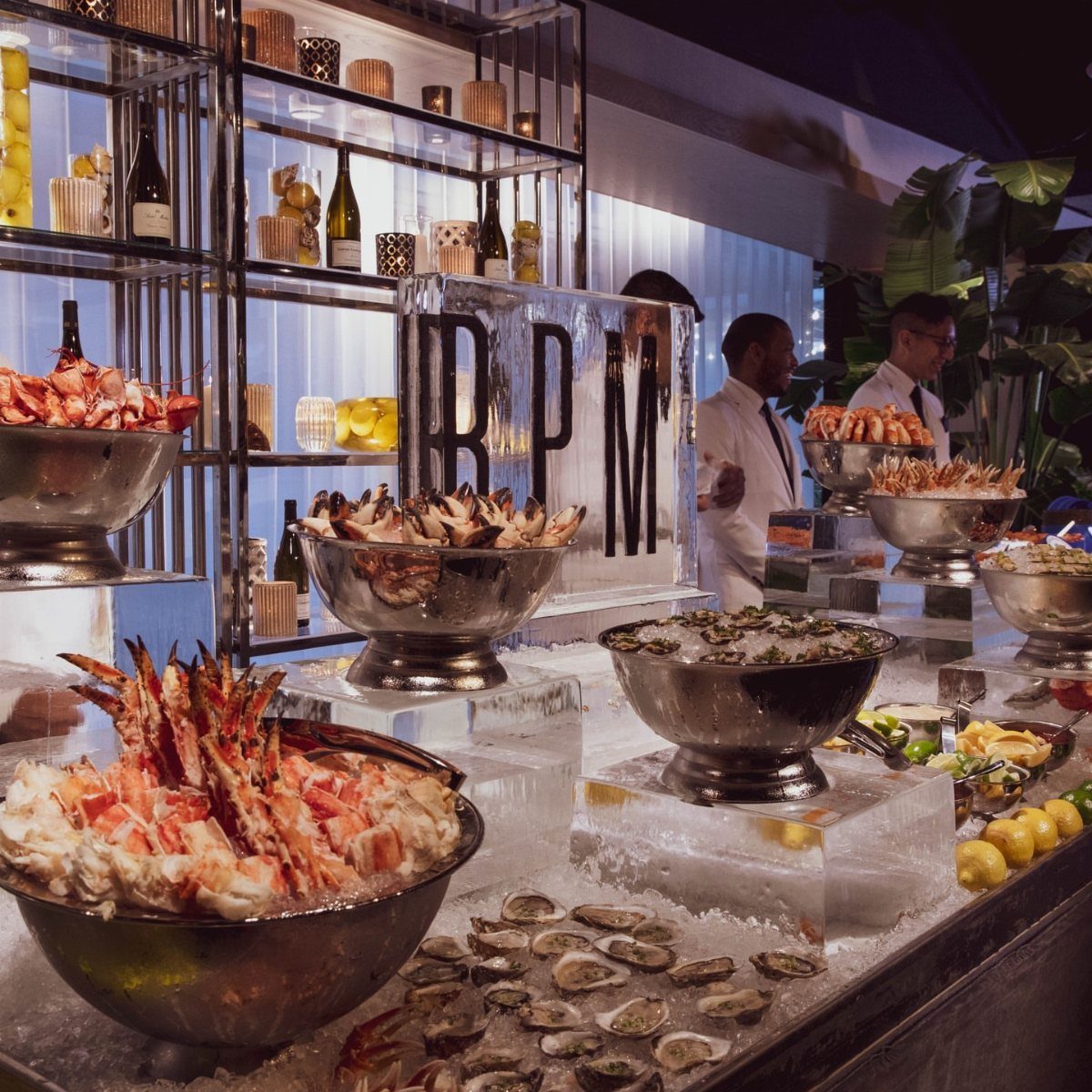
Crab legs, oysters and shrimp heaped on ice make a seafood station that feels like an event of its own.
Servers in white jackets keep it formal and safe to serve, since someone should be shucking and refilling the ice.
A clear ice sculpture, like the one with initials here, gives the table a focal point; I would order custom lettering with your own monogram.
Seafood is pricey per head, so I would offer it as a station instead of a plated course.
6. Seaside Arch
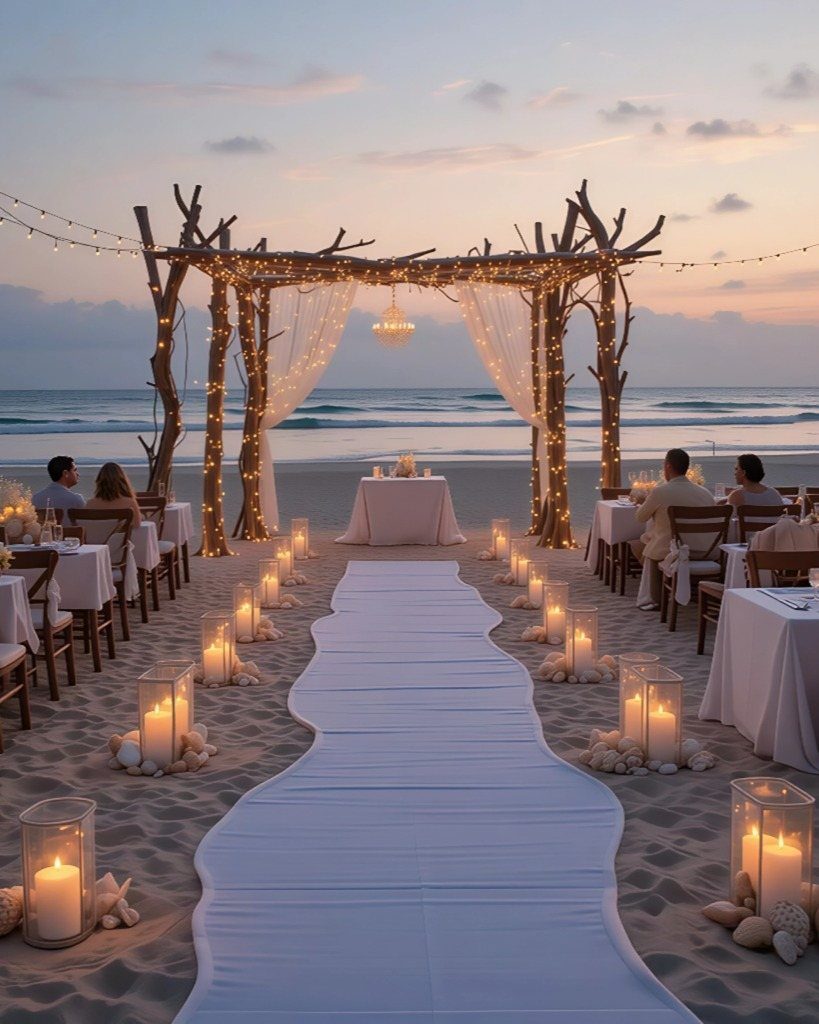
Driftwood beats a rectangular arbor on a beach because it already looks like it washed up there.
Pair a rough, uneven frame with a white runner and lanterns lining the aisle, and wind fairy lights through the wood for evening. Choose pieces with a strong shape, since the ocean behind it is the real backdrop.
I would anchor the base well in sand; a freestanding frame needs weight at its feet when the breeze picks up.
7. String Lights
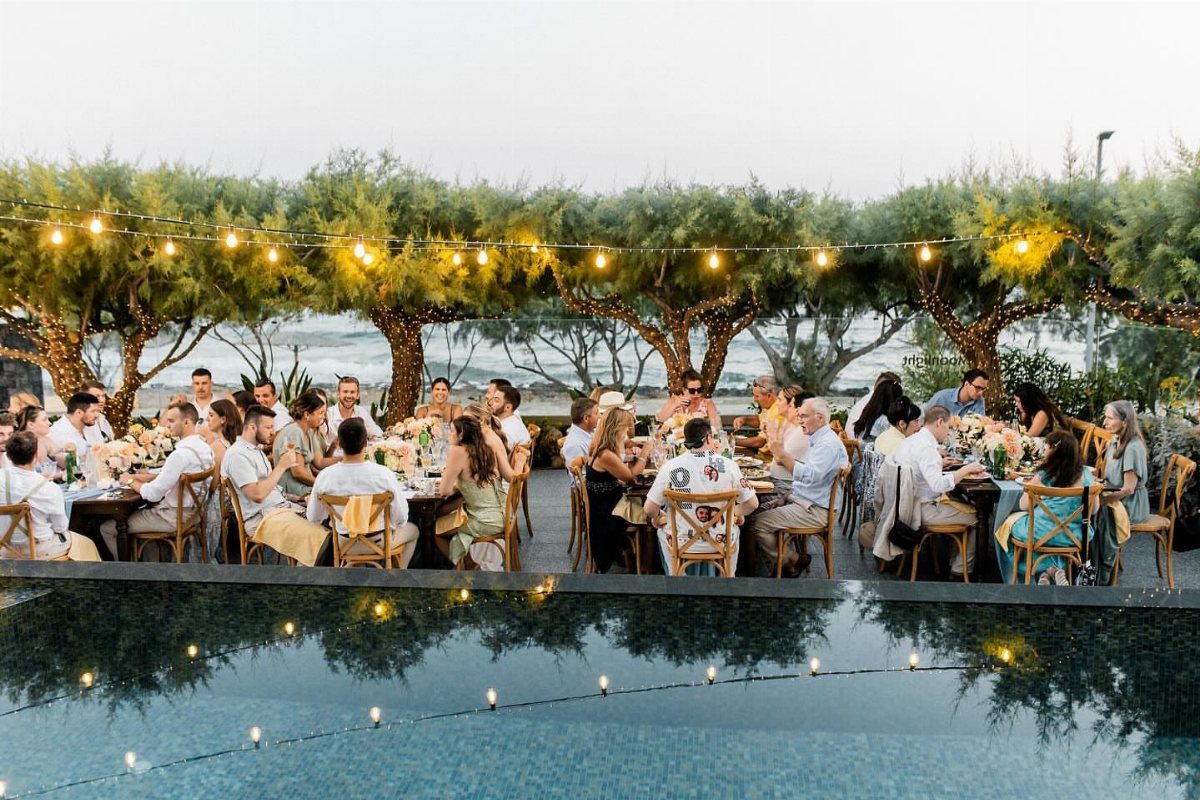
Once the sun drops, string lights overhead decide whether dinner feels warm or flat, and long tables under a canopy of bulbs keep everyone in one glow.
Hang them in loose swags rather than tight rows, and pick warm white bulbs so skin tones stay flattering. Test the whole run at dusk before the day, since that is when gaps show.
Lights cost little next to a rented structure, which makes them an easy place to spend for impact.
8. Ocean Front Gazebo
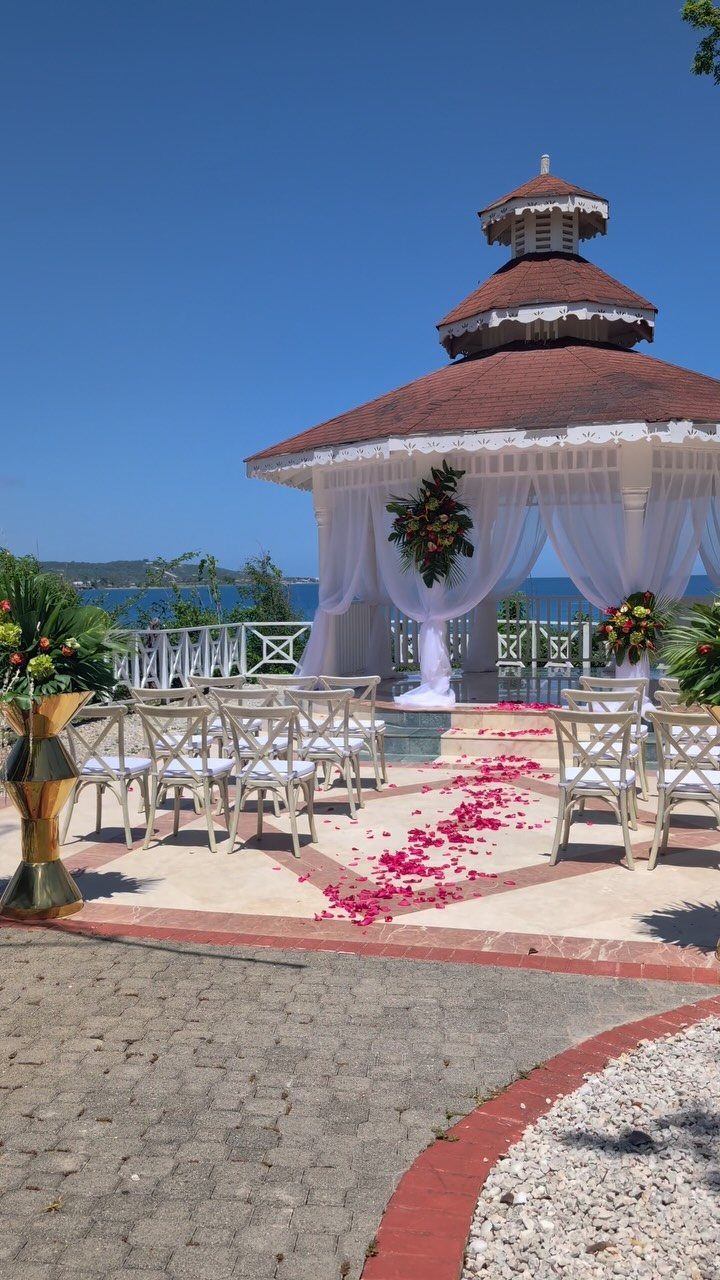
A gazebo gives vows a built-in frame, and a white one facing open water needs almost nothing added to look finished.
White curtains and a few floral arrangements soften the structure, and petals on the floor make the walk in feel intentional. Keep the chairs close to the steps so guests sit near the couple instead of far across the patio.
Expect to book the venue for its gazebo, because building or renting one costs far more than an arch. Couples on a modest budget might choose the arch from entry 6 instead.
Nuptials by the ocean seem to especially appeal to those hosting an intimate celebration or destination wedding, but with careful planning, large events can be held on the sand as well.
9. Seashell-Shaped Backdrop
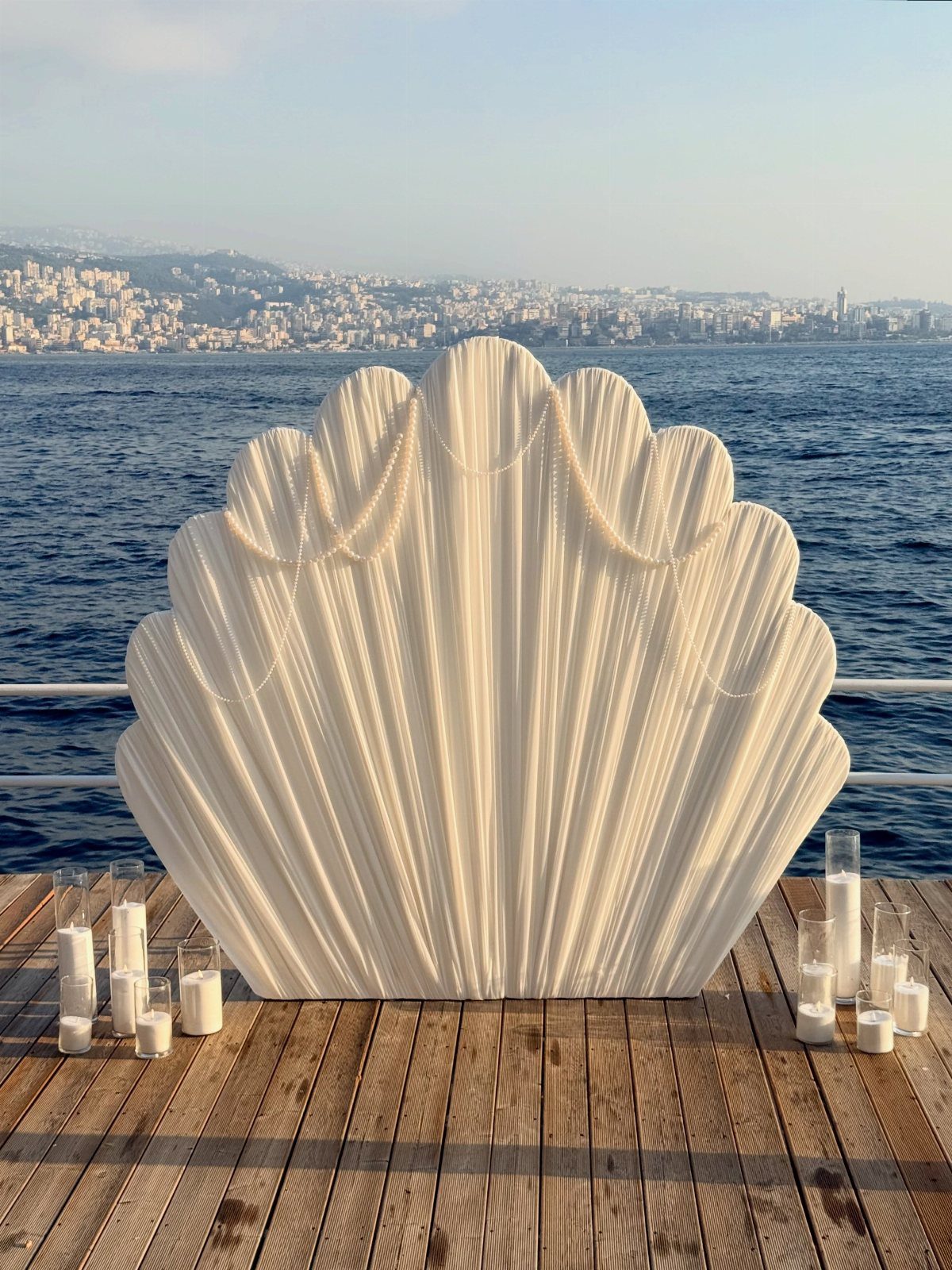
A tall, scalloped shell in white makes a ceremony backdrop that says "seaside" before anyone sees the water, and I like it best with pearl strings hung across its face.
Ring the base with pillar candles in glass cylinders, which keep the flames steadier outdoors than open holders.
Build or rent it early, since a custom shape takes lead time.
10. Coastal Wedding Welcome Sign
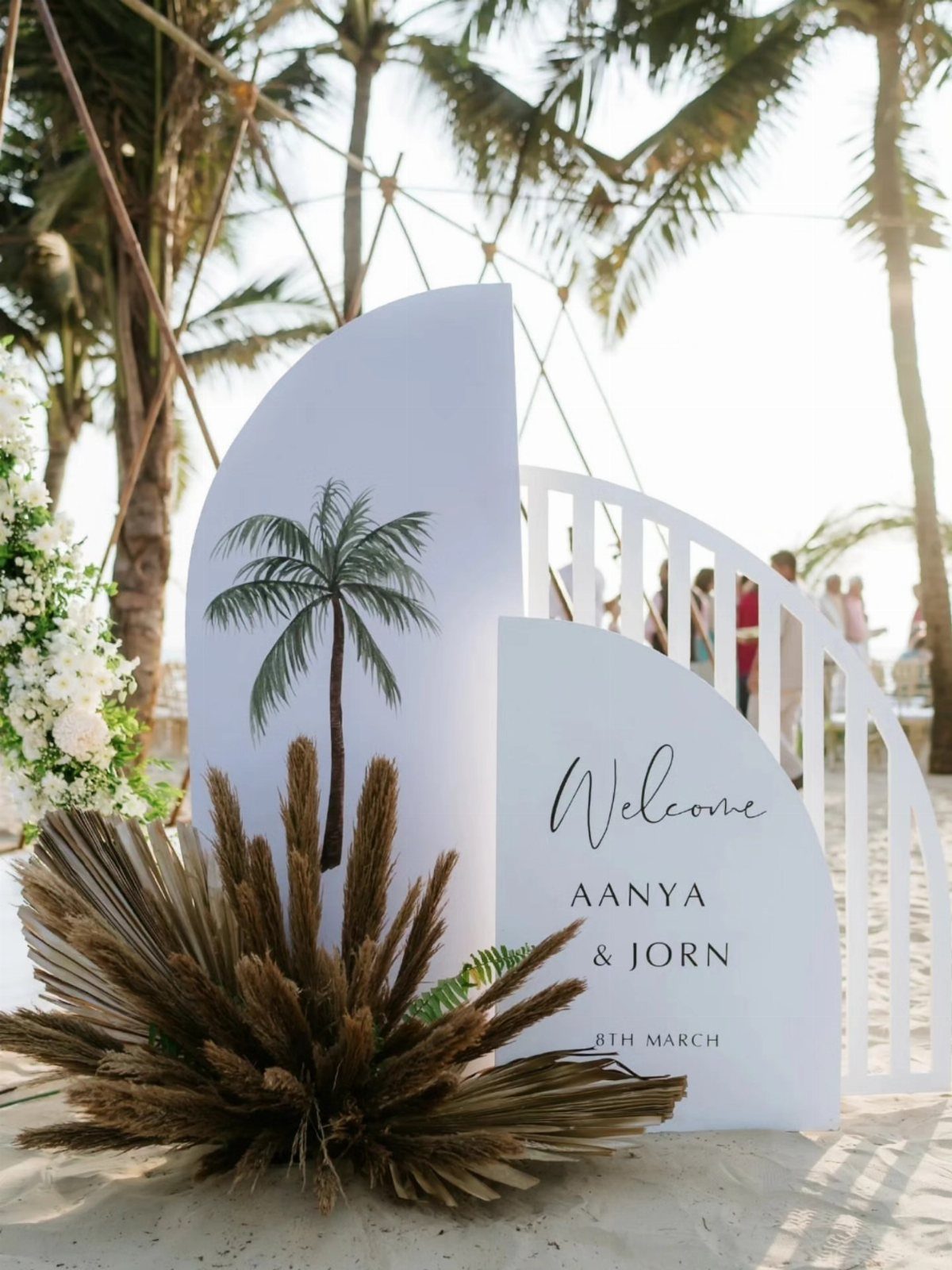
A curved white sign with the couple’s names and date greets guests before they reach a single chair, and dried palm fronds at its edge tie it to the shoreline.
Put the sign where guests arrive, not at the ceremony, so everyone passes it once. Pampas grass or dried palms hold their shape in wind better than fresh flowers, which wilt in sun.
Add a palm illustration if you want a tropical feel, and set the base deep in the sand.
11. Nautical Napkin Rings
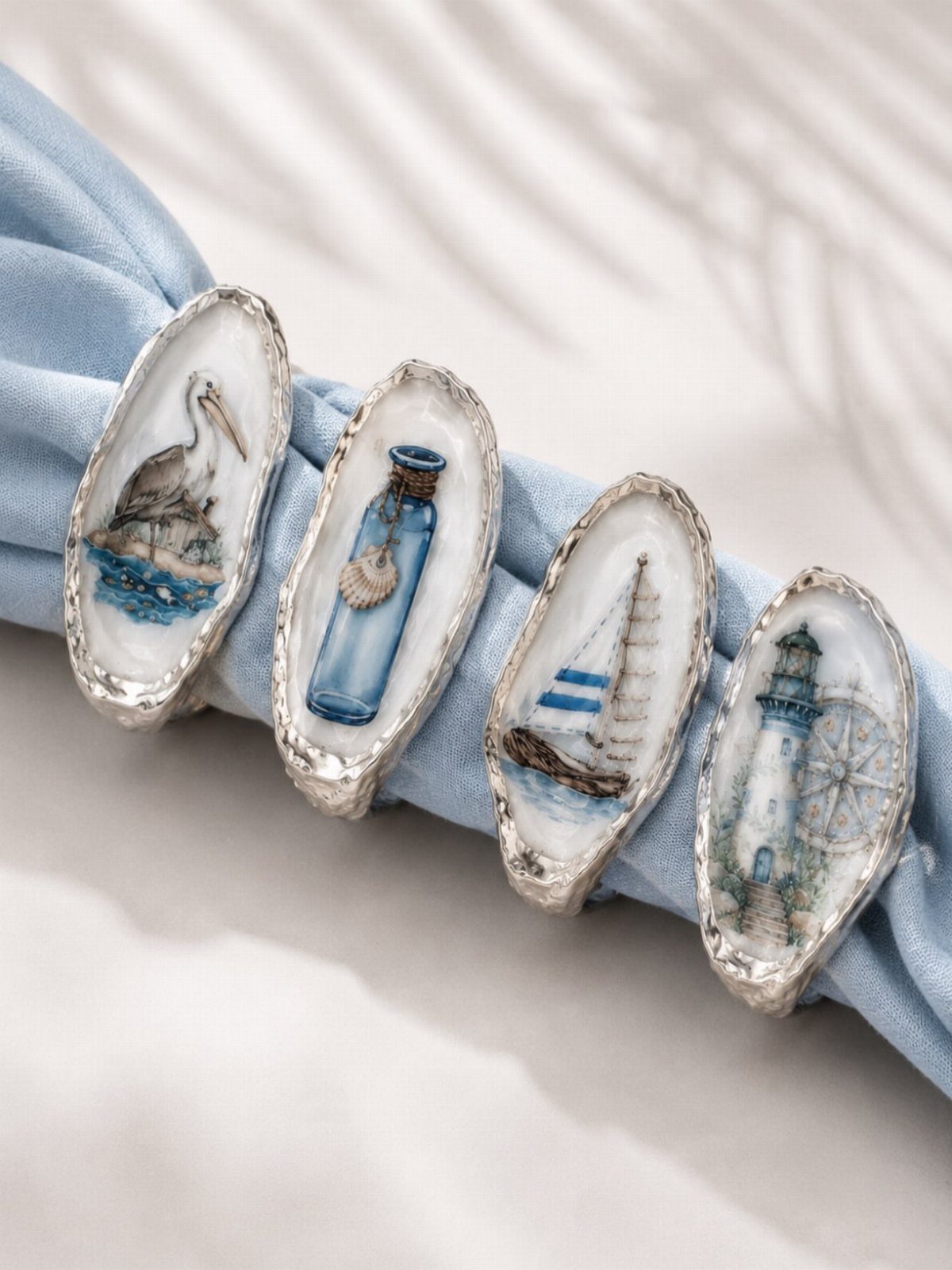
Oyster shells hand-painted with a pelican, a lighthouse or a sailboat turn a napkin ring into a small piece of art, and they look best against pale blue linen.
Painting a different scene on each napkin ring, as here, keeps a table interesting without extra decor. Seal the paint so it survives handling, and test one shell first.
Hand-painting every ring for a big guest list takes real hours, so I would paint only for the head table and use plain shells elsewhere.
12. Shell and Floating Candle Centerpiece
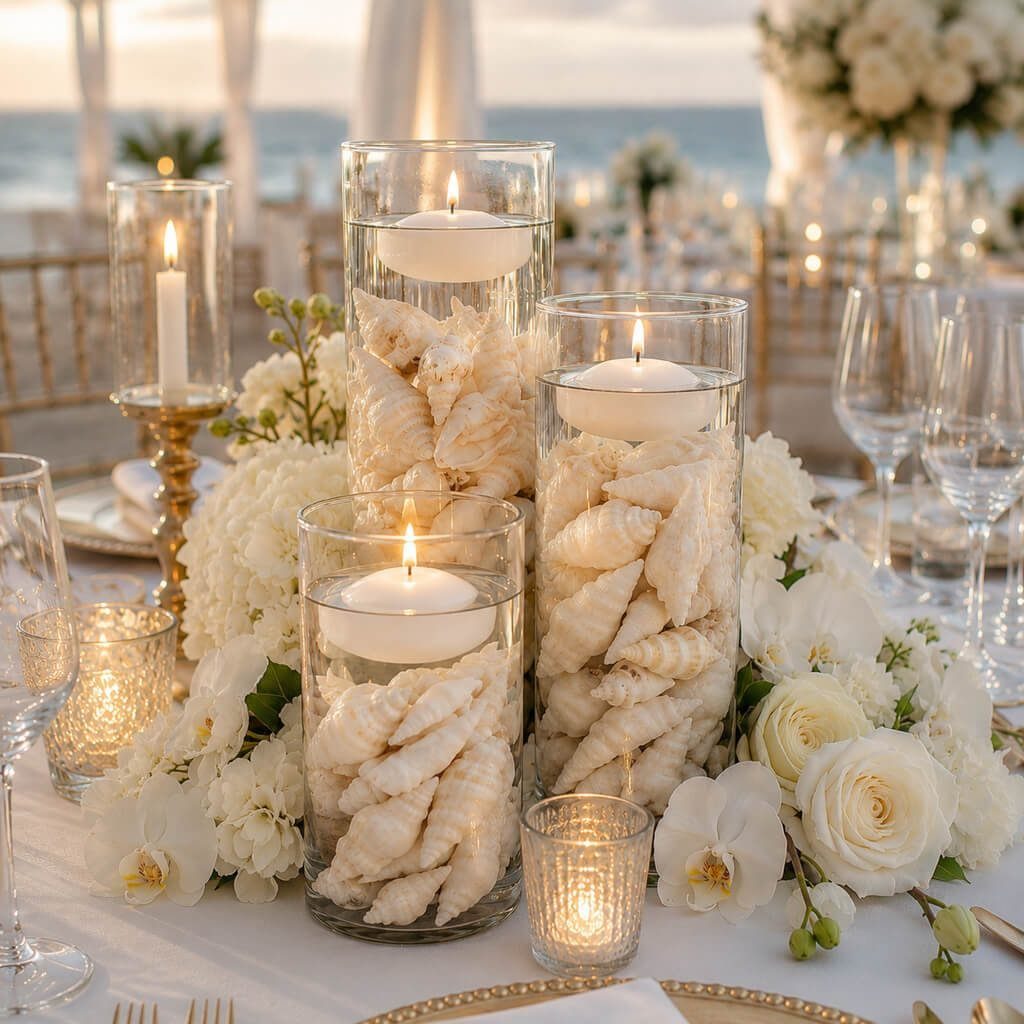
Tall glass cylinders filled with shells and a floating candle make a centerpiece that costs little and reads as seaside from across the lawn.
Use 3 vases per table, grouped, and surround them with low white flowers so the candles stay the focus. Fill each with enough water to float the wick, and light them just before guests sit.
Wind can snuff open flames, so the glass sides help; keep a lighter handy for relighting.
13. Woven Fans on Ceremony Chairs
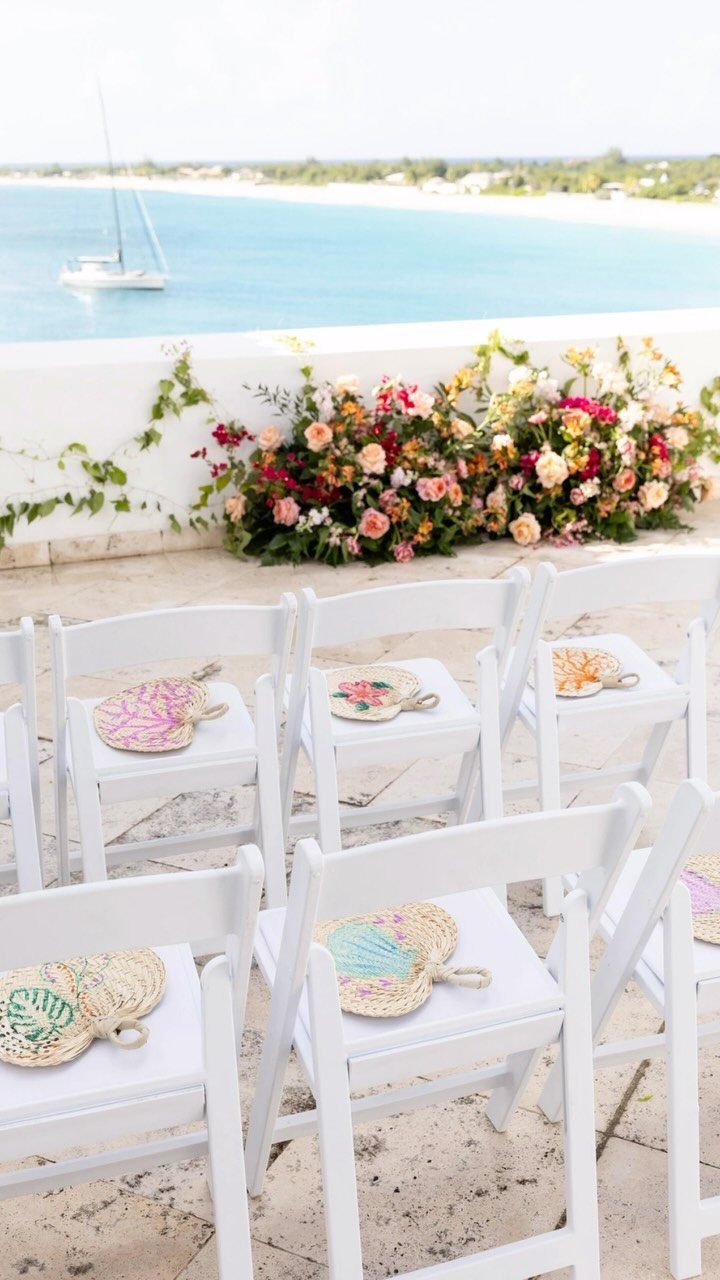
Colorful woven hand fans laid on white folding chairs give a ceremony a pop of color and a small gift for each guest, and they suit an open-air setup facing the water.
Choose fans in two or three shades pulled from the florals by the arrangement, so the seats read as planned instead of scattered.
Set one on every chair before guests arrive, and count a few extra for people who bring a plus-one.
Plain white chairs make the fans work harder, so I would skip any other chair decor.
14. Canopied Beach Dining Table
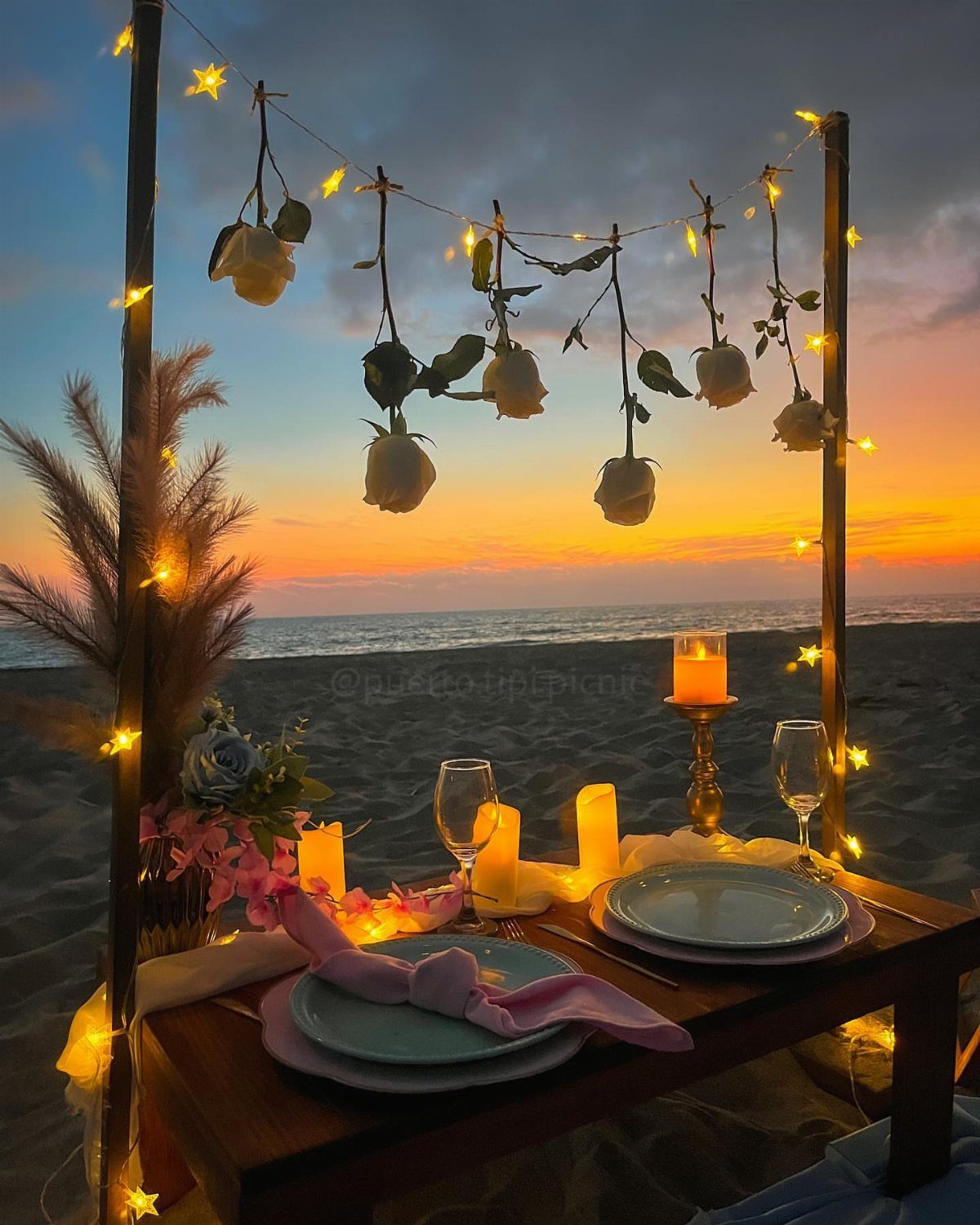
A long wooden table set right on the sand under a timber pergola turns dinner into the scene guests remember, especially when roses hang overhead and fairy lights glow as the sun drops.
Build the evening around sunset, and hang the roses and lights before guests sit so the table already looks finished in that light.
Candles on the table add warmth, but a pergola frame gives you a place to hang lights safely.
A canopy and a custom table run higher than loose rental tables, so this is the idea to choose if dinner is where you want your money to go.
Planning and Permits
Permits and fees vary by location, and some beaches require you to book well in advance. Phone whoever manages your stretch of sand, whether that’s the city, the county, or a park office, and get the date approved first.
A public beach and a private one come with different rules, and the difference usually shows up in who you have to ask.
A public beach may ask for a permit, while a private one may charge a hefty location fee, so price both before you fall for a spot.
The license itself is its own errand, handled through the county clerk and not through the beach office.
Some coastal towns, such as those in New Jersey, post their license rules and beach wedding rules online, so check the state and town pages early.
A wedding planner can sort out these details if your budget allows one. If not, a few phone calls cost nothing and can save a deposit.
Venue Selection
Start with 4 checks: accessibility, weather patterns, local regulations, and amenities. A beach that fails one of them can cost you more than a prettier beach saves.
Accessibility comes first. Picture your oldest guest getting from the parking lot to the ceremony spot, and ask whether the path works for a wheelchair or a walker.
Weather patterns matter next. Look up typical conditions for your month, then decide where guests would go if wind or rain shows up.
Amenities decide your rental list. Find out whether the beach has restrooms, power, and parking, because anything missing has to be brought in and paid for.
A line on the invitation about a sand ceremony lets guests pick shoes that won’t sink, since heels and sand don’t mix.
A wooden aisle or a boardwalk-style runner keeps the hem of the gown off the sand, and it looks good in photos too.
Guest Comfort
Shade is the amenity people forget. Open sand offers none, so plan a tent, canopy, or umbrellas for the ceremony seating and the waiting area.
Cold water matters as much as cold cocktails. Set out chilled refreshments before the ceremony starts, since guests arrive early and stand in the sun.
Keep the menu and entertainment easy to enjoy. A beach guest should feel relaxed, so skip anything that needs long lines or complicated instructions.
Give older guests and anyone with kids the best seats in the shade. A small kindness like that gets noticed.
Frequently Asked Questions
How much does it cost to have a wedding on a beach?
It varies widely with the location, the venue and the guest count, so I can’t give one honest figure.
Public beaches often charge only a permit fee, but a private stretch of sand can add a steep location charge, so get a quote for each one and compare them side by side.
Seafood, a custom canopy table and a built structure push the total up, while string lights and shell centerpieces cost little.
What is the most unpopular month to get married?
January is often considered the least popular month for weddings.