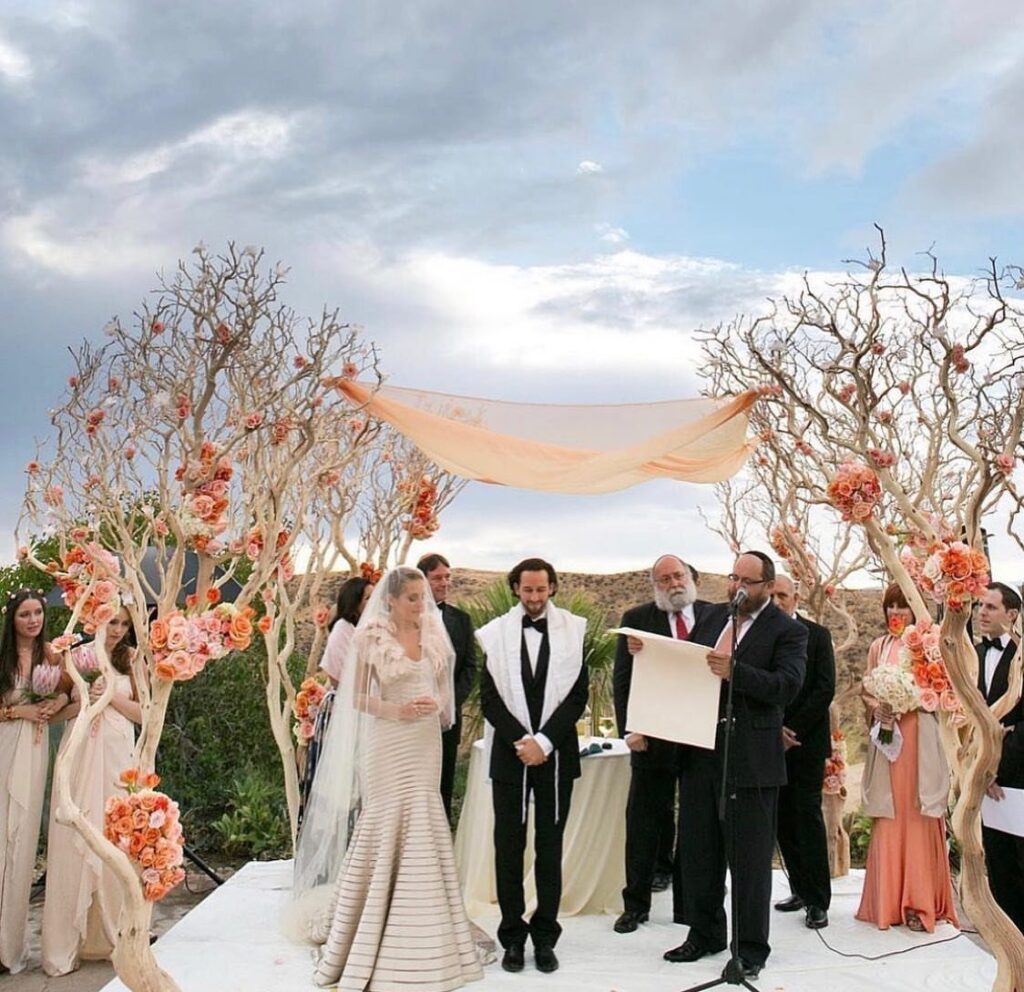
The list runs from a quiet moment with a veil to a dance floor where the couple rides up in chairs, and the price swings just as far: a signing or a veiling costs close to nothing, while the chuppah florals, a framed ketubah and extra vendor hours add up fast.
Which ones you keep depends on which tradition your families come from, since Ashkenazi and Sephardic customs differ.
Some of these customs, like the Tisch and the reception dances, can run long, so I settle the timeline and overtime hours with vendors early.
1. Ketubah Signing
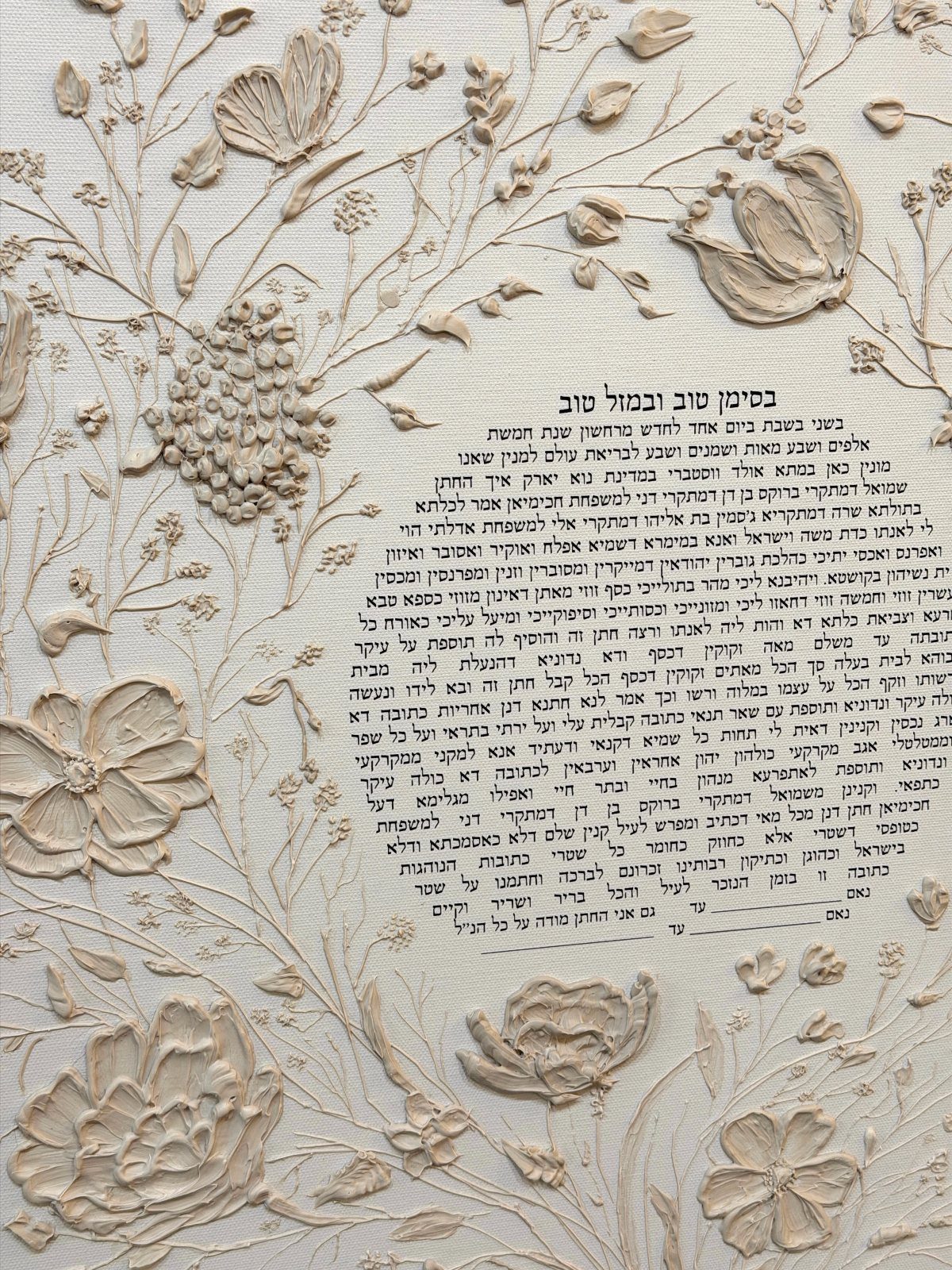
A ketubah is a marriage contract, and the text lays out what the groom owes his bride, including support and care. That makes it the one wedding document you can frame and hang at home.
An embossed floral border on cream paper is a strong choice if you want the ketubah to hang in a hallway as art rather than sit in a drawer like a certificate.
Pick the design before the wedding date crowds your calendar, since the text should be settled well before the day it gets signed.
Choose the wording with your officiant, and read the Hebrew alongside an English translation so you know what you are agreeing to.
Signing the ketubah is one of the oldest Jewish wedding traditions, dating back two thousand years.
2. Badeken (Veiling)
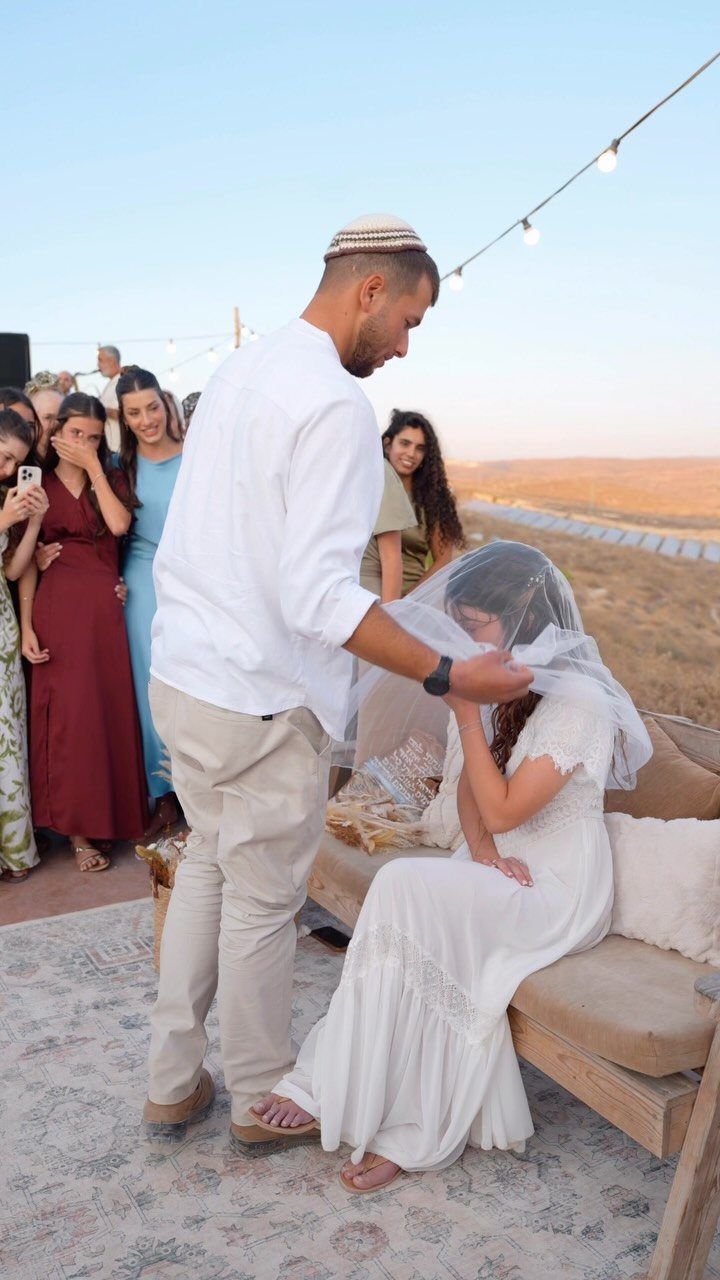
Veiling is a short, quiet moment: the groom lowers the veil over the bride’s face himself. It works well for couples who want one beat of stillness before the ceremony, with only a few guests close enough to see it.
Plan the veil around that gesture.
A long, light fabric lowers in one smooth motion, and a bride who stays seated gives the groom a steady reach. Tell your photographer ahead of time, because the moment is brief and easy to miss.
I would keep it unhurried and let guests gather around.
3. Chuppah (Wedding Canopy)

Under the chuppah, the whole ceremony unfolds, so the canopy is where your photos will be taken and where your guests’ eyes will rest.
A white frame dressed in white flowers, with a tallit as the covering, keeps the look clean and lets a sea or sky backdrop do the work.
An open-sided canopy suits an outdoor setting, since nothing blocks the view behind you.
Spend your budget on the flowers and the fabric on top, because those are what people see. A tallit with a color stripe, like the blue one here, adds meaning without adding décor cost.
4. Breaking the Glass
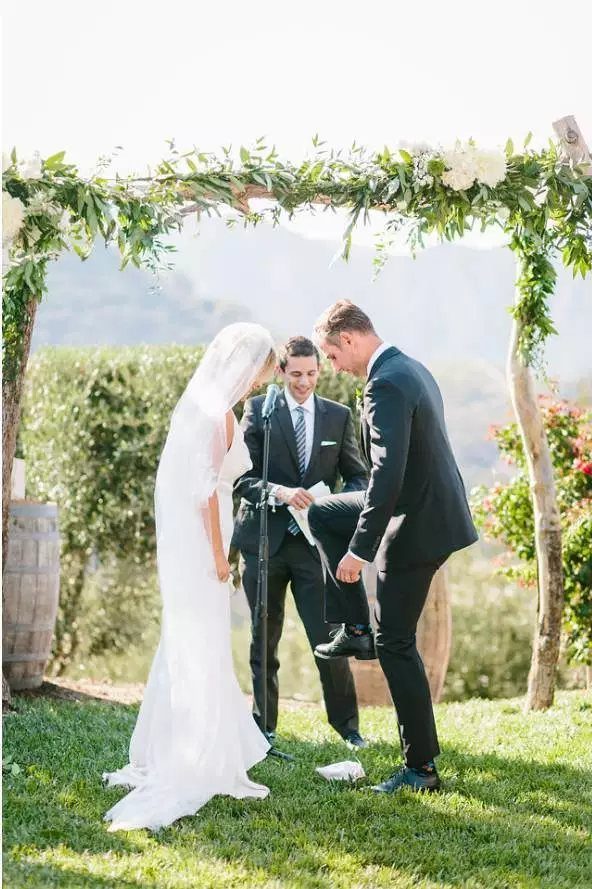
Breaking the glass ends the ceremony with a loud, clear sound, and guests respond with a cheer. The groom, or the couple together, stamps it underfoot.
Wrap the glass in cloth before the ceremony so the shards stay contained and nobody picks glass out of the grass later.
Rehearse the stomp once with your officiant, because a glass that refuses to break is the one awkward note possible here.
Set it on level ground, not on a soft lawn patch where the heel sinks. Ask your photographer to be in position, since the moment is over in a second.
5. Jewish Wedding Reception Dances
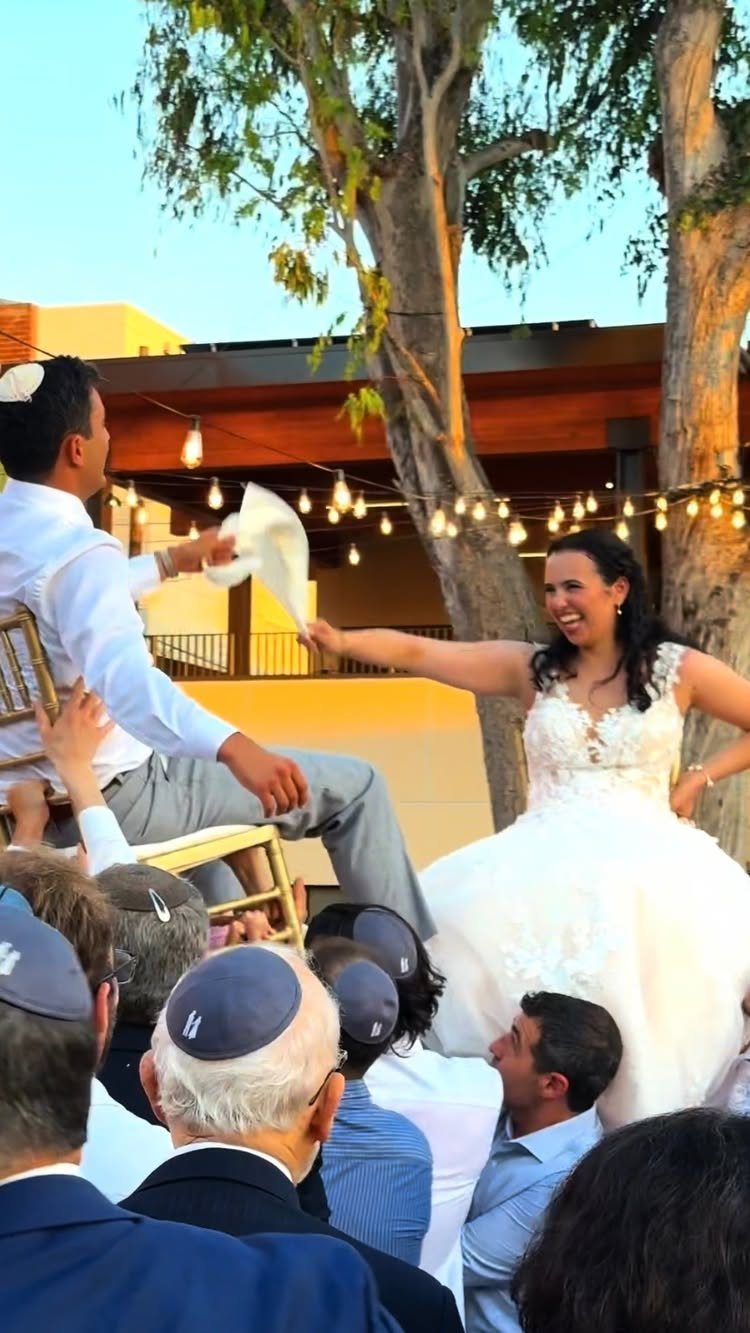
Once the ceremony is done, the reception turns into a dance floor, and the best-known moment is lifting the couple high in chairs. Each of you holds one end of a cloth while guests carry you in circles.
Choose sturdy chairs and ask strong friends to lift. Tell guests beforehand so the floor is clear and everyone is ready, including those who would rather watch.
I would save this for the first half of the evening, while energy is high and shoes are still on.
6. Tisch (Groom’s Table)
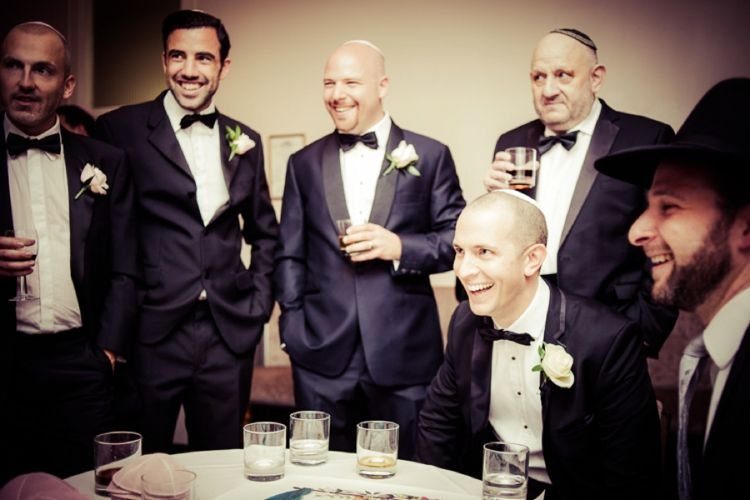
Before the ceremony, the groom sits at a tisch with his male friends and family, and the mood is loud, warm and full of toasts. It is a small party inside the big one.
Keep it simple: one table, drinks, and room for everyone to crowd around. The tisch fits right into a formal dress code, so the groom and his guests can stay in tuxedos and kippahs and skip a costume change.
If your groom likes a lively room, this is where he gets one. Give it a clear start time so the ceremony stays on schedule.
7. Hands Adorned with Henna Designs
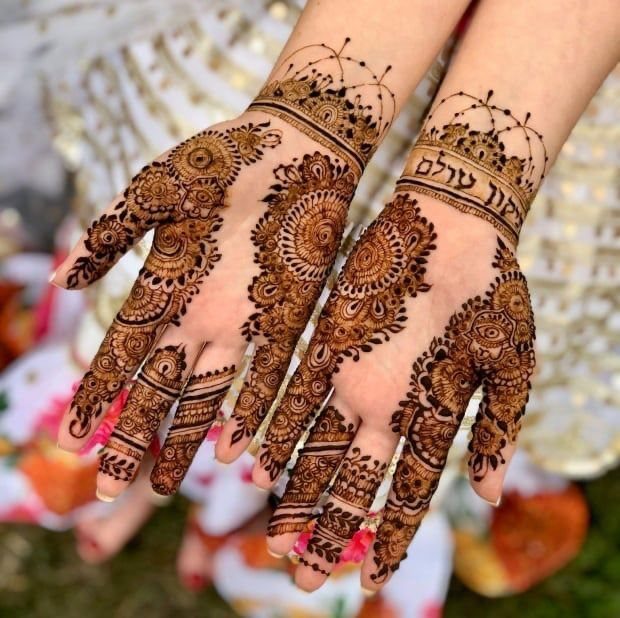
Henna on the hands is a pre-wedding art: fine brown patterns drawn in paste, with a line of Hebrew script running across the wrist.
That script is what sets this version apart, since it turns a decorative pattern into something personal to the two of you.
Ask the artist what the Hebrew will say before the appointment, and have a family member or your officiant check the spelling. A wrong letter is permanent on the day, even if the henna fades.
Book the session well ahead of the ceremony, and treat it as a quiet hour with friends, not a rush job. Keep the sleeves of your gown simple so the wrists stay visible in photos.
Significance of Rituals
Each ritual carries spiritual and cultural meaning, and many are rooted in historical practice and biblical stories.
Ask your officiant to tell you the story behind each one you keep, so you know why you are doing it and not just what you are doing.
Print a short program that explains the meaning in a sentence or two per ritual. Guests who are new to a Jewish ceremony will follow along, and you will have the words ready when a relative asks.
Cultural Variations
Jewish wedding customs can differ a good deal between Ashkenazi and Sephardic communities, and those differences shape both rituals and celebrations. Before you finalize anything, ask both families what they expect, then decide together which customs to keep.
If your families come from different traditions, pick one version of each ritual instead of blending them at random. A half-and-half ceremony can confuse guests and your officiant.
Plan for a long day, too.
Plan on a long day: most Jewish weddings begin around midafternoon and carry on well into the night, though the timing can run shorter or longer, and the festivities can stretch across the 7 days that follow.
Tell vendors the real hours early, since overtime fees add up fast on a budget.
Modern Interpretations of Traditions
Many couples adapt traditional rituals to reflect their own beliefs and values, and that includes same-sex and interfaith ceremonies.
I would sit down with your officiant early and say which parts matter most to you; a good one will help you reshape the rest without losing the meaning.
A Halachic prenup is one modern addition I think deserves a real sit-down conversation before the wedding.
Under Jewish law, a divorce only takes effect when the husband hands his wife a document called a Get, and when he refuses, she can be stuck in the marriage; women in that position are called agunot.
Signing a prenup before the wedding guards against that, and many couples now treat it as part of the planning.
Frequently Asked Questions
How much money do you give at a Jewish wedding?
Gifts typically run from $100 to $500, depending on your closeness to the couple and your own budget.
What are the rituals of a Jewish wedding?
The main ones are signing the ketubah (the marriage contract), the groom’s veiling of the bride, the ceremony under the chuppah canopy, and breaking the glass.
Many weddings also include a tisch, where the groom gathers with friends and family for toasts, and a dance where the couple is lifted in chairs.
Henna designs before the wedding are another custom. Each ritual has its own story, so I would ask your officiant to explain the ones you keep.
How long does a Jewish wedding last?
Most Jewish weddings begin around midafternoon and run well into the night, though the timing can be shorter or longer.
The festivities can also stretch across the 7 days that follow. Give your photographer, DJ and venue the actual start and end times early, since each extra hour on a contract can cost a few hundred dollars.