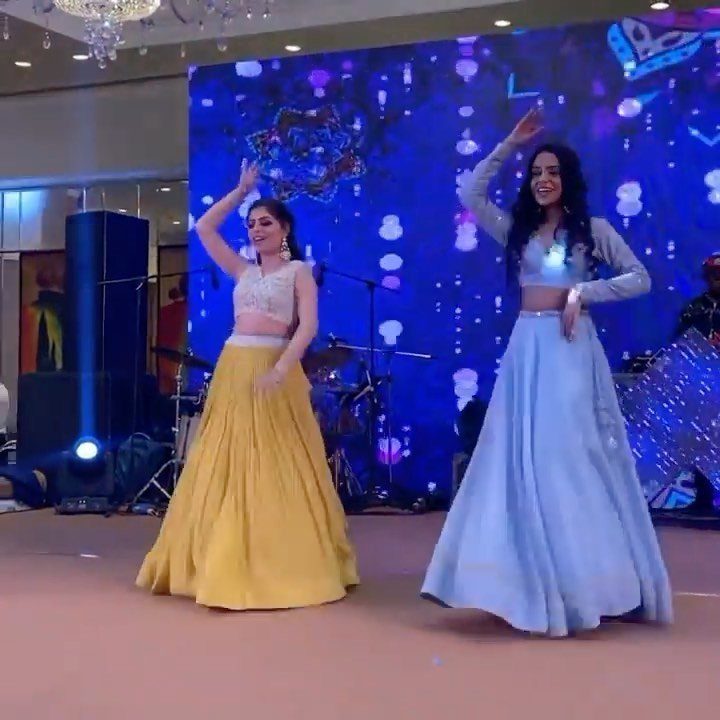
Ideas here range from a free line dance that needs only a caller and a few well-known songs to a hired professional troupe in coordinated black costumes, and the rule that picks yours is how much of the night you want guests watching versus moving.
Watching moments, like the mother-son dance or a solo bridal number, need a clear stage and rehearsal.
Moving moments depend on lower lights, flat shoes in a basket near the floor and a DJ who reads the room, so choose one or two of each and leave the rest.
1. First Dance
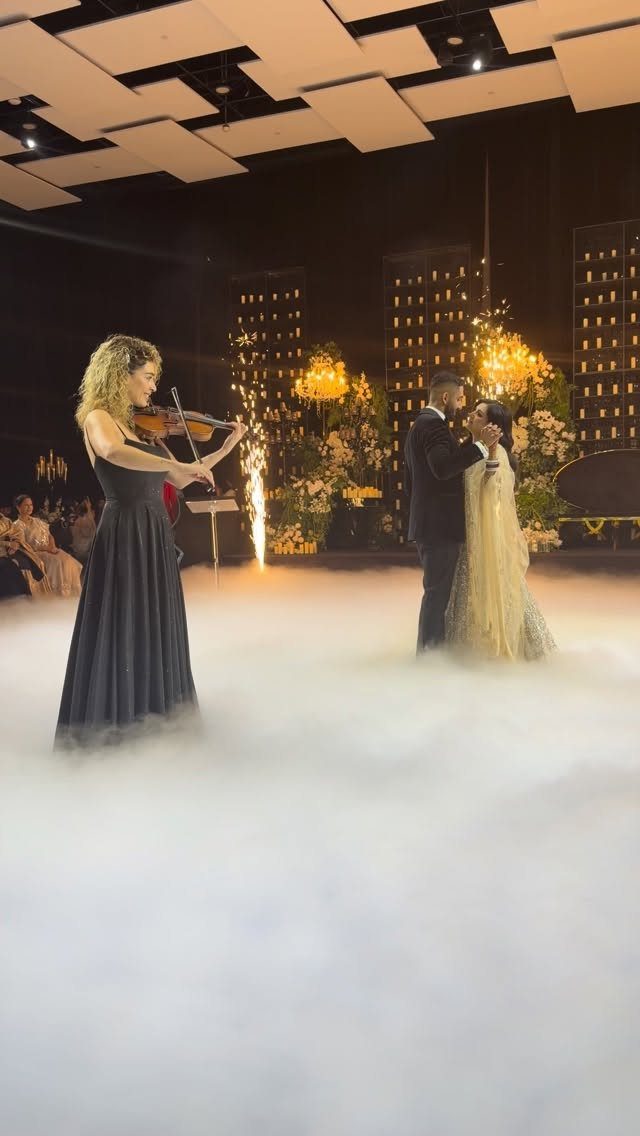
A first dance sets the tone for every song that follows, so pick one you can sway to without a lesson.
Fog, gold lighting and a live violinist all work because they slow the room down and give guests a reason to watch instead of film.
Keep it to one song, trimmed to the verse and chorus you love.
A full song feels long when every guest is staring, so pick a track you can shorten or plan a point where the floor opens to everyone else.
Sure, you may have a few favorite tunes you know you want played during the wedding reception, but the first song that indicates it’s time to start the dance party can set the tone for the rest of the night.
2. Money Dance
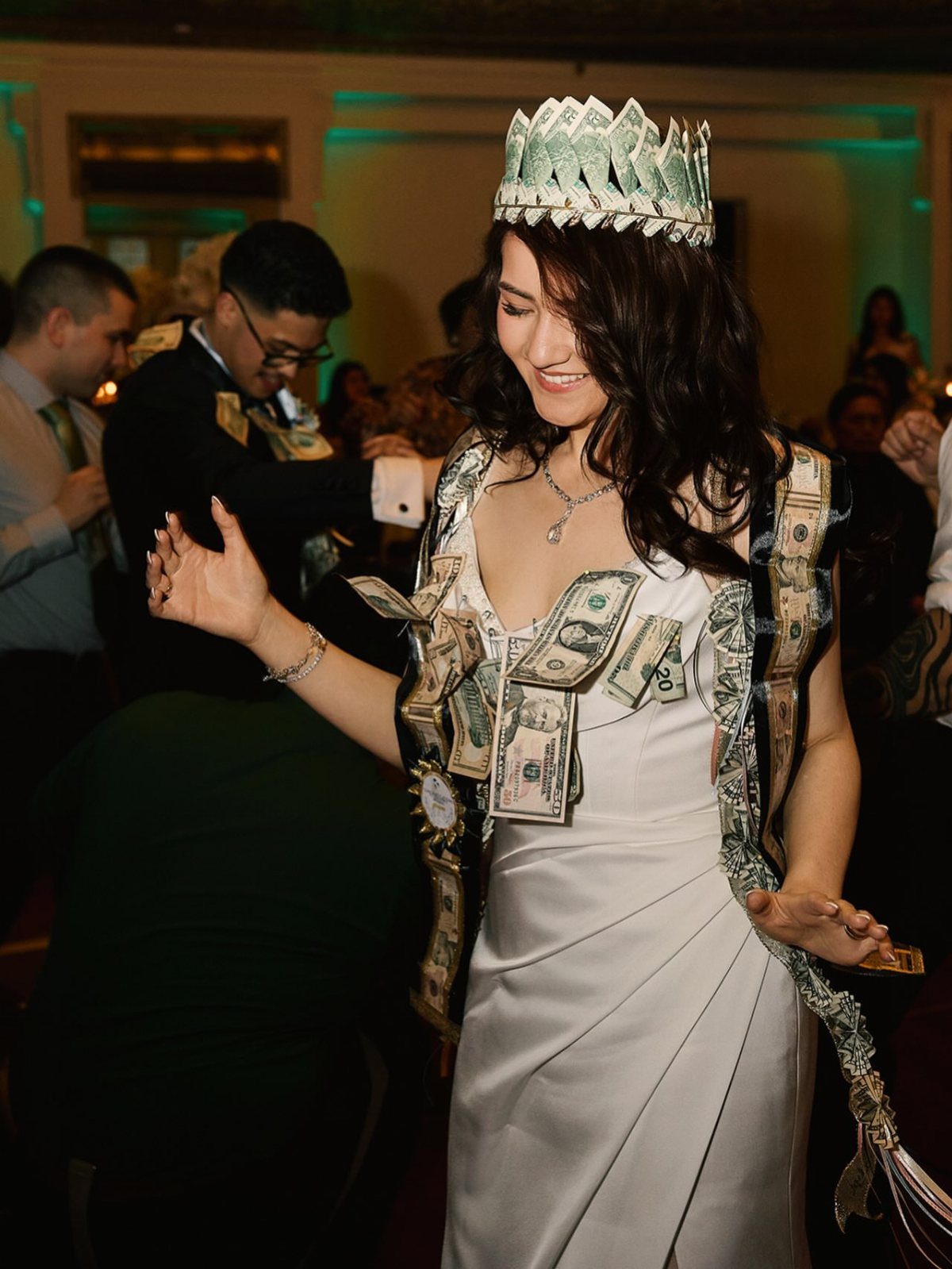
Guests see where to pin their cash without anyone having to explain.
Decide before the night who holds the money, since a bride in a dress has no pockets.
A trusted friend with a bag keeps it safe. Cash is the fun part, so keep the dances short.
3. Father-Daughter Dance
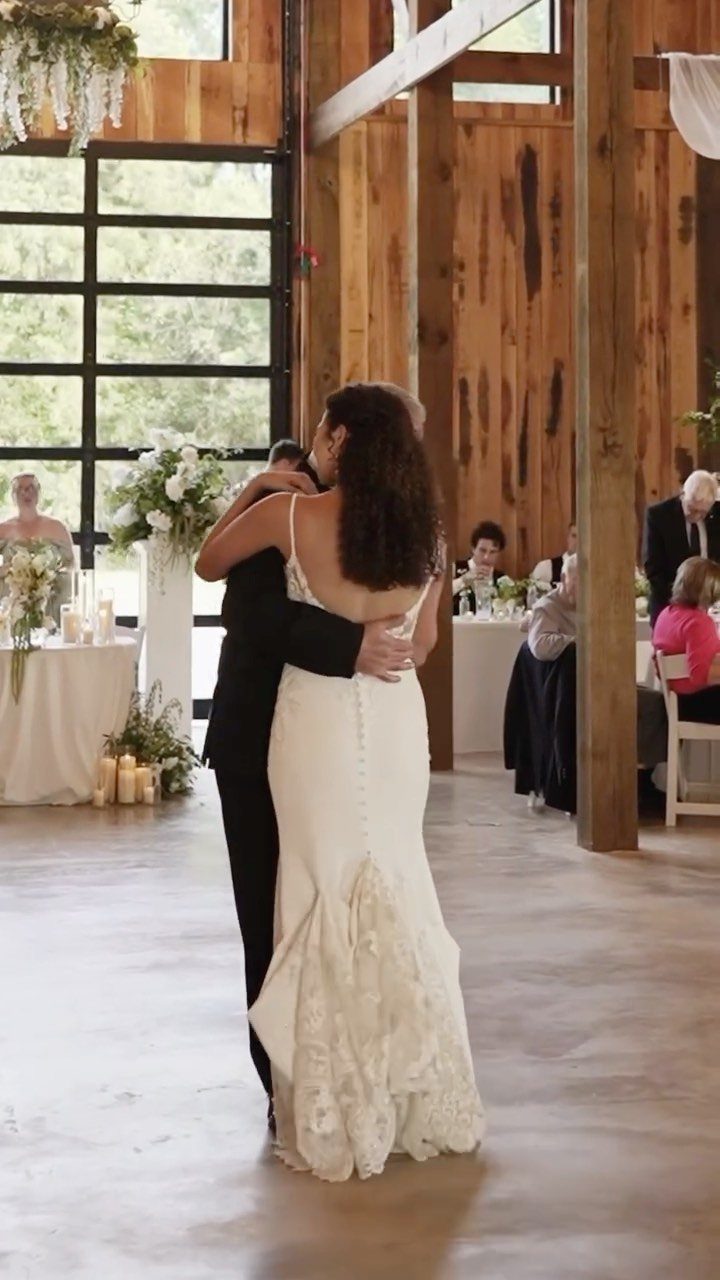
Choose a song that means something to the two of you, not the one everyone expects.
Walk through the steps once beforehand. Even a simple sway looks calmer when both of you know when the song will end and who will lead.
4. Mother-Son Dance
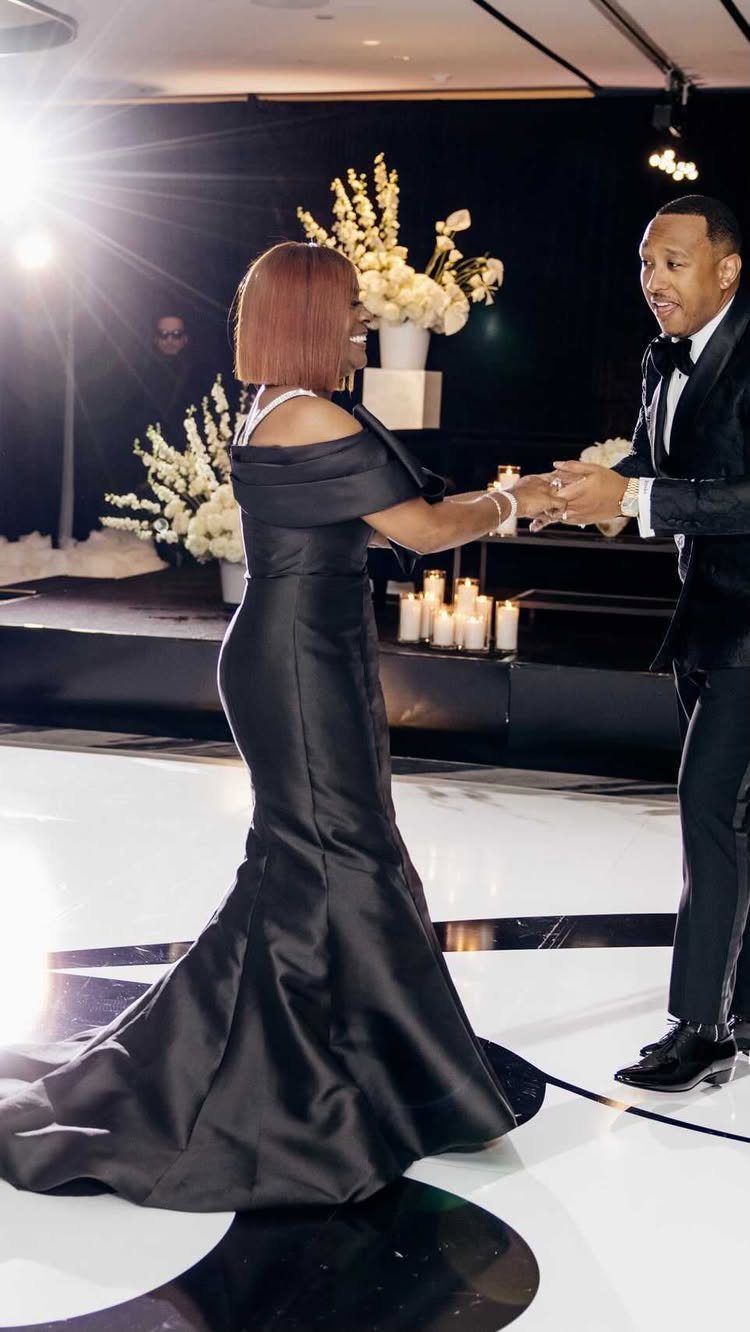
Mother and son take the floor after the first dance, and a formal room with a white floor gives them a clean, quiet stage.
Choose a song with a story behind it and trim it to about 2 minutes. I would rather see a short dance that stays warm than a long one that drags.
5. Dance Floor Atmosphere
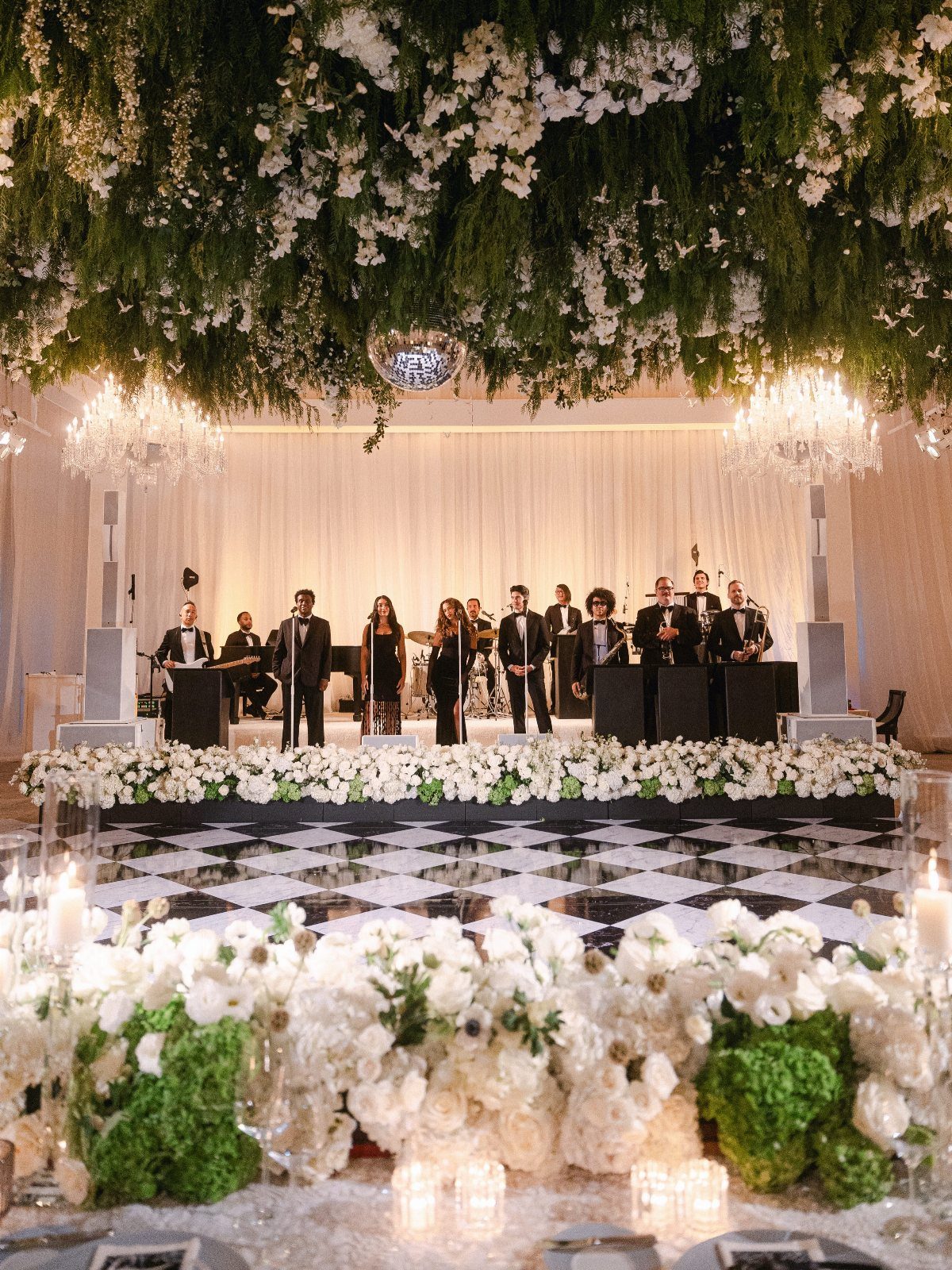
A live band on a stage above the floor gives guests a clear place to look, and the checkered floor tells them it is meant for dancing.
Flowers and greenery overhead keep the room warm, so the dancing does not feel like a stage show.
Chandeliers look lovely but should dim once the band starts.
A floor that is bright and empty stays that way. Lower lights invite people in.
6. Groomsmen Choreographed Dance
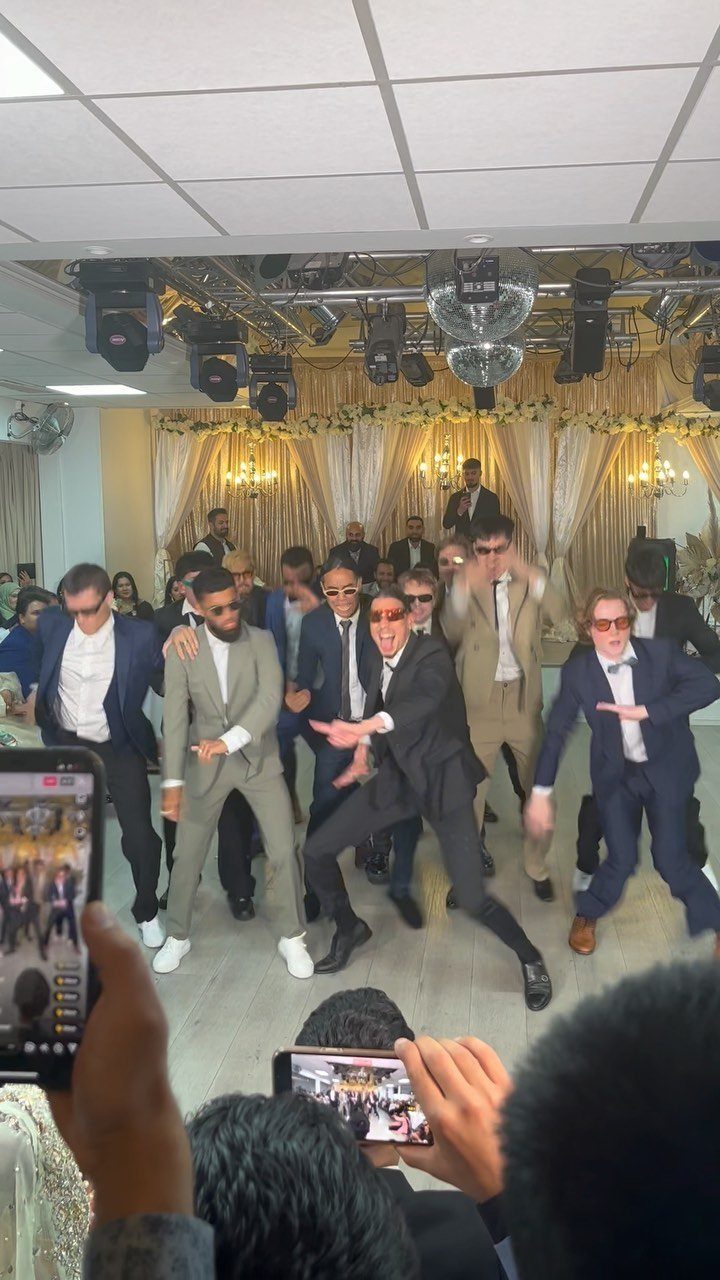
A group of groomsmen in suits and sunglasses moving together is a crowd-pleaser, and a disco ball behind them makes the whole thing look like a music video. Sunglasses help the shy ones commit.
Pick moves that a group of non-dancers can learn, and rehearse them more than once.
Simple and sharp beats ambitious and sloppy. Keep the routine to one song and cut it early rather than late.
7. Bridesmaids Dance Performance
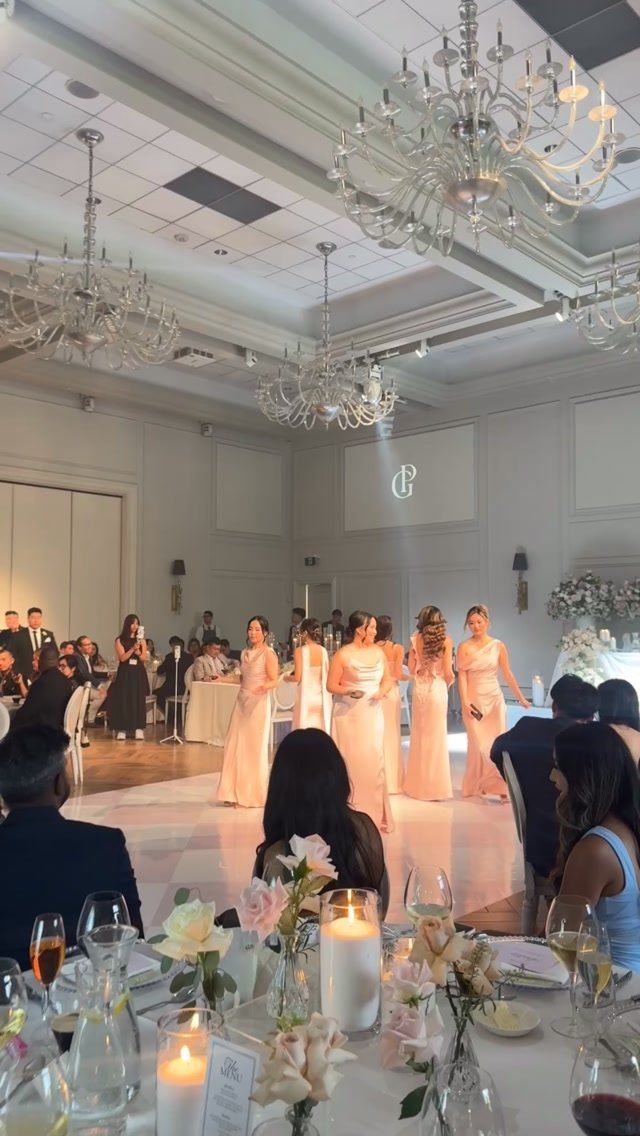
Bridesmaids in matching dresses read as one unit the second they hit the floor, so the routine can stay simple. Matching color does half the work.
Pick one song the group already knows and keep the steps to what everyone can repeat on the night.
Rehearse at least twice in the shoes they will wear, since heels change how people move. Keep the routine short, and I would end it by pulling the guests onto the floor.
8. Professional Dance Performance
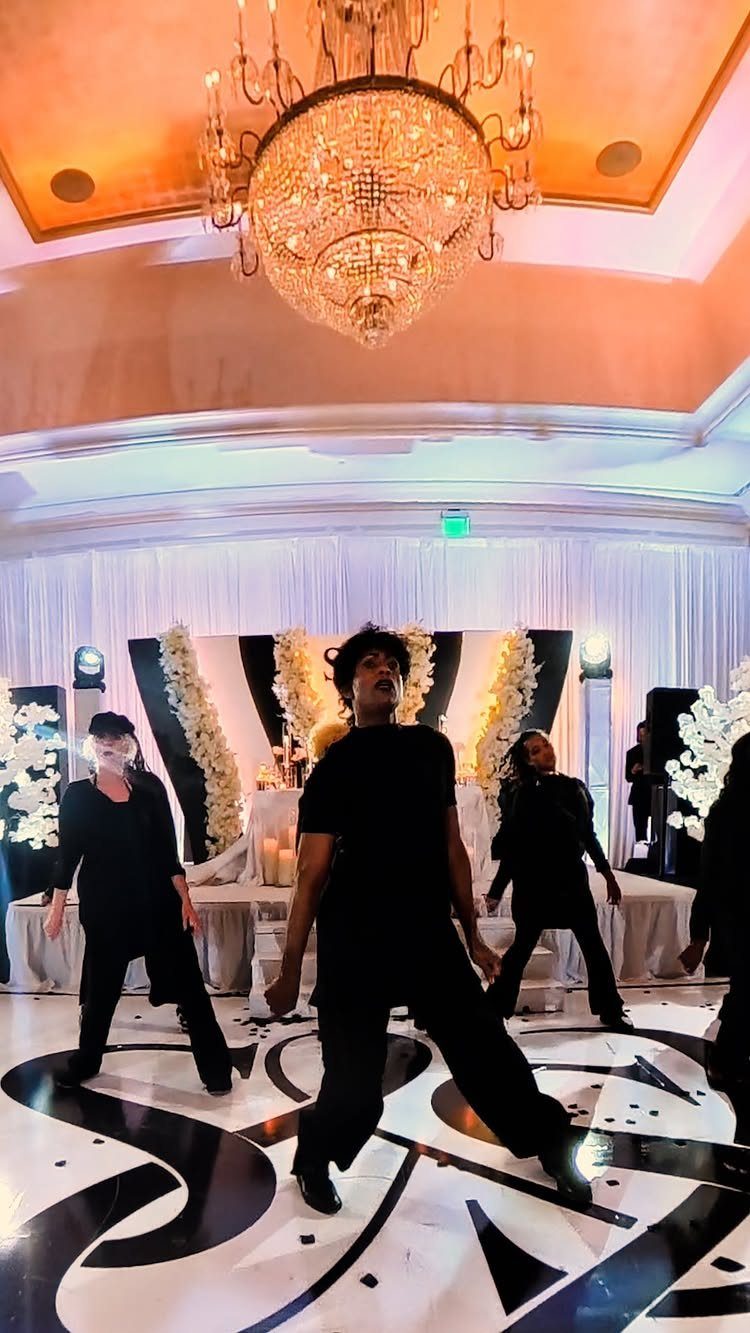
Hiring dancers puts a polished routine in front of your guests without asking anyone you love to rehearse. 3 performers in coordinated black costumes fill a floor and hold a room.
Book them for one slot, ideally just before the open dancing, so the energy carries straight into the party. Confirm the floor size with them early, because a routine built for a stage needs space.
A performance is a cost on top of the music, so I would choose it over a second band hour only if watching matters more to you than dancing.
9. Solo Bridal Dance Performance
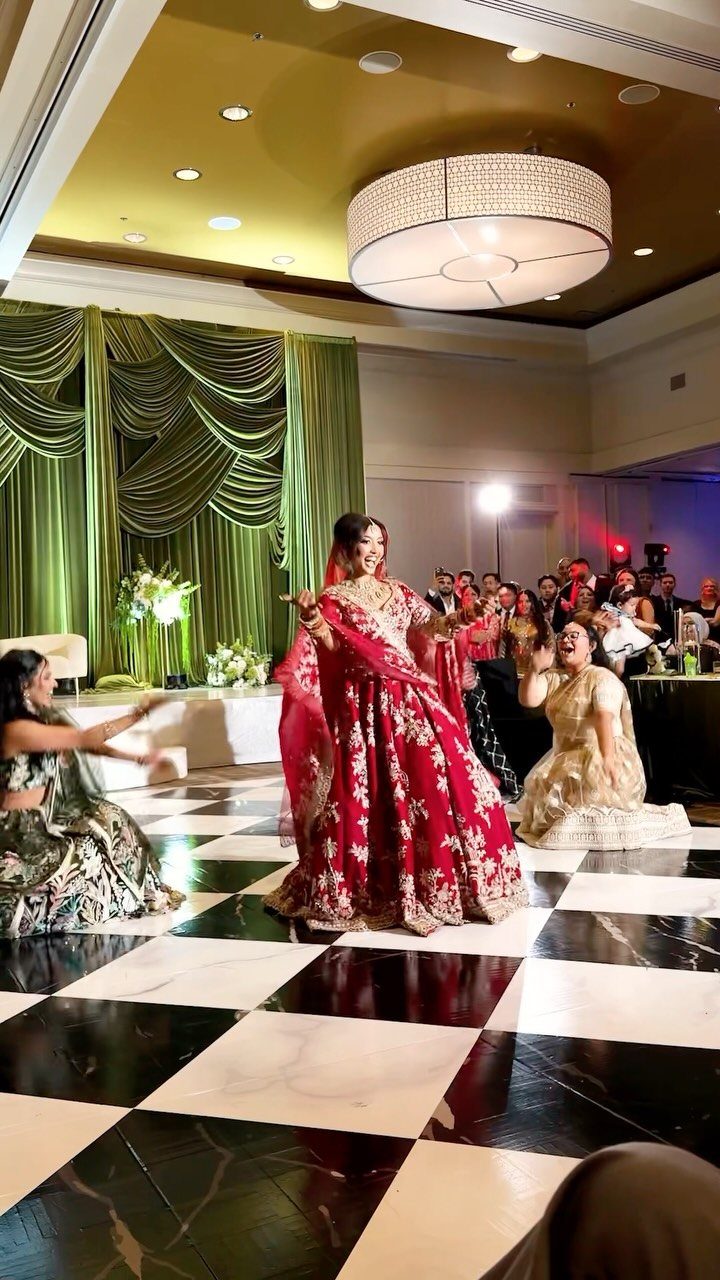
A bride dancing alone in her wedding outfit is the kind of moment guests talk about afterward, and it suits anyone who loves to perform.
Choose a song with a strong beat and a clear ending so the crowd knows when to cheer.
Practice in the full outfit, skirt and all, because a heavy hem changes every turn. I would ask the DJ to cue the lights up for the finish, then bring the groom or the whole room in.
10. Line Dancing
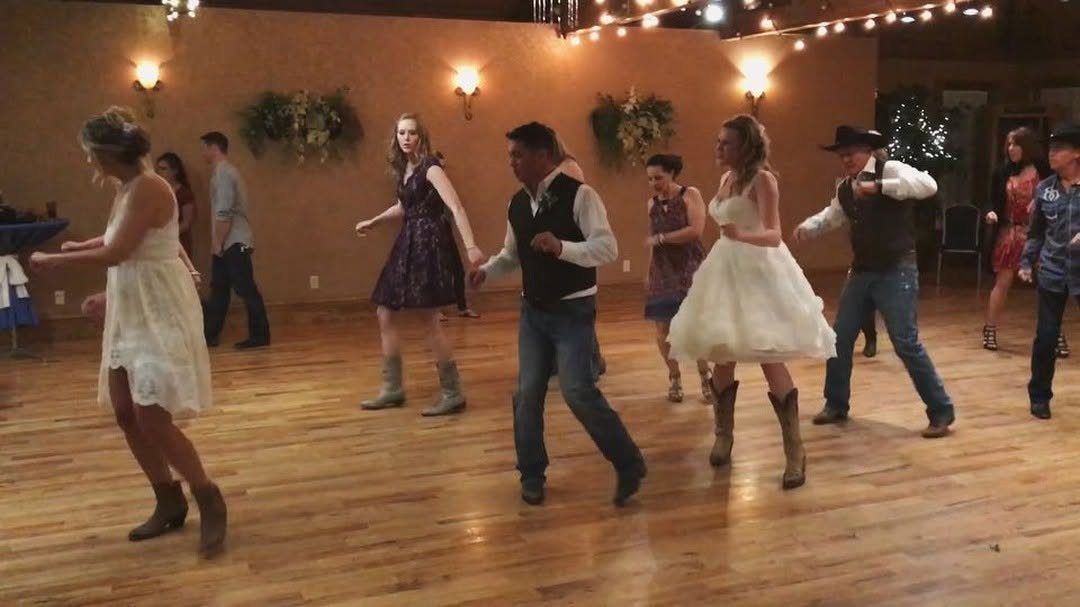
Line dancing works because nobody has to be good at it. One caller or a single repeating pattern gets a whole room moving in minutes, and the bride in boots sets the tone.
Choose two or three songs with well-known steps, and have the DJ or a friend call the moves out loud the first time through.
Put it early in the night, before guests settle at tables. A wooden floor suits it well, and I would tell guests ahead of time that boots are welcome but not required.
Tips for Encouraging Dancing
Props give shy guests something to do with their hands, and that makes the first step onto the floor easier. Funny hats and maracas work well, and a DJ can run a simple game to get people moving.
If you hire a band, ask the members to come down and mingle between sets. Grandma is far more likely to dance when the keyboard player asks her in person.
Song choice matters as much as props.
Look for tracks that guests of every age recognize, with a steady beat that needs no thinking about steps. Songs that let people dance in a group, not alone in front of a crowd, keep the floor full longest.
Then let your DJ read the room. A good one will switch tracks within a minute if the floor thins, so I would hand over a must-play list and a do-not-play list, then step back.
Creating a Fun Atmosphere
Sore feet empty a dance floor faster than a bad song.
Set out a basket of flip flops, flat shoes or colorful socks near the floor, and tell guests it is there. Women in heels will be the first to take you up on it.
Dim the lights once dinner is cleared. A softer room makes people feel less watched, and that is what gets the hesitant ones moving.
Group activities do the rest. A song with shared moves, or a game the DJ leads, pulls in guests who would never dance alone.
Frequently Asked Questions
What is the dance that everyone does at weddings?
Line dances are the ones that pull in the whole room, with the Cupid Shuffle and the Electric Slide as the usual picks.
Nobody needs a partner or any skill, because one caller or a repeating pattern gets people moving in minutes.
Who gets the first dance at a wedding reception?
The couple takes the first dance, usually as the dance floor opens for the night.
A single song works best, cut down to the verse and chorus that mean the most, because a full track drags when every guest is watching.
What is a good song to dance to at a wedding reception?
Choose upbeat tracks that every generation knows, like ‘Uptown Funk’ or ‘Don’t Stop ‘Til You Get Enough’.