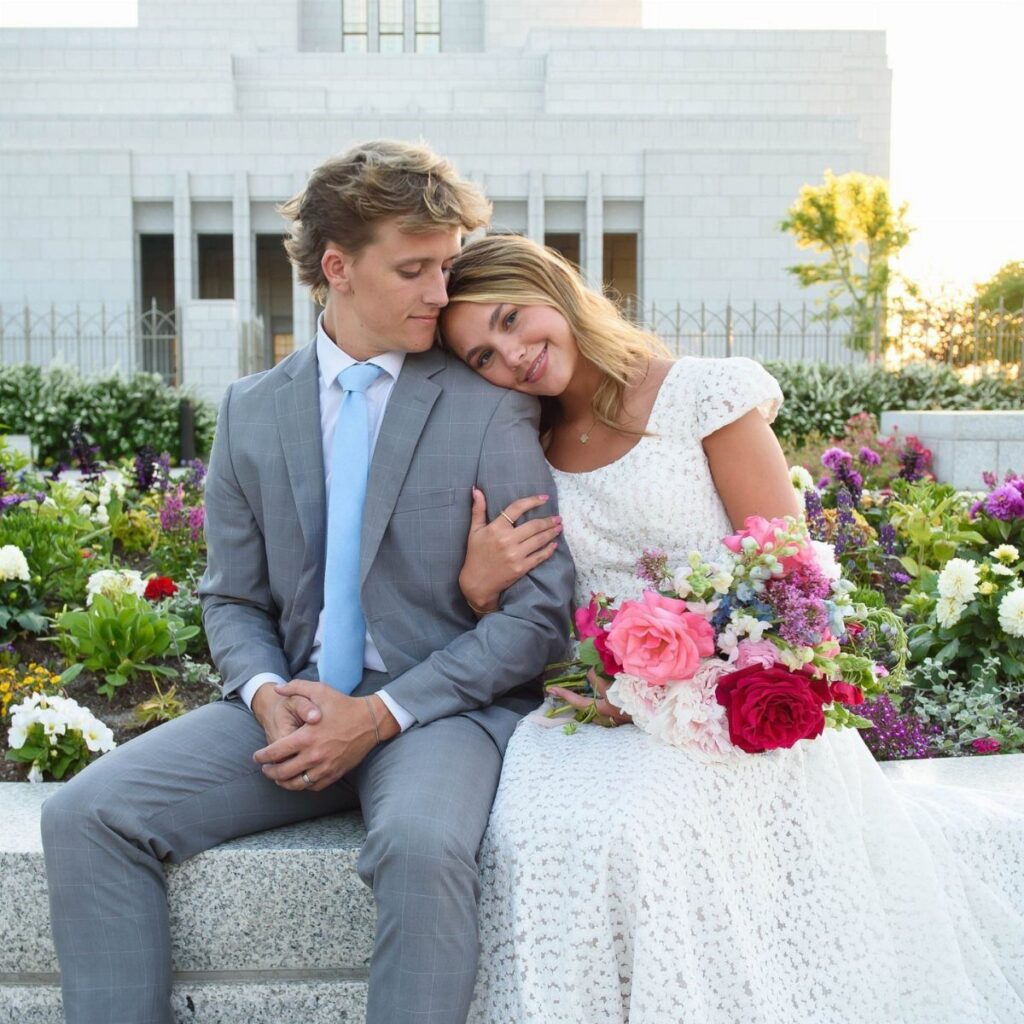
Coverage across these dresses runs from a full wrist-length sleeve to a short sleeve, with a cape and detachable sleeves in between, so the right pick depends on how much of your shoulders and arms you want covered and for how much of the day.
If you want both a covered ceremony and a bare-shouldered dance floor, detachable sleeves are the one that does it.
1. Long Sleeve Wedding Dresses
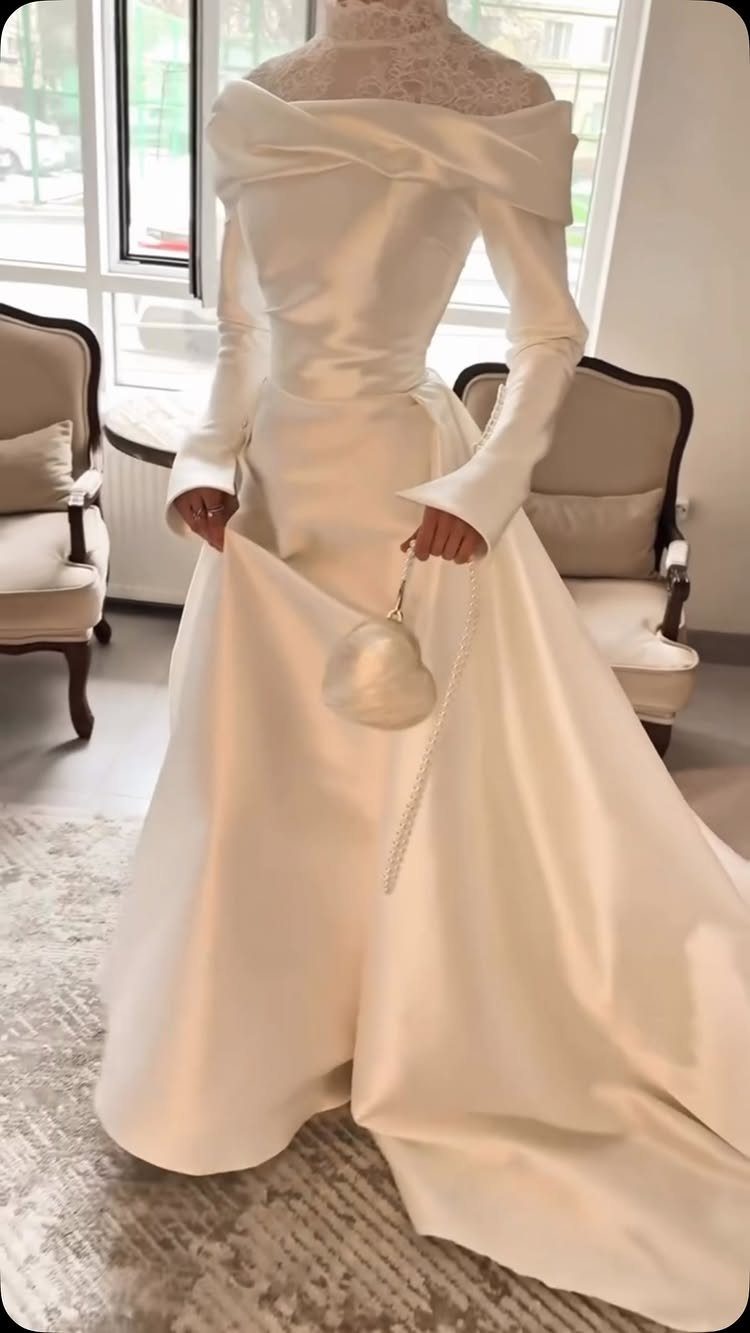
Long sleeves are the simplest route to full coverage, and satin with a lace neckline keeps the look formal instead of fussy.
A fitted sleeve that runs to the wrist reads as sophisticated on its own, so the rest of the dress can stay quiet.
I would pick one place for the lace and leave the rest plain. Try your sleeves on with your arms raised, since you will hug a lot of people that day.
2. Strapless Gowns with Detachable Sleeves
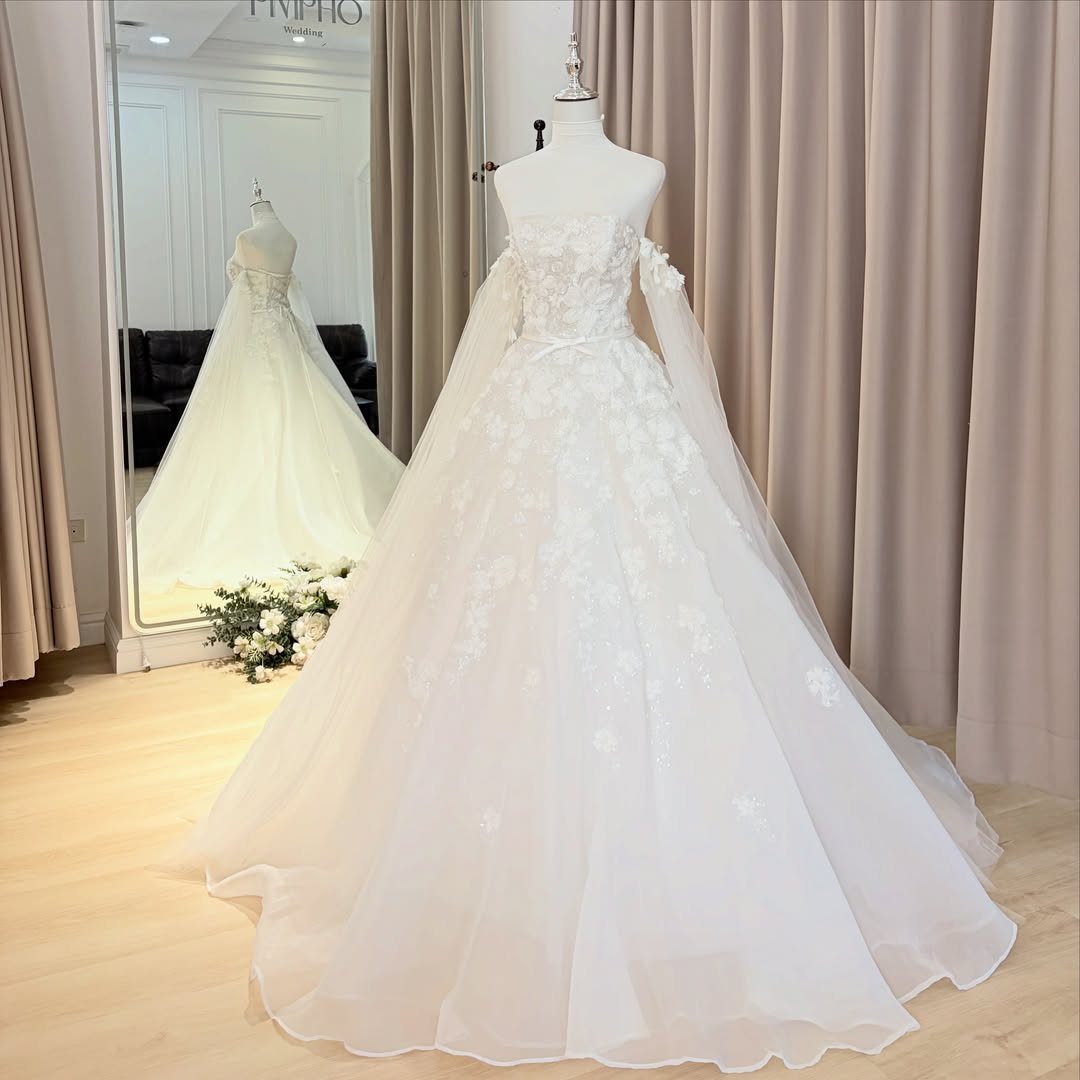
Detachable sleeves let one gown do two jobs: covered for the ceremony, bare-shouldered for the dance floor. Sheer off-the-shoulder sleeves in matching lace give a strapless bodice a finished look instead of a bolted-on one.
For a modest bride, this is my pick when you want options. Ask the shop whether the sleeves are sold with the dress or separately, because that changes your total.
3. Bridal Gowns with Capes
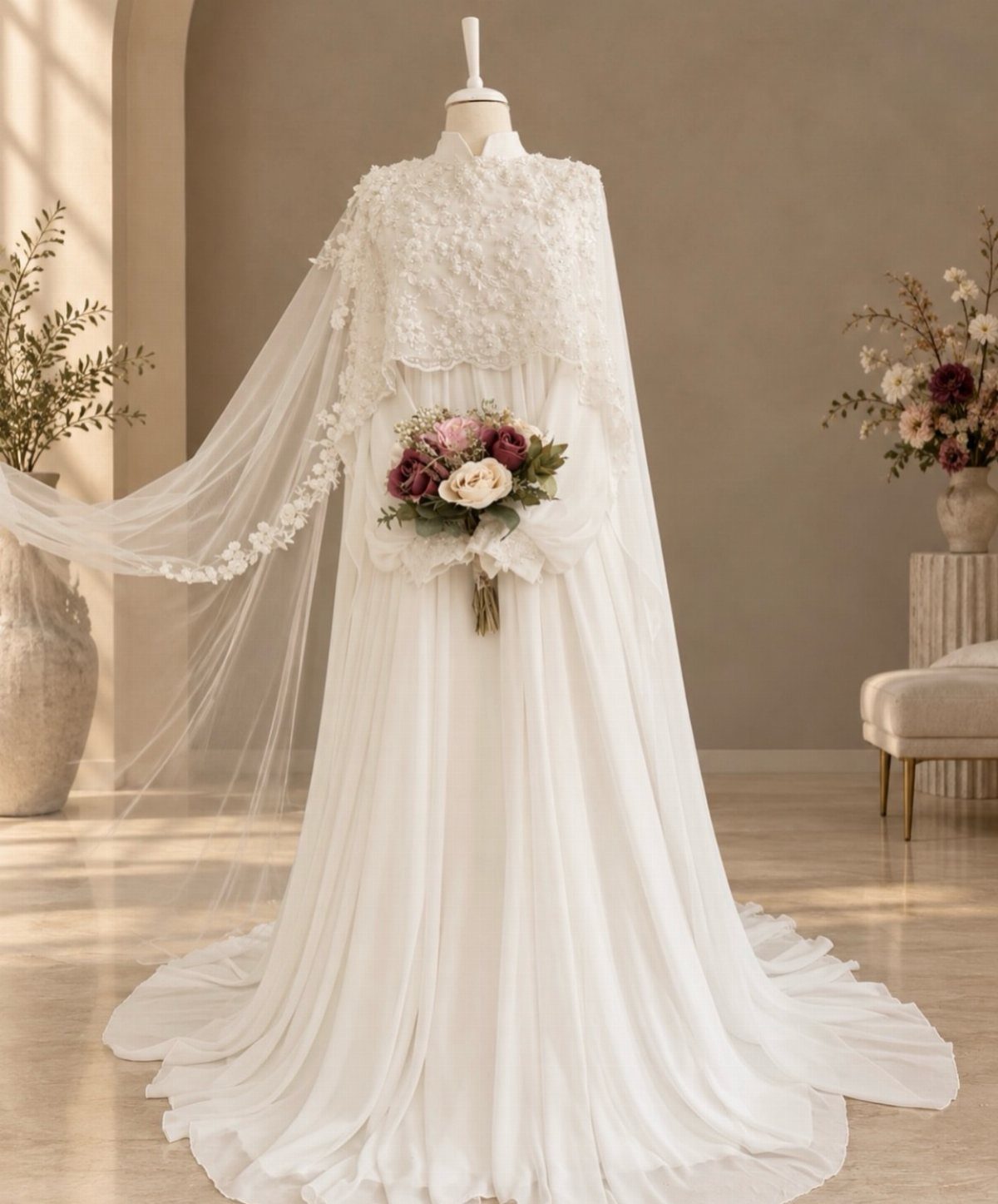
A lace capelet covers the shoulders and upper chest without adding sleeves, and it drapes lightly over the bodice. That makes it a good fit if long sleeves feel heavy but you still want coverage up top.
Plan your bouquet around it. A capelet with plenty of lace pairs best with a simple, loose bunch of flowers, so the two do not compete.
4. Puff Sleeve Wedding Dresses
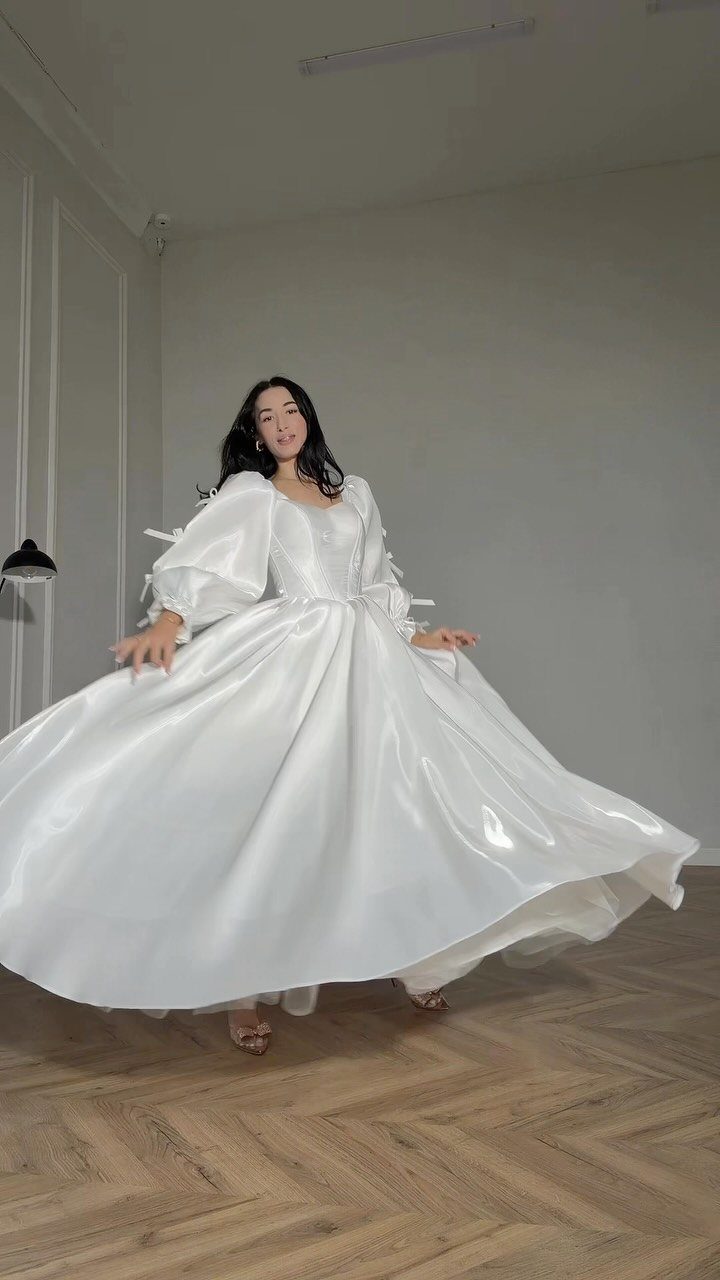
Puff sleeves in satin bring romance and a bit of drama, especially when the skirt is full. Because the volume sits at the shoulder, the look suits a bride who wants coverage with some theater.
Keep the bodice clean so the sleeves lead. If you love this shape, check how the sleeves sit when you hug and lift your arms, since structure matters more than style here.
5. Short Sleeve Wedding Dresses
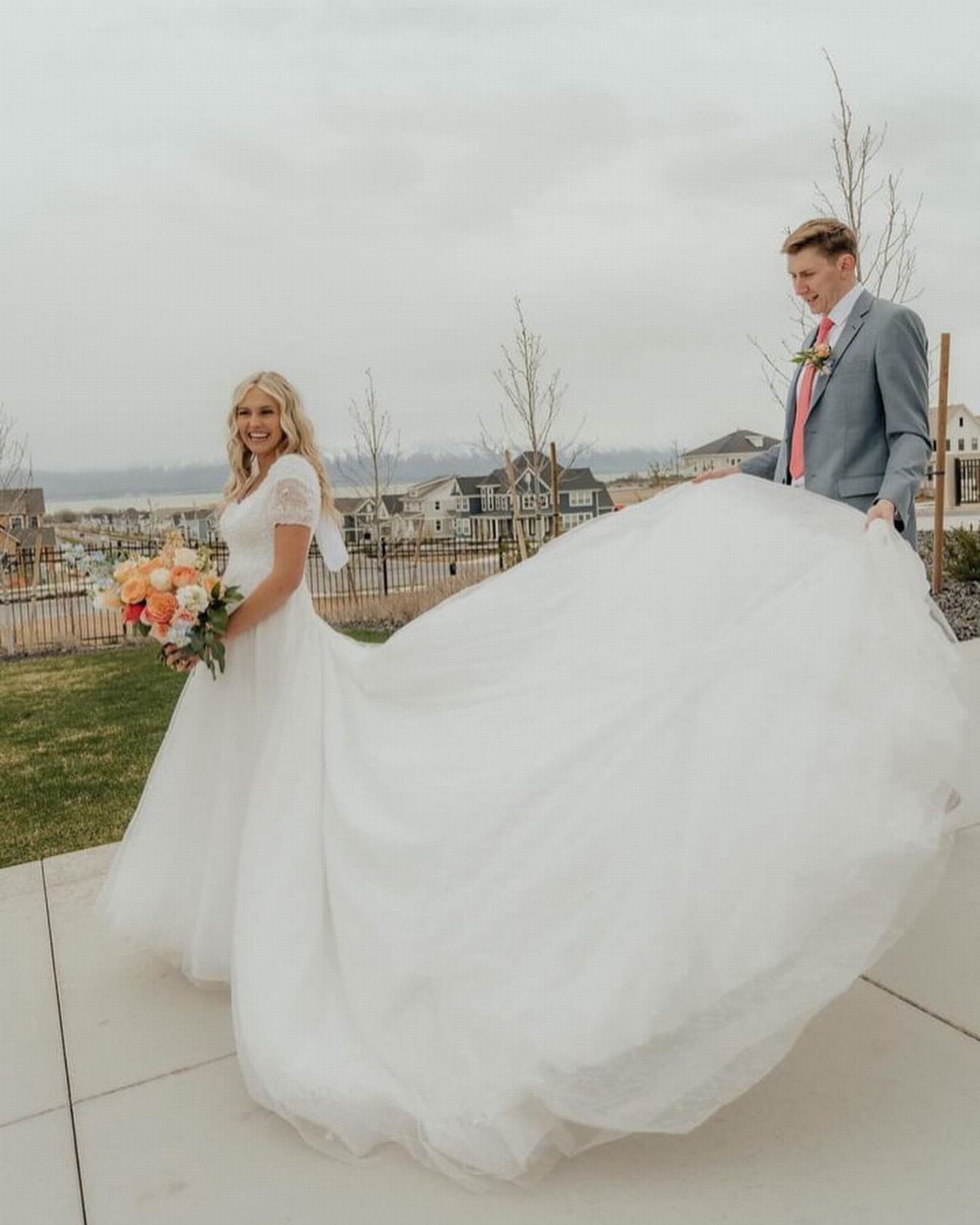
Short sleeves are the easy middle: more covered than a strap, lighter than a full sleeve. They work well for an outdoor day, and a long train keeps the dress feeling formal.
I like them for brides who run warm. A train this long deserves a plan, so ask your groom or a bridesmaid to lift it for photos and walking.
Finding the Right Dress
Start with the options that change a gown without replacing it.
Many modest designs let you add sleeves or a modesty panel, so a dress you love that is a little too open can still be an option. Ask about this before you rule a style out.
Look at necklines, backs and bodices as well as sleeves. Modest gowns come in glamorous, boho and romantic styles, so pick the look first and the coverage second.
Size matters too. Modest gowns now come in US sizes 0–28 from a number of designers, so a larger body shouldn’t mean settling on fit.
When you search, sort by sleeve and neckline type. Sleeve names (cap, flutter, bell, bishop, 3/4, half) are worth learning, because a shop can find your dress faster when you describe it in those words.
Shopping Experience
Designer websites send you to an authorized retailer, so look up the shops near you that carry the gown you like. Book an appointment there instead of walking in.
Modest bridal shops are a real category, and there are plenty of them.
Some names to search are A Dressy Occasion, Latter Day Bride, Beautifully Modest, Totally Modest, Alta Moda Bridal and Simply White Bridal. Try a handful of options side by side before you commit to one.
Ask each shop how it handles alterations, such as adding sleeves or a modesty panel. Some shops also carry temple dresses and accessories, which helps if you want everything in one place.
I would judge a boutique by how it answers questions about coverage. If the staff treat your standards as the starting point rather than a limit, that is the shop to buy from.
Frequently Asked Questions
What makes a wedding dress modest?
Covered shoulders and a higher neckline are the core features, and many modest gowns add sleeves, a modesty panel, or a covered back and bodice. Long sleeves, short sleeves, lace capelets and detachable sleeves all get you there.
Glamour, boho and romantic silhouettes all come in high necklines and long sleeves, so settle on the style you want, then look at how much coverage it needs.
Can I add sleeves to a wedding dress that is too revealing?
Yes, many modest designs let you add sleeves or a modesty panel, so a dress you love that is a little too open can still work.
Before you cross a style off the list, ask the shop what alterations it offers.
If the sleeves detach, ask whether the price includes them or whether they are sold apart, because that can move your total by a few hundred dollars.
Do modest wedding dresses come in plus sizes?
Yes. Several designers now cut modest gowns in US sizes 0–28, so a fuller figure is no reason to settle on fit.