The ideas here run from a wine barrel on the aisle or a horseshoe napkin ring at each seat to a fringed gown, a cowboy hat with a veil, or embossed leather shoes, with a rustic venue doing much of the work before you add a prop.
1. Bohemian Style Western Wedding
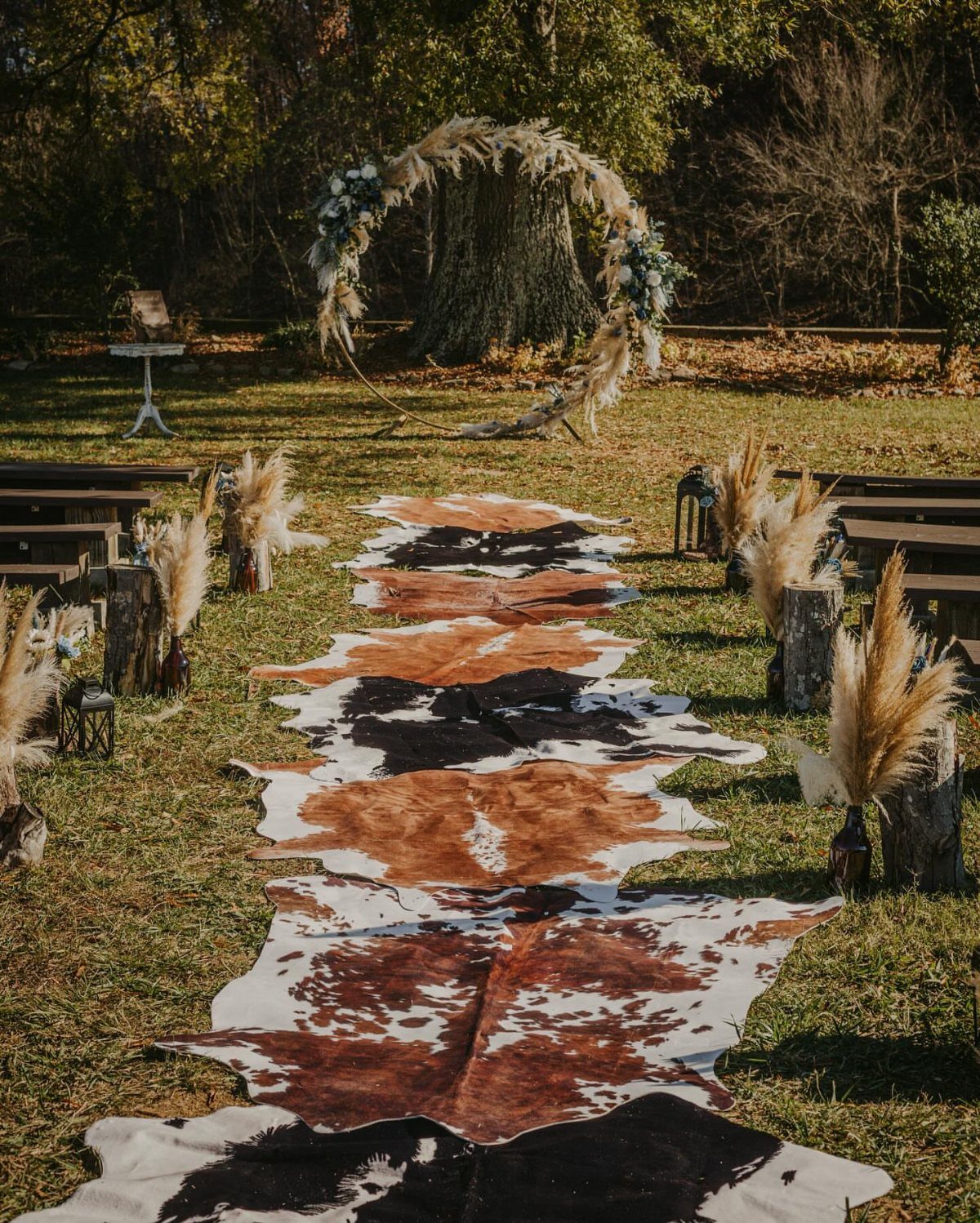
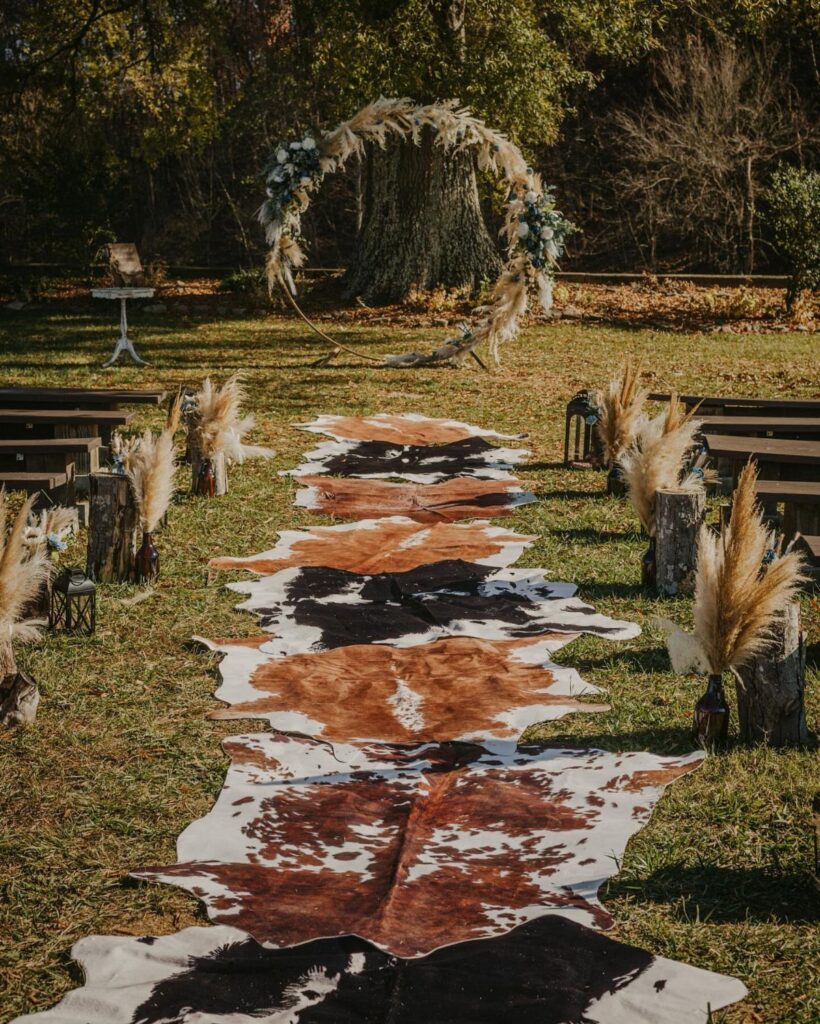
A cowhide runner swaps the usual white aisle cloth for something with texture and a bit of dust-road attitude, and pampas grass softens it right back into boho.
Keep the palette to creams, tans and soft browns so the hide reads as a deliberate choice.
I like a circular arch here because the round shape frames the couple without the heaviness of a square structure. Skip stiff ribbon bows and let the grass do the work.
2. Western Wedding Dresses
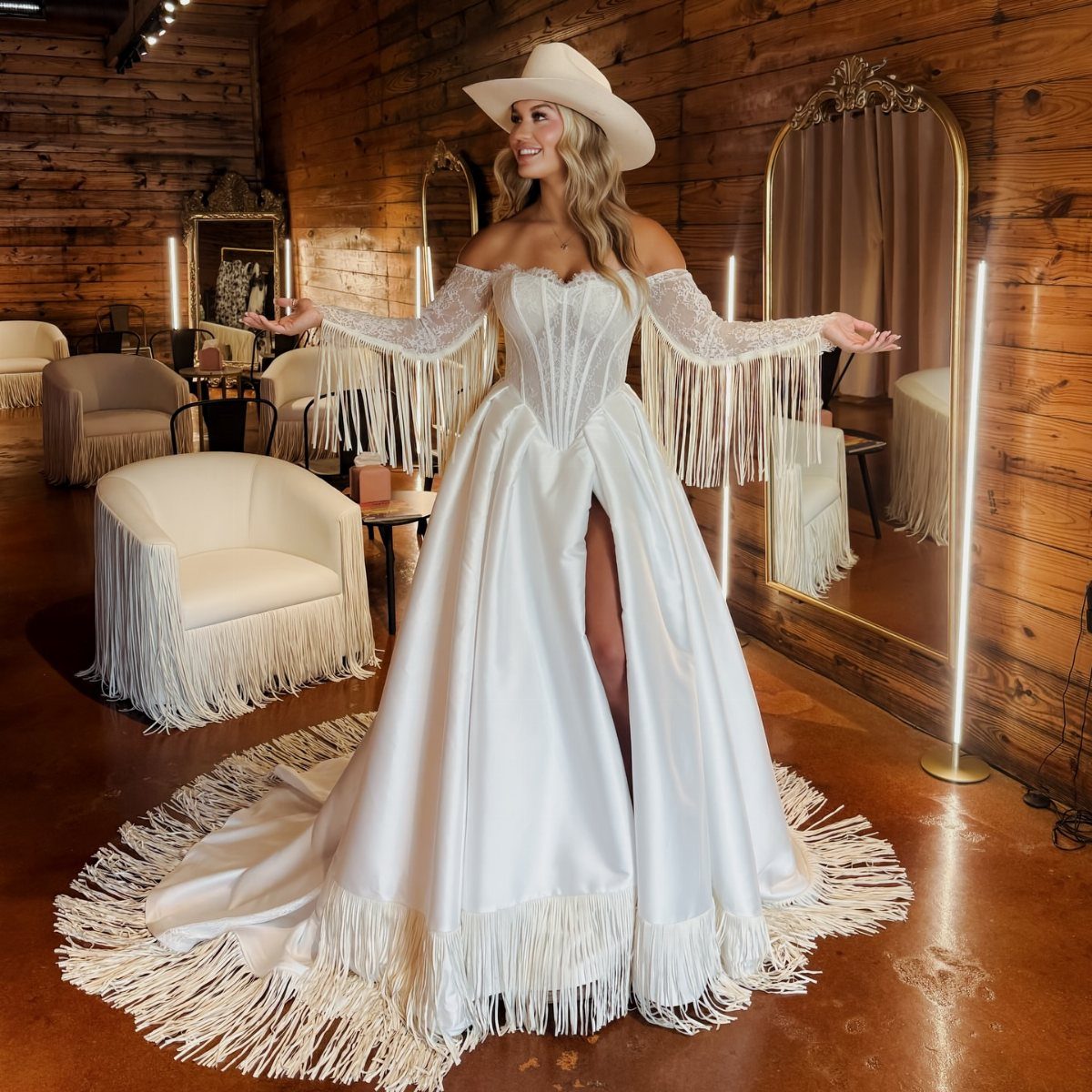
Fringe is the quickest way to put a western stamp on a bridal gown while keeping it white and formal.
It moves when you walk and sways on the dance floor, so the dress does some of the theme’s work for you.
Pair it with a cowboy hat and keep everything else simple. If the dress has this much going on, plain jewelry and a loose hairstyle will look better than piling on more.
3. Rustic Wedding Venues
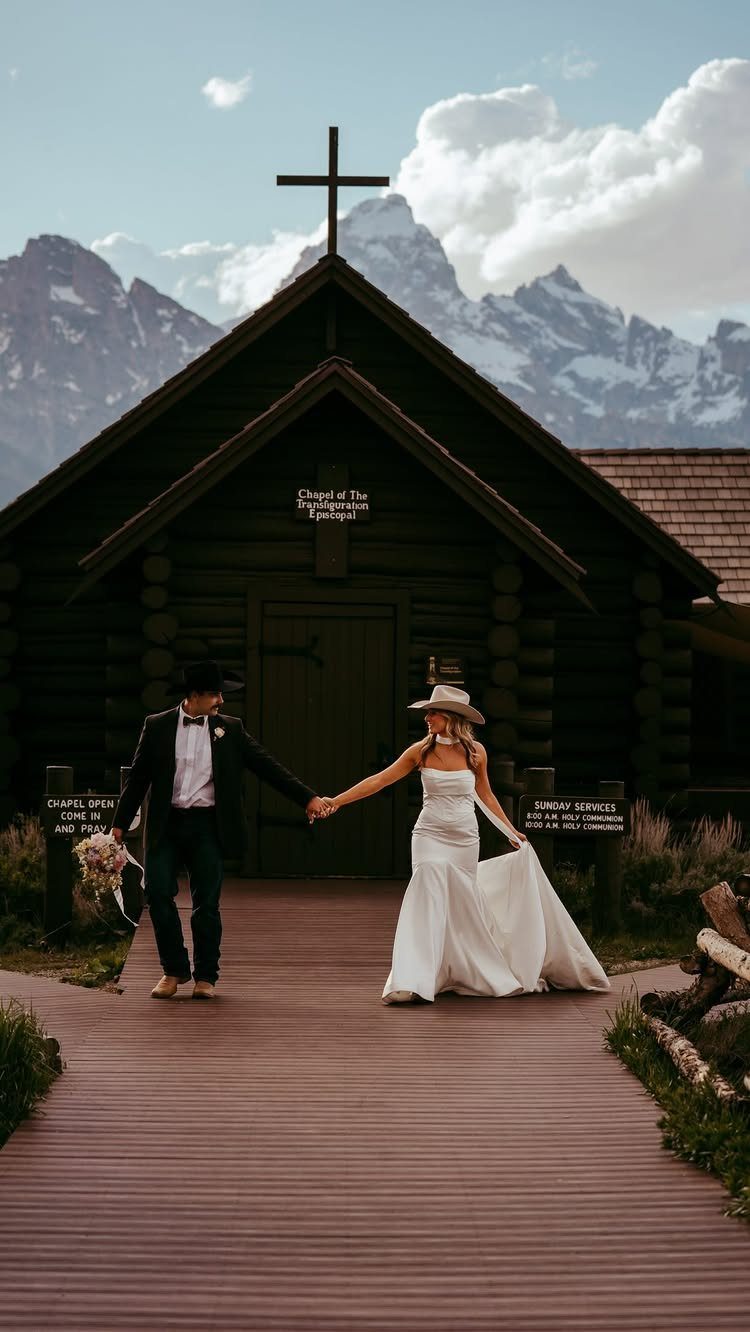
A log chapel set against open mountains gives you the western look before you add a single prop, so spend the decor budget on the inside and let the building carry the rest.
That matters on a tight budget, because a venue with real character means less spending on decor to fake it.
Look for places where the building itself is the backdrop. Then let hats and boots be the only theme you bring, and ask yourself whether anything else is needed.
4. Wildflower Floral Arrangements
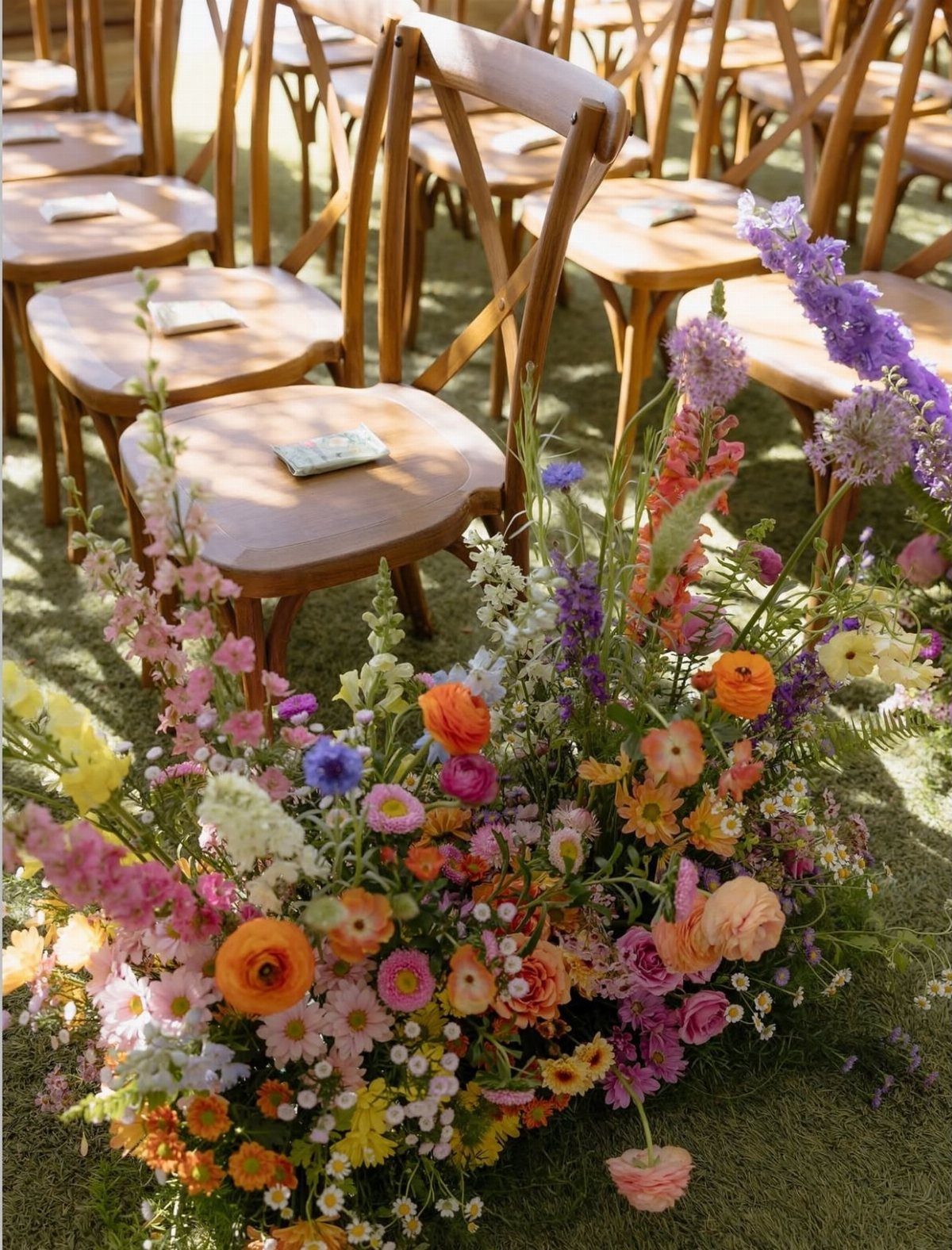
Wildflowers suit a western wedding better than formal roses because they look picked, not arranged. A loose, colorful bunch set on the grass in front of the front row of chairs is a simple ceremony focal point.
I would choose a mix of bright colors over a single tone, since it echoes the field around you. Plain wooden cross-back chairs let the flowers carry the color, so keep the seating unfussy.
5. Natural Setting Outdoor Ceremony
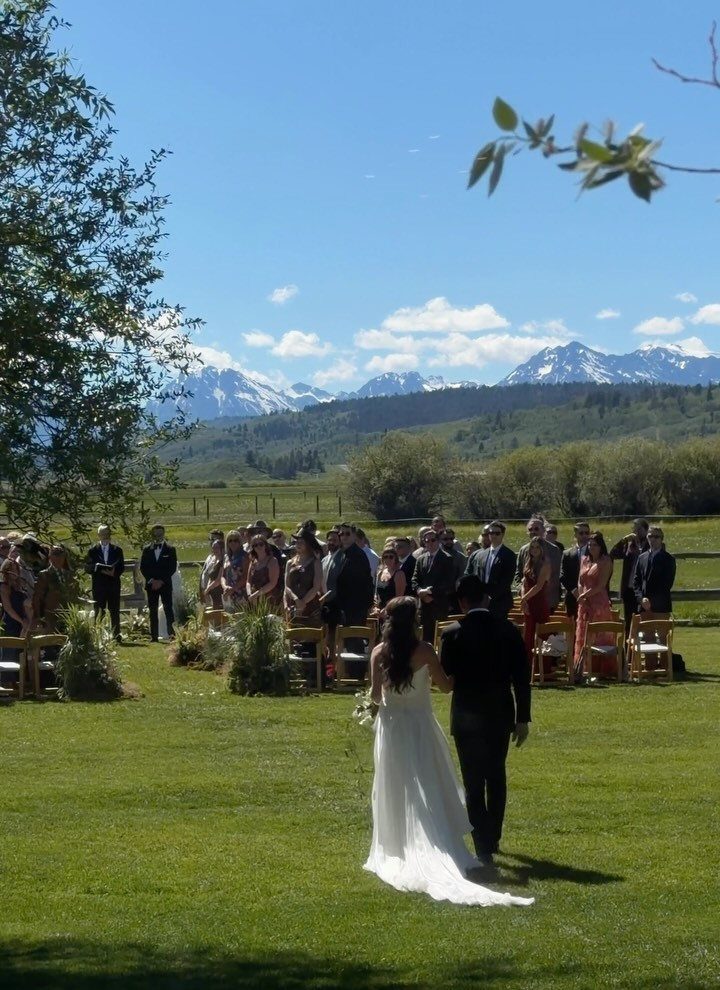
Holding the ceremony on an open grassy field with mountains behind you makes the scenery the decor. With a small guest list, rows of simple chairs are all the setup you need.
My advice is to spend on the view, not on arches or draping that compete with it.
6. Unique Sleeves
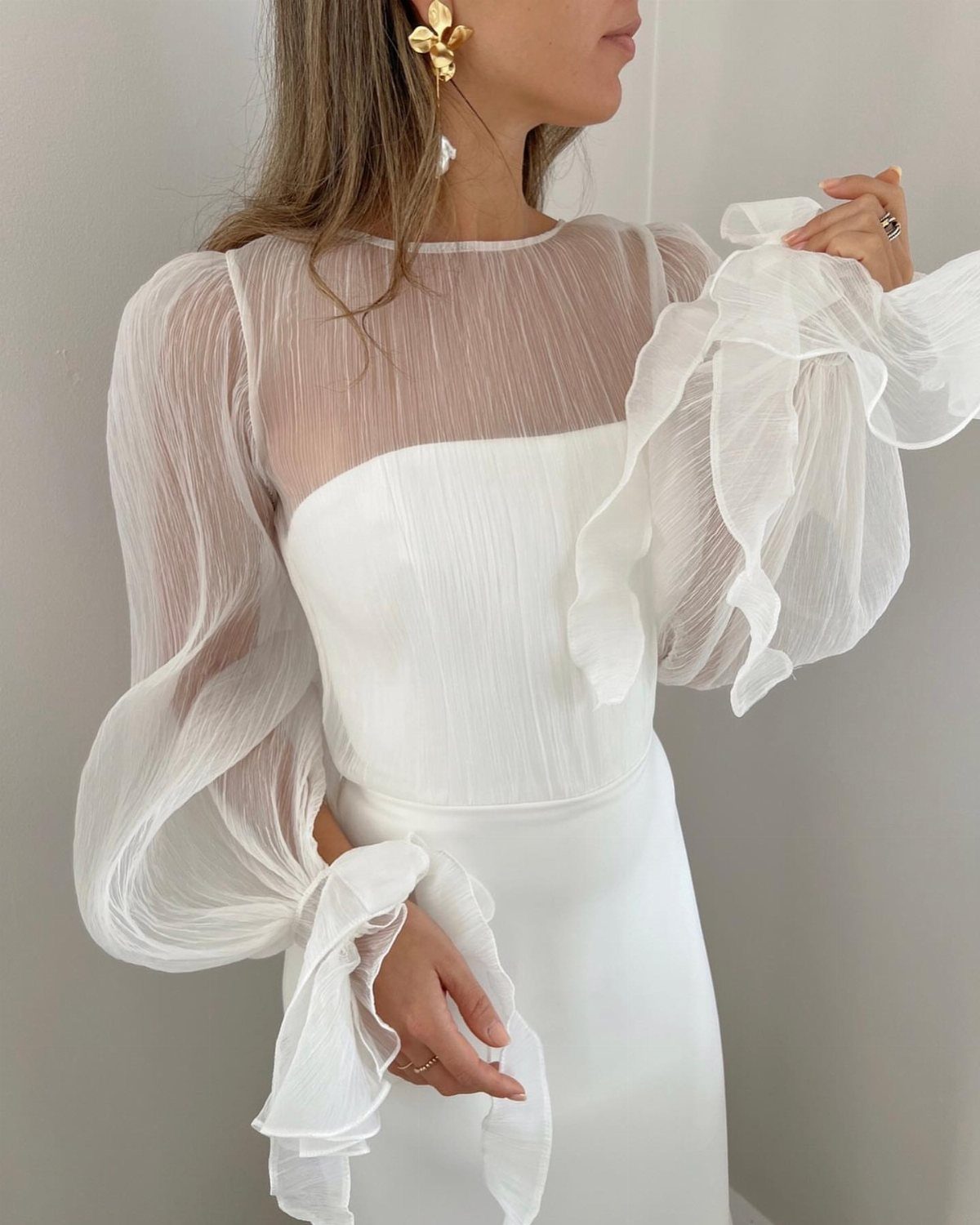
Sheer, ruffled puff sleeves add volume and a soft, romantic note, which keeps a western dress from looking too costume-like.
Sleeves are where a simple gown becomes memorable, and Rue de Seine is the name I would start with for a western-leaning version.
Pick sleeves with a sheer finish if you want drama without weight. They photograph well against a plain backdrop, so you can pair them with minimal jewelry and let the sleeves lead.
7. Bridal Cowboy Hat with Veil
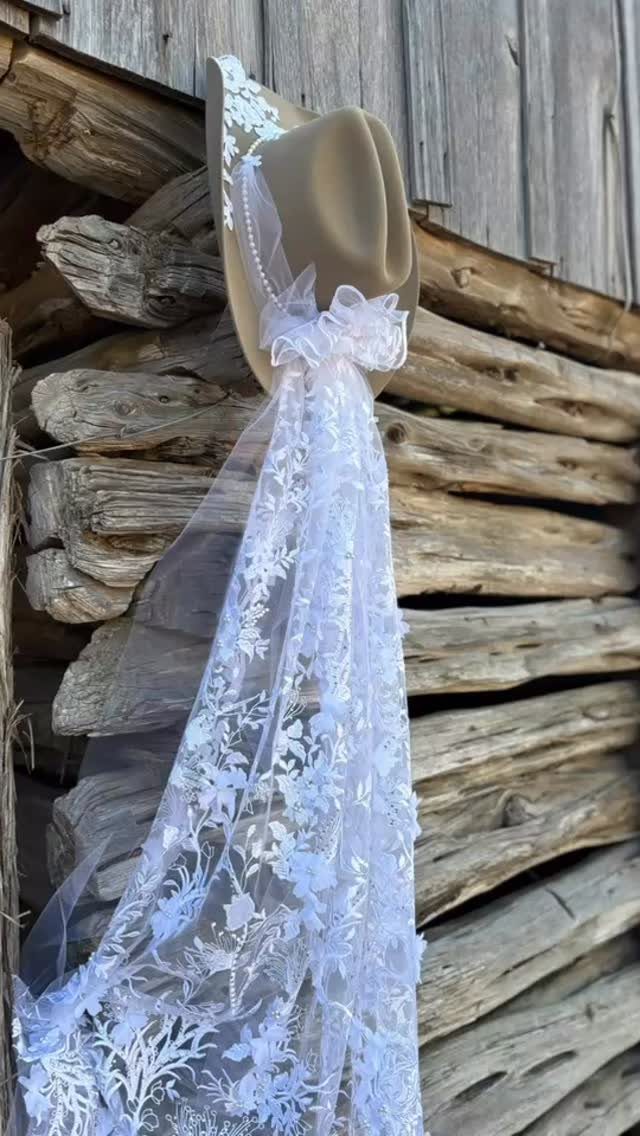
A tan cowboy hat with a lace veil pinned to it gives you a headpiece that reads as a bride and a ranch hand at once.
Choose a veil in white floral lace so the hat’s brim stays the rustic part and the lace supplies the softness.
I would keep the dress simple, since the hat and veil already carry the look. Try the veil attached before the wedding day, not on the morning of, so you know it hangs the way you want.
8. Embossed Leather Bridal Shoes
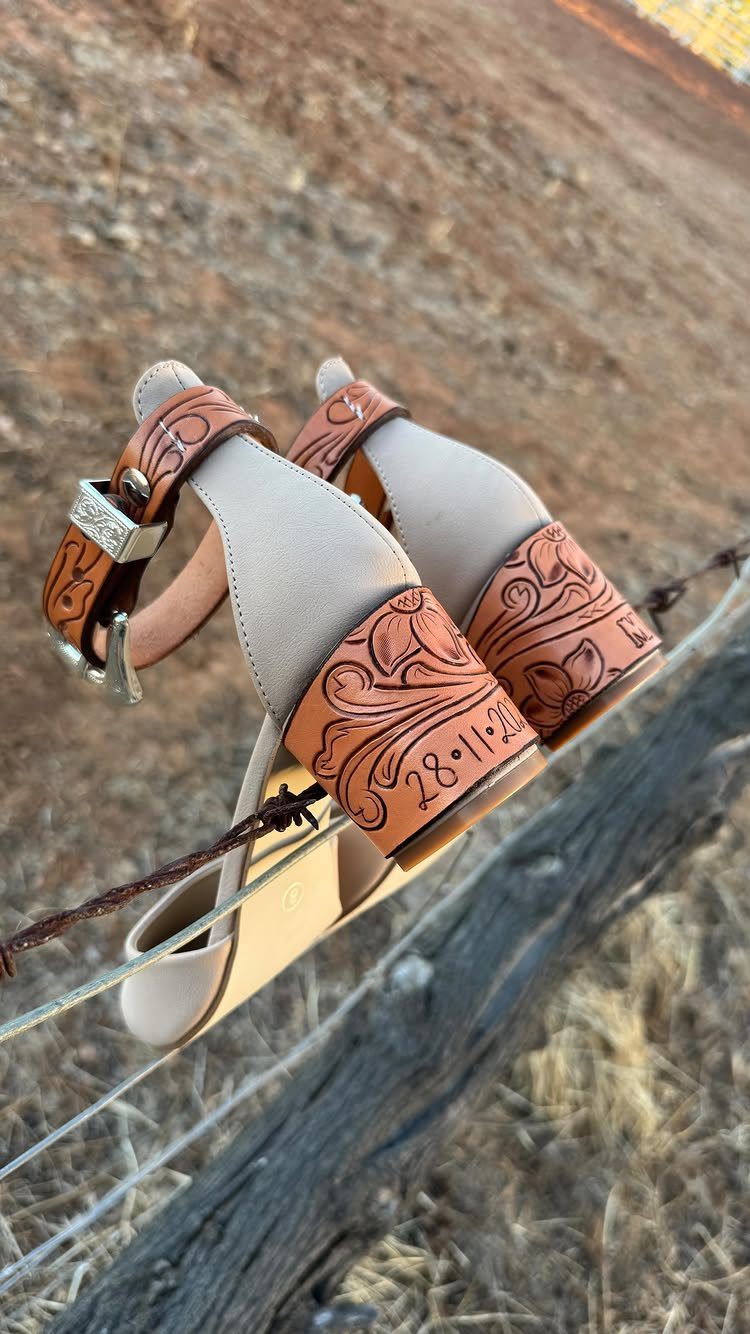
Shoes are a quiet place to put the western theme, and floral embossed leather straps do it without a single fringe tassel.
Beige heels with brown straps stay neutral under a long gown, so the tooling is a detail only you and the photographer will catch.
Look for a date stamped into the leather, like the one on this pair. It turns the shoes into a keepsake you can display after the wedding, and I would take that over a plain sole.
9. Wine Barrel Aisle Decor
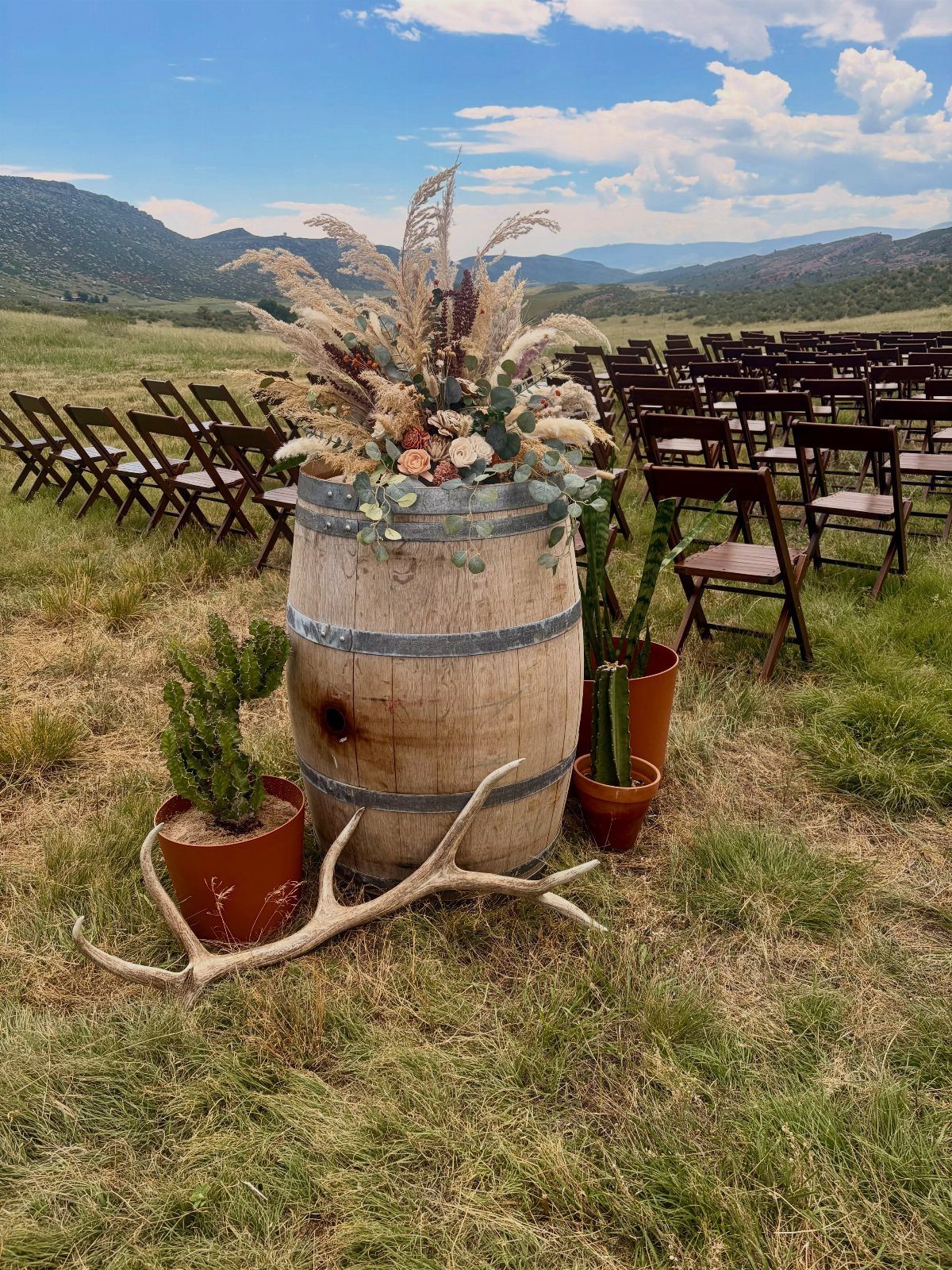
A wine barrel works as an aisle marker because it gives you height and a place to set flowers without renting a single arch.
Top it with dried florals, then add small potted cacti and a set of antlers for a desert-meets-mountain mood.
Dried flowers hold up outdoors without wilting, which saves you a last-minute scramble. Place one barrel at the front of the aisle and let the rows of plain folding chairs do the rest.
10. Horseshoe Napkin Ring Place Setting
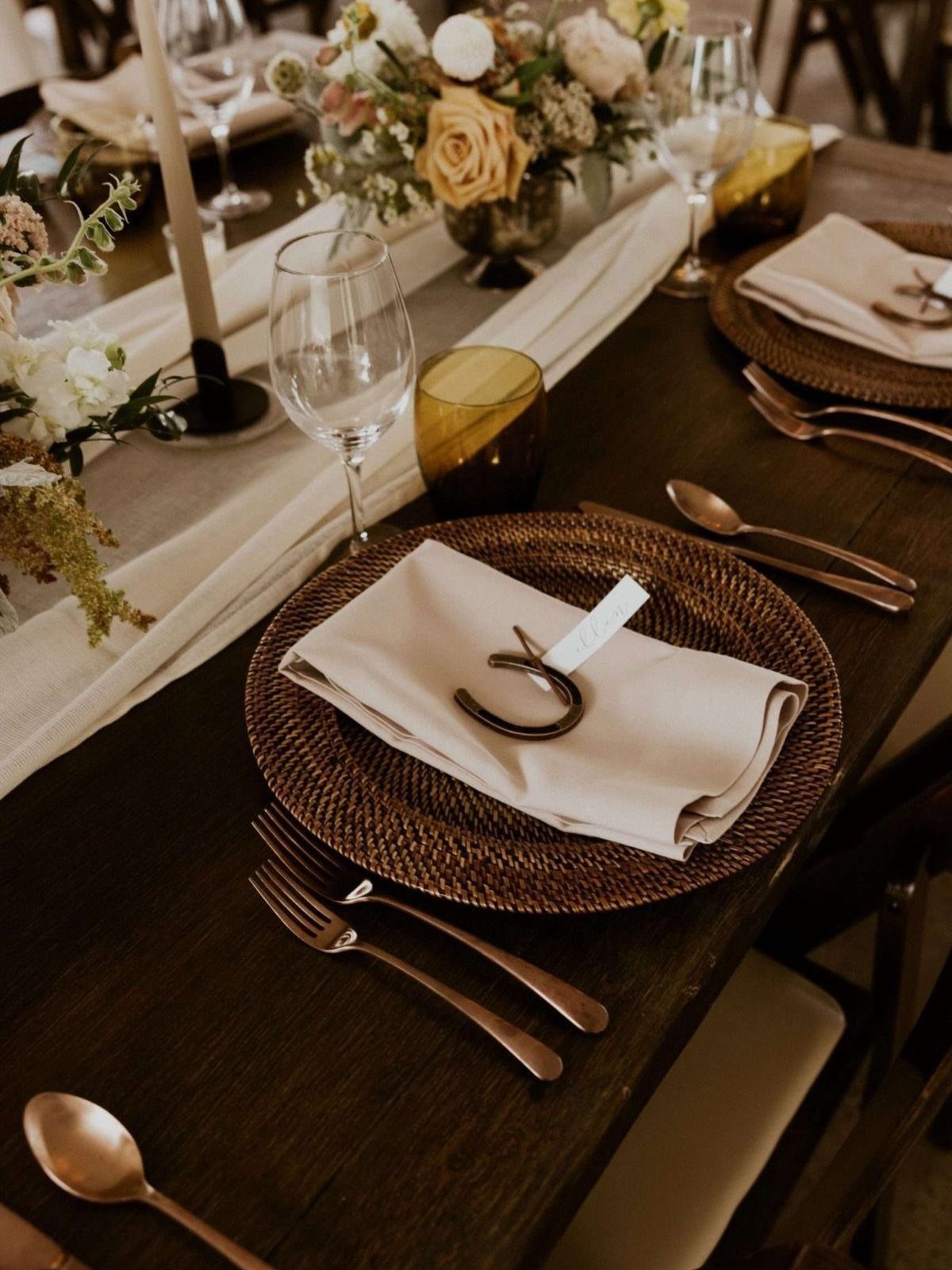
A horseshoe napkin ring is the cheapest way to bring the theme to every seat. Slip a beige napkin through it and tuck a name tag in, and the ring does double duty as a place card.
Pair it with woven chargers and copper flatware, and the table has a warm, earthy palette with no extra props. I would skip centerpieces that fight the horseshoes and keep the floral arrangements low.
Choosing the Right Dress
Start with where you will stand, because the venue decides the dress. A grassy field, a barn floor and a hotel ballroom each ask for something different in hem length, train and weight.
Breathable fabric matters more than most brides expect. Chiffon and organza are light, airy and drape well, and they keep you cooler through a long day of photos, hugs and dancing.
Before you buy, test the movement.
Sit, lift your arms and take a full turn on the dance floor. If the dress fights you in the fitting room, it will fight you at hour six.
Floral-inspired gowns are an easy fit if you want the western look to stay soft, and pastel or brighter shades both work.
Accessorizing for Western Weddings
Pick one or two statement pieces and let the rest stay quiet. A western look gets busy fast.
Turquoise earrings are an easy start. Cinch a dress or skirt with a tooled leather belt and the western look is settled; a big engraved buckle does the same job with a little more shine.
Pick boots with the dress hanging in front of you, since the leather shade and the style both have to agree with the fabric, and buying them last usually means a compromise.
A fringe or leather clutch finishes the outfit, though I would pick one or two pieces from that list and let them carry the look.
I would treat the dress as the base: country-inspired details layered over classic bridal shapes. That mix is what keeps the outfit looking like a wedding, not a costume.
Seasonal Considerations
Season should shape the dress before the theme does. Temperature affects the fabric, the layering, the silhouette and the embellishments, so settle those first.
A dress that fits the time of year and the setting keeps you comfortable and looking right.
Heavy fabric and long sleeves in summer sun will wear you down, and a thin, sleeveless gown on a cold day will have you reaching for a wrap in every photo.
Plan layers on purpose. Pick a shawl, jacket or wrap that suits the dress, not one grabbed at the last minute.
Check the forecast for your date range when you start shopping, and again before your final fitting.
Frequently Asked Questions
What is the western wedding tradition?
A western wedding borrows from country and cowboy life: outdoor settings like a ranch, farm or barn, rugged details, homespun decor and a relaxed dress code.
Hats, boots, fringe, leather and wildflowers do most of the work. The warmth comes from the setting, so a place with real character means less to fake with props.
What should a 60 year old woman wear to a wedding?
Age doesn’t change the rules here, so my advice for a 60-year-old guest is the same as for anyone else at a western wedding: dress for the venue and the weather.
Choose a dress that fits the season and the setting, ideally in a light, airy fabric such as chiffon or organza, then add a western accent or two, like turquoise earrings or a tooled leather belt.
A shawl or wrap belongs in the plan, and a quick look at the forecast a few days out tells you whether it will be needed for warmth or shade.