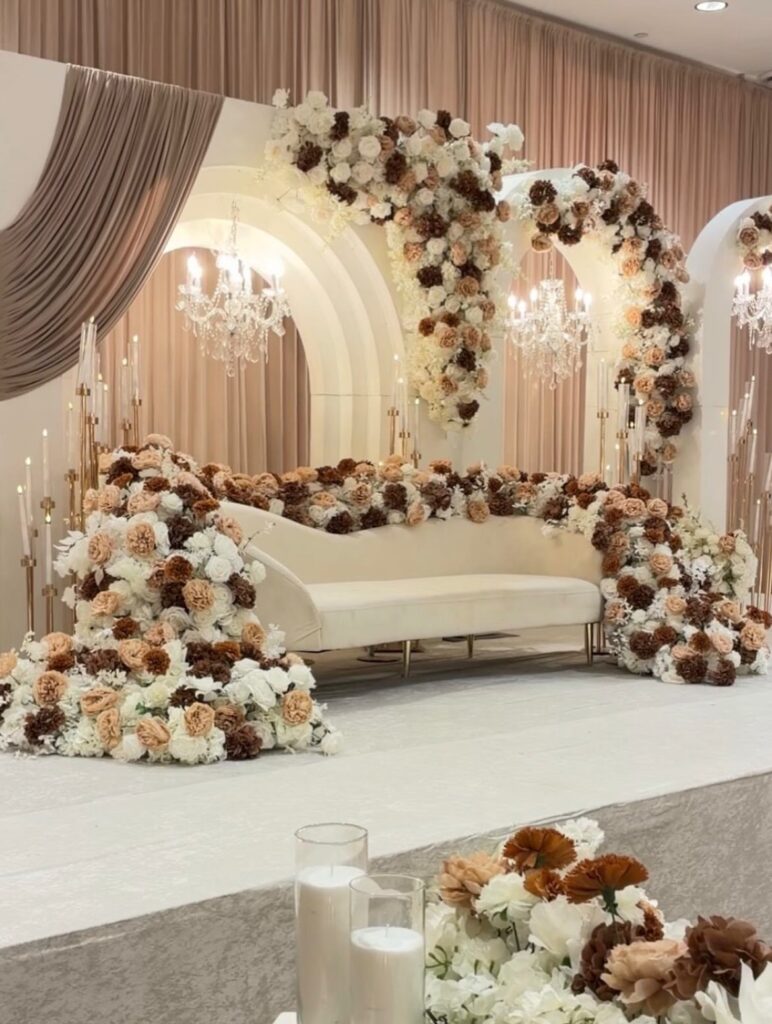
The ideas here run from a single dramatic feature to a full planning process with a designer, and what separates them is how much of your budget goes into one spot.
Pick the one place that gets the money, whether tall centerpieces, over-the-top blossoms, oversized colorful hanging lampshades, or Spanish moss and lanterns, and let everything else stay plain around it.
A look this large depends on choosing a designer and starting the event planning process early, so settle who builds it before you settle the details.
1. Dramatic Statement Feature
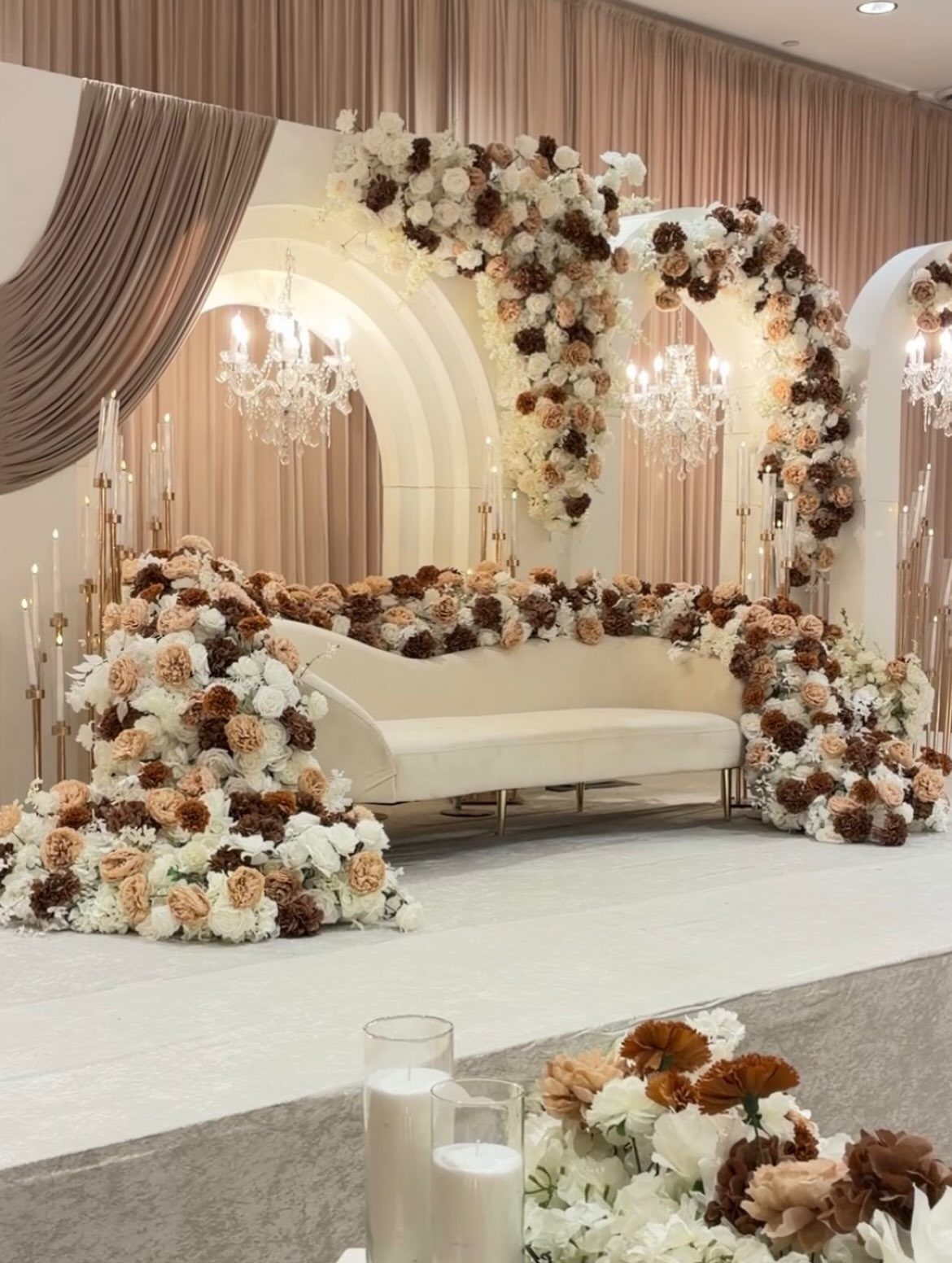
One focal point does more for a room than a scattering of small touches.
Pick the piece that anchors the room, then build everything around it so nothing competes.
I would spend the money here first and let the rest of the room stay simpler. This approach asks you to cut elsewhere, and cutting is easier when you decide early.
2. Tall Centerpieces
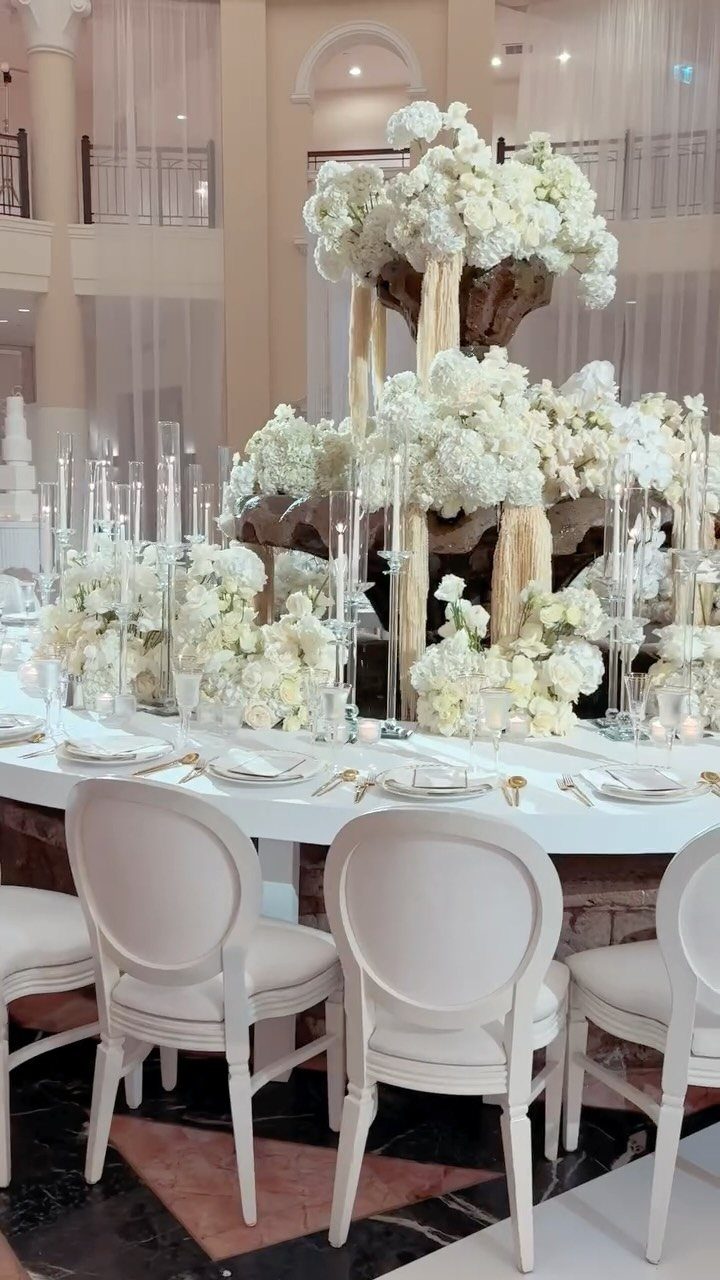
Height changes how a reception table reads. Tiered white floral centerpieces rising above glass candle holders turn a plain white table into a room’s main event, and white chairs keep the eye on the flowers.
Keep the palette tight so the towers do the talking. Candles at the base add glow without adding more color.
Tall arrangements cost more in flowers and structure than low ones, and I would only go this big if the budget can carry it. If it cannot, use tall pieces on a few tables and low ones on the rest.
3. Over-the-top Blossoms
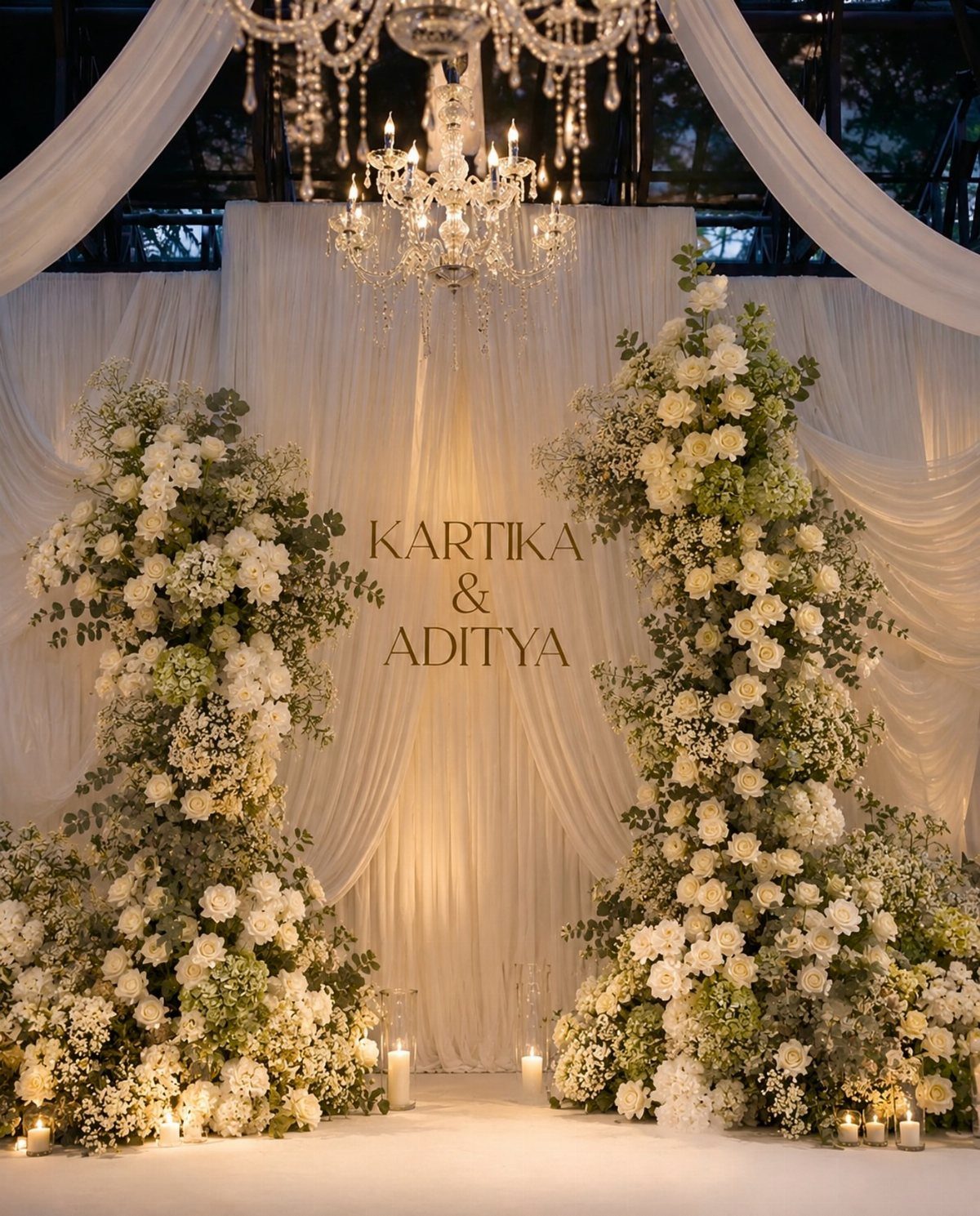
Go bigger than feels reasonable.
White drapery gives the blooms a calm surface to stand against, so I would keep the backdrop plain and spend on volume. Place the arrangements where photos will be taken.
Lush flowers at this size are a real expense, so decide whether this one spot gets the budget, and let other areas stay quiet.
4. Oversized Colorful Hanging Lampshades
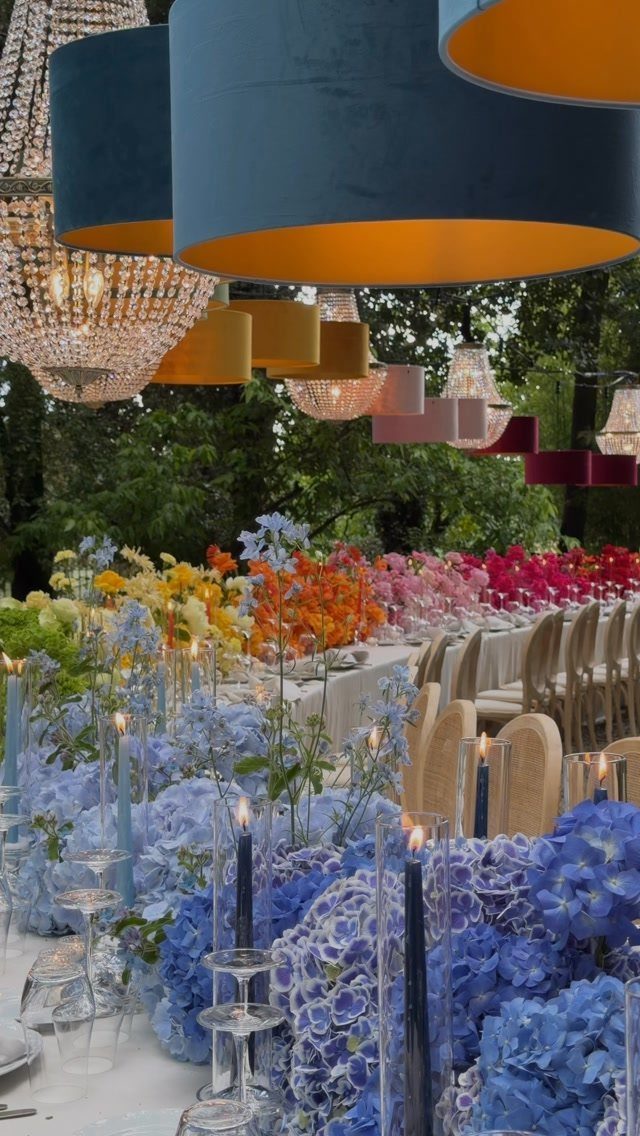
Color can run the whole table. Hydrangeas arranged in a gradient down a long reception table, with big cylindrical lampshades and crystal chandeliers above, make a bold look that still feels formal.
I like the gradient because it looks planned, not busy. Choose one flower and shift only the shade, so the lampshades can carry the brightest notes.
This takes more setup than a standard centerpiece, since lighting hangs overhead, so ask your venue what it allows before you commit.
5. Spanish Moss and Lanterns
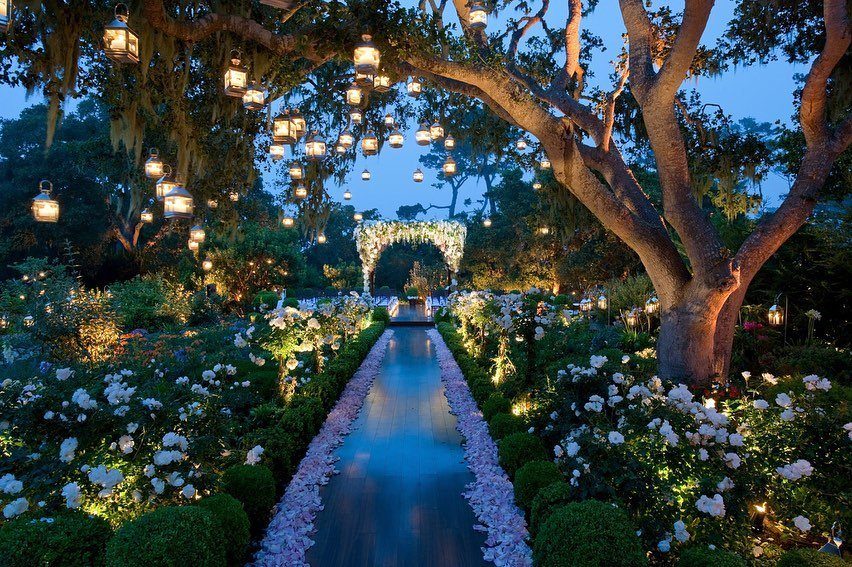
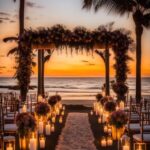
Oak trees draped in Spanish moss already supply the drama; lanterns hung from the branches add the glow at dusk.
A reflecting pool lined with white blossoms, a wooden path and a floral arch at the end give an aisle a clear line to follow.
Keep the flowers white so the moss and lantern light stay the focus. Time the ceremony for dusk, when the lanterns start to matter.
This only works if you have mature trees with the right look, so choose the venue first and design around it.
For a casually sophisticated wedding at an estate in Carmel, California, Bailey created what he calls an “enchanted garden,” illuminating the Spanish moss–bedecked trees with glimmering lanterns. The ceremony was performed under an arbor embellished with a canopy of lilacs, wisteria, jasmine, and hydrangeas.
Advice for Brides
Hand the details to the professionals and keep your own attention for the day itself. A bride who is fixing a centerpiece at 3 p.m. is not enjoying her wedding.
Before the day, write down who answers questions about delivery times, setup and vendor problems. Give that person your phone number only as a last resort, and tell your vendors who they will be dealing with.
Stress usually comes from decisions left open. Settle them early, then trust the people you hired to carry them out.
Choosing a Designer
Comfort with your designer matters as much as their portfolio. You will share budget worries and half-formed ideas with this person, so you need to feel you can say "that is too much" without a pause.
Pay attention to how they respond in the first meeting. A good designer asks questions about you, listens to the answers, and does not rush to sell their own taste.
If you leave a call feeling unheard, keep looking. Rapport is hard to build later, and a designer you trust will tell you honestly when an idea is not worth the money.
Event Planning Process
A planner and a designer have to work from the same plan. Ask them to talk directly, early, and share one timeline, one floor plan and one budget sheet, so nobody builds from an outdated version.
Organization is what makes a big look possible. Put deadlines in writing for final guest count, delivery windows, venue access and setup time, and ask each vendor to confirm them.
I would also ask for a written plan for the day, including who is on site and when. Changes will come up, and a team that already communicates can absorb them without involving you.
Frequently Asked Questions
Who is Preston Bailey?
Preston Bailey designs weddings and large events from his base in the US, and he has long been counted among the top names in the field, with Vogue listing him among the best wedding designers anywhere.
His work leans toward big, dramatic floral and lighting looks, which is why his name comes up whenever couples talk about over-the-top weddings.
What are the top wedding trends?
Over-the-top creations and unusual floral arrangements lead the list. Tall tiered centerpieces, oversized blooms against white drapery, and big hanging lampshades over a hydrangea gradient all fit that direction.
Choose a single trend to carry the room, then let everything around it stay quiet; that is how the spending stays in check.